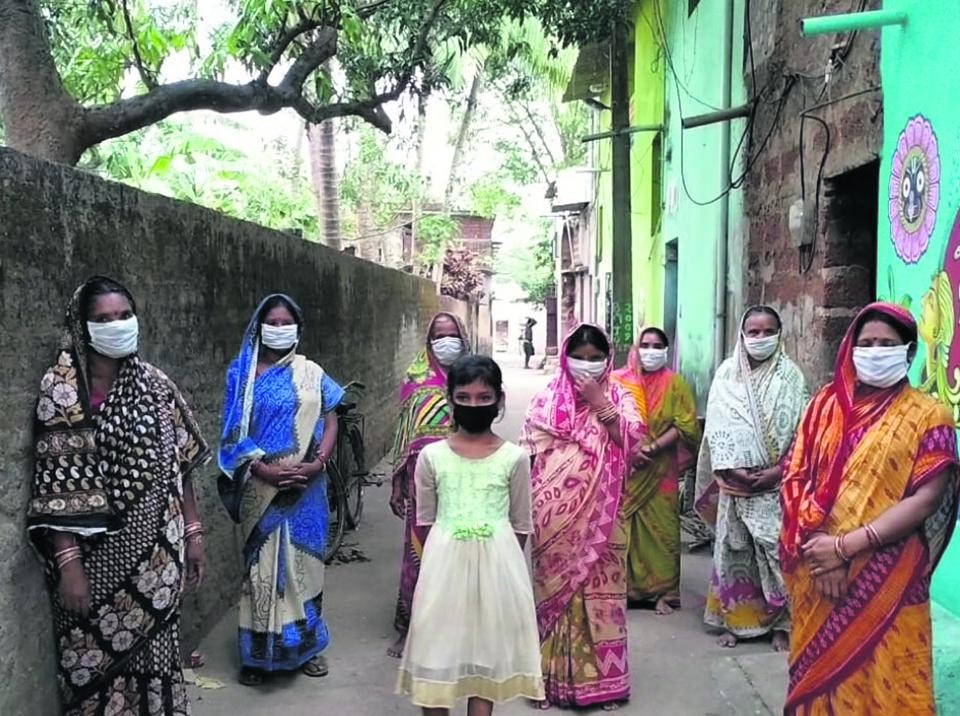
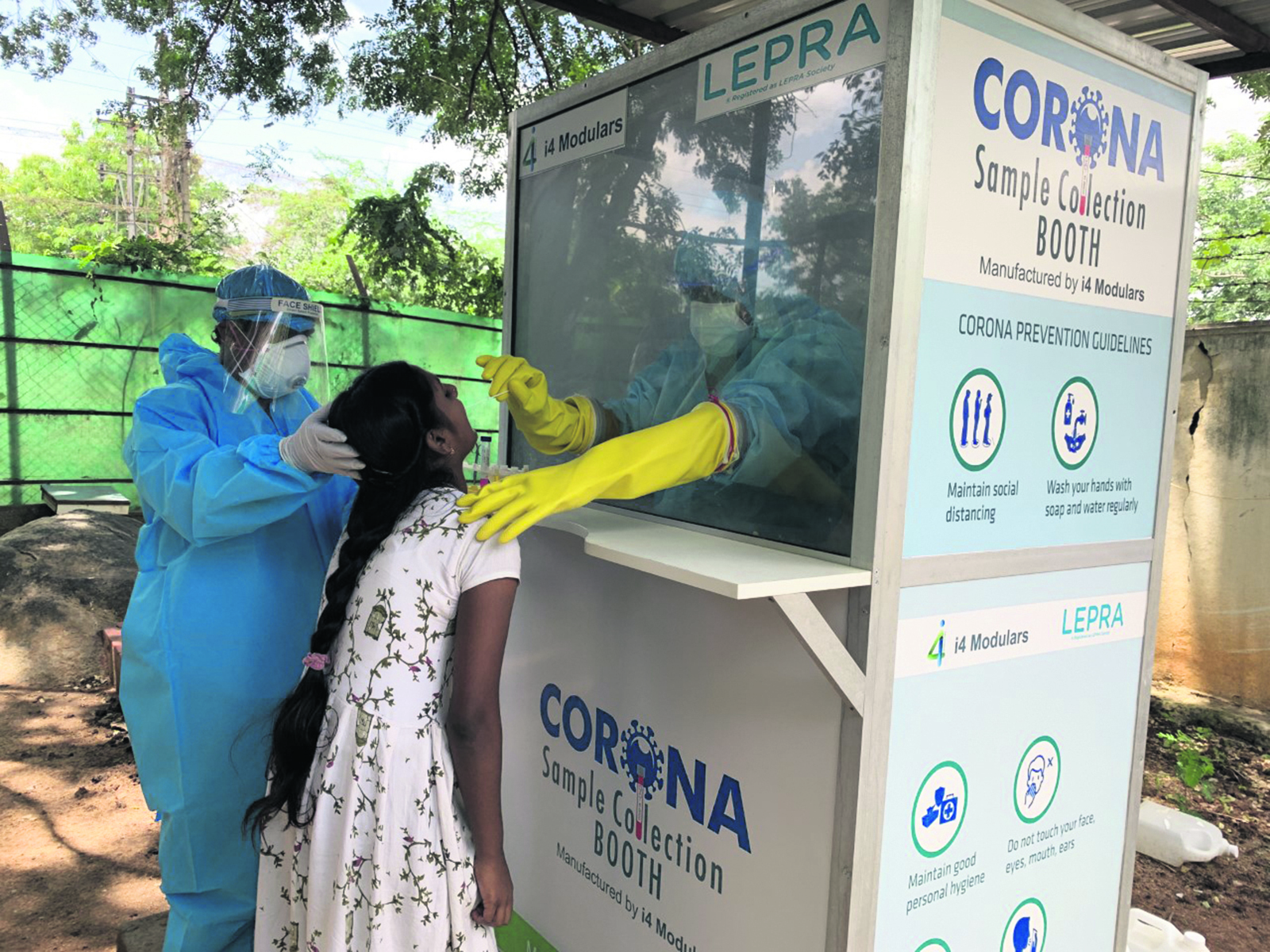
Speaking to us from the very frontline in India, Lepra’s national CEO, Prasant Kumar Naik, explained the reality of the escalating epidemic currently shaking the South Asian sub-continent. It seems the media coverage in the West has not been entirely accurate, tending to focus on the sensationalist image of ‘bodies piling up in morgues’ over the real on-the-ground issue of fuelling man-power and resources and the public’s morale in administering and receiving the vital vaccines. Like much of the medical workforce across the country, Prasant and his team of hard-working health workers have been on the job around the clock to be part of the movement that provides the millions of jabs necessary to urgently boost people’s well-being. In fact, “Lepra is one of the only charities in the UK who are providing both PCR testing and extensive vaccination for COVID-19 in India.” Prasant also emphasised their success as being reflective of the national effort: “Our healthcare system is strong and our staff excellent. They should be commended for their tireless efforts. India’s infrastructure is not collapsing – it’s more that society is being utterly overwhelmed. This is common issue. That's the nature of a pandemic – it’s elementally chaotic. As a result, I think it’s better to keep perspective and be constructive.” Indeed, the UK has similarly struggled to adjust to the demand of the viral outbreak with PPE being in short supply and hospitals running out of beds to support struggling patients, and we've reacted with encouraging sympathy to move forward.
Inherently a shared crisis, it is better to think of viral challenge in India in terms of nuanced troubles to deliver the helpful solutions. Prasant talked of Indian staff experiencing burn-outs and needing emotional encouragement through international acknowledgement as well as financing of extra healthcare for the country’s vast population: at around 1.3 billion, “of course the death toll is going to be high. What we need is the universal interventionist healthcare to combat this.” For this, Lepra has put their funds into tackling COVID-19 to generally protect those not on the nation’s official register and the most vulnerable in society. Primarily a charity that fights Leprosy, they are leading by accommodating example: “We see to those who would not otherwise be able to get access to the vaccines. There are many with difficult disabilities such as leprosy and the underprivileged in the slums who do not own a smartphone to register and, in some cases, any ID. The government reasonably turns away those not listed, but this is limiting overall progress with complete management of the virus as well as discriminating against those from the lower strata. This is a disease where everybody needs to be safe or else no one is.” In short, tackling underlying inequality is as important as physically battling the microscopic virus. This is as much a test of psychological health as it is practical capacity.
Again, this is a globally resonant truth. Prasant elaborated on the Indian socio-political landscape: “Many more people died during the first wave in India, but the newspapers are only making a fuss now. This is because poor people were the ones to be predominantly affected. The second wave is impacting middle and upper classes equally and this makes the headline. However, this is not to belittle the many deaths. Every life counts. Rather we should be thorough in the way that we provide aid.” Lepra’s testing facility based in Hyderabad is at present reporting “anywhere from 35 – 40% positive results per day” where the multidimensional organisation provides treatment and mitigation (vaccinations) as well as the testing. They have 10 sites across India, including in hard-to-reach remote areas such as Bihar. “Additionally, when we find that someone is positive, we equip them with the isolation kits and treatment and provide the isolation. This protects overlooked families and the communities at large. Many NGOs are focussed on bringing in more ventilators etc. to hospitals but we want to prioritise prevention and keep people safe locally, early on.” Lepra quotes a £19.00 donation to have people from marginalised backgrounds properly privately checked: “for the travel from home to the vaccination centre and back twice for 2 doses, some snacks and bottled water. We have the capacity for rolling-out and scaling up, but require more support. It is best to drive private care as the public health facilities are crammed.” As a smaller grass-roots organisation, Lepra also need help with PCR cartridges and reagents where they are not able to place bulk orders, costing between “£10-15,000”.
Finally yet significantly, Prasant appealed for contributions to help fight “testing reluctance’. Many are in hospitals because they didn’t want to receive the available vaccines due to superstition, general apprehension and old religious beliefs. As a result, we need money to help show the wider public instructional videos on the importance of the vaccine and how it works: social distancing, ventilation, wearing masks and hand-washing are the big four imperatives. We take vans, projectors and public speakers across the country to not only explain this, but the whole health program, including receiving vaccines. It costs around £4,000 altogether. We’re managing with masks and PPE but need to spread the word to every community we work with so the nation is maximally aware. We’re actually talking to priests and community leaders in the different areas to ask them to try to reach people too. I’ve worked in Africa before where there was the Ebola outbreak and this is on a much larger scale. The resilience of our health workers is what’s almost paranormal!” Prasant importantly added that world-wide panic and fear works to international detriment:
“for me, the priority is the population and we need to keep them motivated. More stress isn’t useful. In fact, breathing in huge amounts of oxygen when distressed means a higher intake of air! I was disappointed to see the news of huge queues outside crematoriums simply because this does India more harm than good. As I say, even in normal times, you can expect hold-ups due to the sheer size of the country. There are long lines as much of the population is Hindu and upholding core ritual is important. Fixating on this now is distortive, disrespectful and even destructive. Where was the concern before? People are getting affected in their millions, and it’s awful to make them want to hide and evade care to the point of even death with cultural hyperbole. We need to stay positive as possible: this brings calm, factual responses and ultimately effectiveness.” Indeed, a higher mindset counterbalances the deep disaster of a pandemic, truly acting upon the big picture. The appropriate response is collaborative moderation as this wholly speaks to reality. As Prasant’s bold testimony highlights, medicine and technology transform in the moment but it is ideological progressiveness that will firmly carry these to beat the new coronavirus globally long-term. Who knows? Perhaps we might even emerge as fundamentally reformed. Let not myopia increase the chance of failure. Clear mature thinking is the way out. “Above all, we want to facilitate human dignity. This is a pandemic of our generation – let’s face it responsibly, powerfully together.”
W: https://www.lepra.org.uk/get-involved/donate/paypal-donation