“Leprosy has not been ‘eradicated," Rajni, the state co-ordinator for the UK-based NGO, Lepra, who are fighting for prevention and treatment of leprosy, told us from his rural, Indian region of Bihar. The National Leprosy Eradication Programme (NLEP) India stopped their active searches, or the active detection of ongoing door to door surveys, in 2004, declaring leprosy eliminated according to flawed methodology. Giving a hard, numerical figure, Rajni told us: “if the leprosy prevalence rate is less than one case in a group of 10,000, it is considered a neglected tropical disease. Europe and many believe elimination means no new cases in the community at any one given time. The WHO currently includes leprosy as a Neglected Tropical Disease (NTD).” However, this does not consider the psychological shame surrounding these painful, often disfiguring diseases, which cause many to retreat into hiding and refrain from declaring, much less seeking treatment, for their illness. The concept of leprosy colonies, and as Rajni added, “the condition of leprosy itself is a very ancient one, where the first medicine for it only became available in 1942.” This is particularly shocking when you consider that there has been documented evidence since Biblical times. “Religion, myth and superstition - in general - do come into it,” Rajni continued. “Sufferers are believed to be cursed and there are a number of backward biases associated with that. There are roughly 1000 leprosy colonies existing in India today, and the real shame is that we do now have effective drug treatments, such as Multi Drug Therapy (MDT). But because people are largely unaware, mainly driven by fear, those affected would never be able to benefit. To aggravate matters, living in terrible, isolated conditions adds a host of diseases, such as TB and Cholera.” Leprosy cannot be spread by touch and is believed to be transmitted through droplets of moisture – however it is worth noting that it sometimes takes as long as years to catch the disease.
***
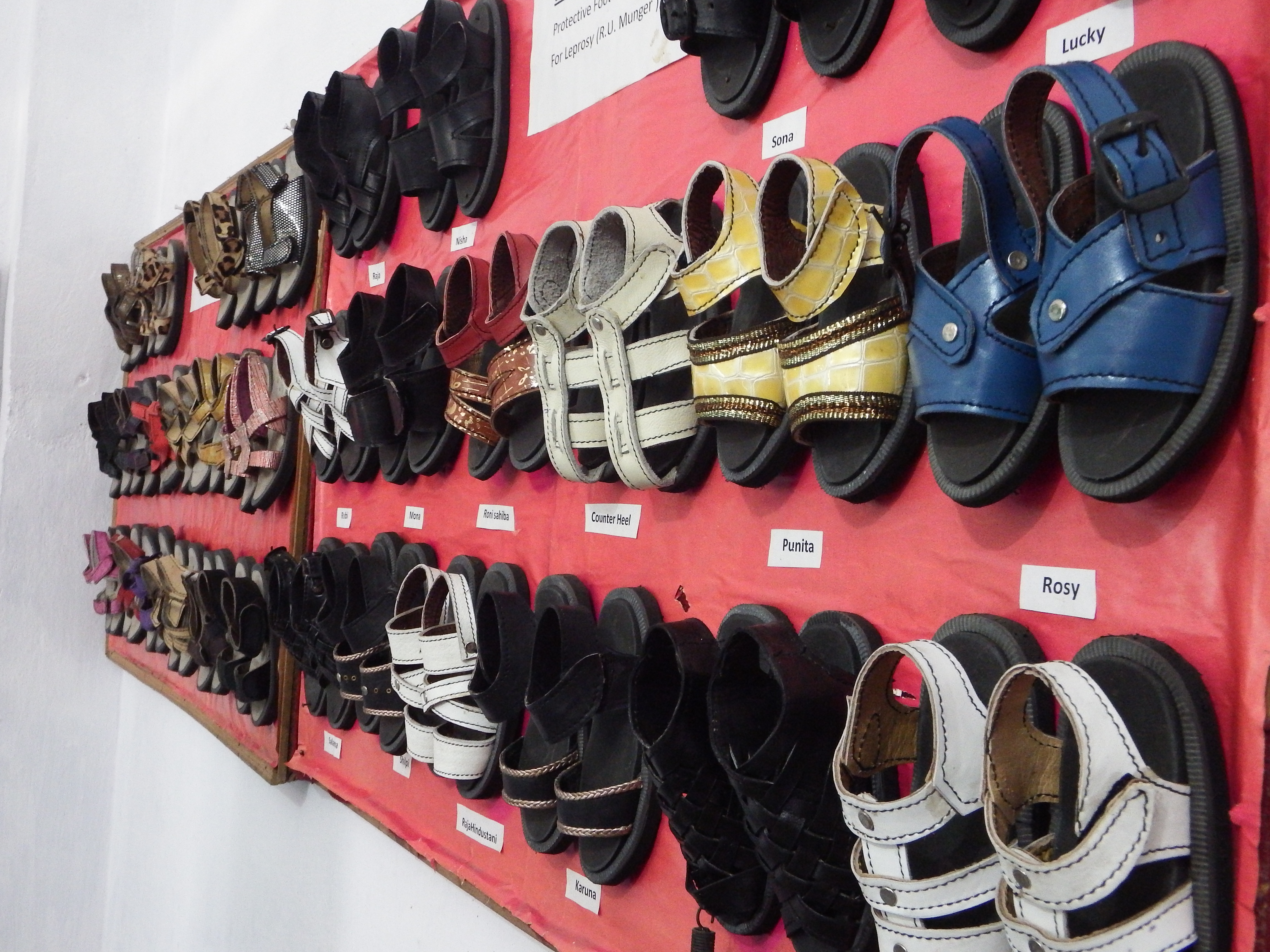
Consequently, a pivotal part of Rajni’s work has been to sensitively raise awareness about the condition, and make more effective the administration of MDT treatment to patients. He has been responsible for successfully distributing educative short films as well as an award-winning, new active case finding programme in Bihar, which introduced special contact and focal surveys. This meant that if one patient is diagnosed with leprosy, the entire family contacts and surrounded families will be screened and also the 20-25 nearest households. In addition to this, Rajni has created a more comprehensive guide for identifying leprosy in its earlier stages, helping sufferers avoid much agony in the long run. Testing for the loss of sensation on certain patches of skin is commonly known, but the committed community leader has also made sure that medical experts and the wider community know to probe for more subtle signs, such as loss of sensation by the nerves without an effect on the skin and for traces of the disease in the blood too. Employing the above methods, three times more cases of leprosy were found by Lepra, compared to previous government initiatives. “Today, we have many professionals such as; physiotherapists, doctors, councillors and drivers, working together on the ground to make a difference. We have monthly meetings with the Indian government and the WHO so we are all in touch with the reality of the prevalence of leprosy. Of course, there is still much work to be done.” Indeed, what is most impressive about Rajni’s approach is the intent behind it; highly personal, passionate, attentive and focussed. He is also recognised for pioneering Lepra’s integration of prevention and treatments for similar diseases to leprosy (Integrated Prevention of Disability, IPOD) such as Lymphatic filariasis, from which Rajni himself has suffered: “There is a 5-step programme - skin-care, wound-care, type of exercise, protective footwear and raising awareness, which helps common sufferers heal and rehabilitate faster.” Caring for people down to the foundation itself then, his Bihar team also provides protective footcare to 63 leprosy colonies, “catering to different colours and designs of shoe each individual might prefer. Integrating the treatment of those fighting like illnesses also helps them mentally: they feel mutual encouragement and moral support.” Rajni does more than just the pragmatic healing of reducing numbers and dissolving the local stigma; he elevates social consciousness and fights the global blind spot which is as much as a contributing factor to underrepresented disability: “my humble appeal to the worldwide community is to remember these people, and their potentially needless strife. They deserve everyday life goals and ambitions – careers, marriage and having a healthy family – just as we do.”
What has stuck with you most through your vast career?
The sight of so many children suffering from the disease. 16% of new leprosy cases found nationwide were minors. I recently helped a young girl whose two fingers were effectively claws. Now rehabilitated, knowing she will be able to graduate and go on with her life is wonderful. There was another boy who had to have leg surgery for foot drop and after several months he can finally play football! A significant proportion of these children are the disabled beggars you might see on the streets.
What was your particular experience with a physically debilitating disease?
In addition to the pain and the usual self-hatred, there was a certain gendered – emasculating -shame. It was very painful to have sex with my spouse and to be able to walk properly with lymphatic filariasis. Even as a well-trained health-care worker I felt the need to keep quiet. For about six years. This is one of the reasons I feel Lepra’s work is so important.
What other intimate/involved initiatives do you take?
The protective footwear is tailormade to a micro-cellular level. Patients enduring wounds have their quality of life improved while they’re healing. Another aspect is the care taken with communication. For example, I was driving a van that stated the symptoms of leprosy, but wasn’t necessarily using the best description for that region; for them literally translating the idea of ‘a loss of sensation’ wasn’t right. They spoke more of ‘a blunt sensation.’ We amended the slogans as such. The more I immerse myself, the more I learn from my patients. When you apply a pre-prepared, blanket methodology, you struggle. Those suffering are ultimately all individuals. The government aids with administrative power; as an NGO, we mainly act and practically institute that change.
Donate: https://www.lepra.org.uk/