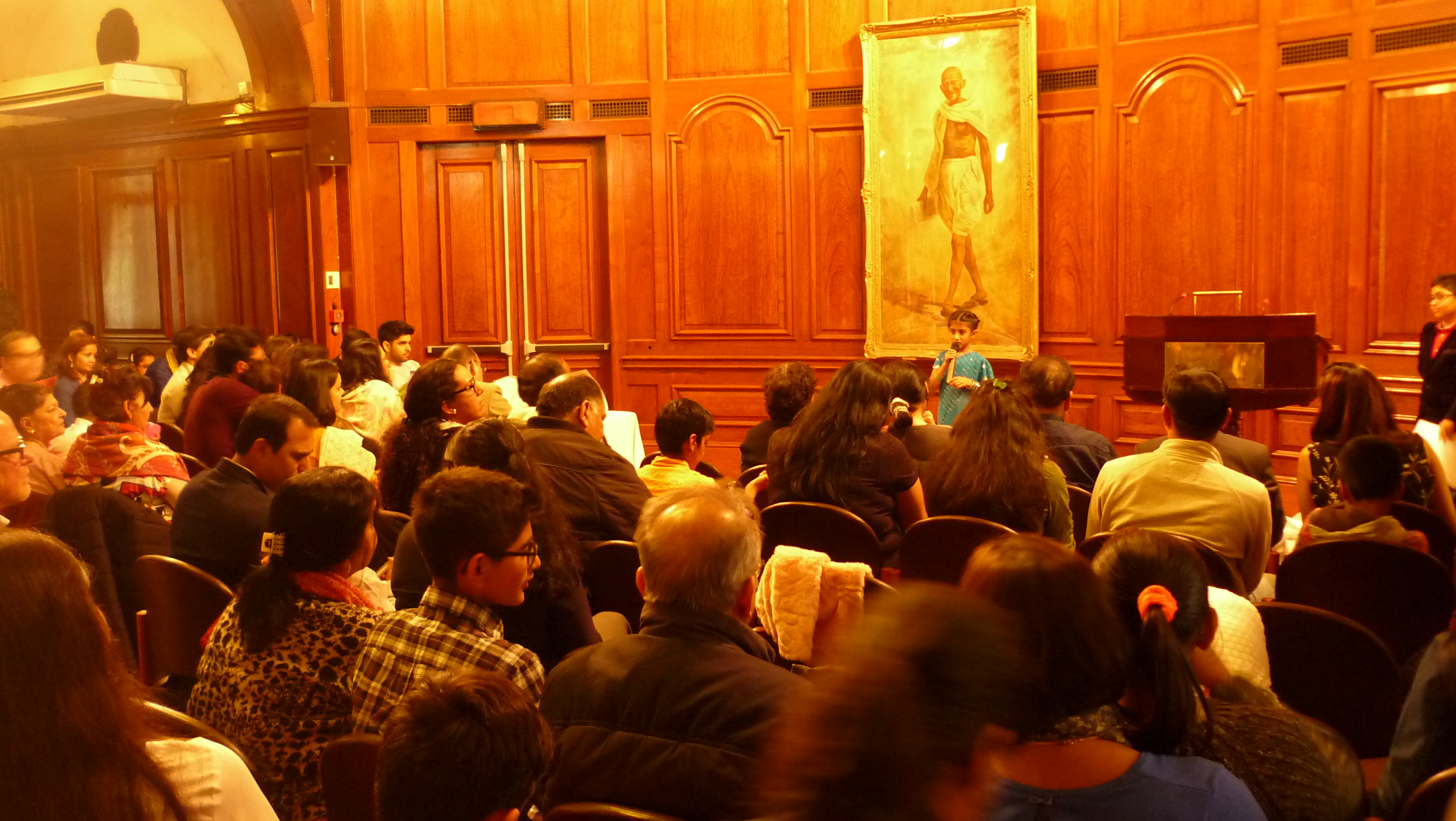
Hindi language is gaining popularity at the UK and many Indophiles are learning the language at various institutes across the UK, for a plethora of reasons. The High Commission of India at the India House in Aldwych for the first time co-organised An Annual Hindi Speech Competition on Saturday, 6th May, and the event was a bit hit with nearly 250 people turning up to participate and watch the people competing in different categories. .
The Competition begun with the 5 to 8 year-olds, then the 9 to 12 year-old category and finally the 13+. There was a special category for competitors who came to Britain at the age of 3+.
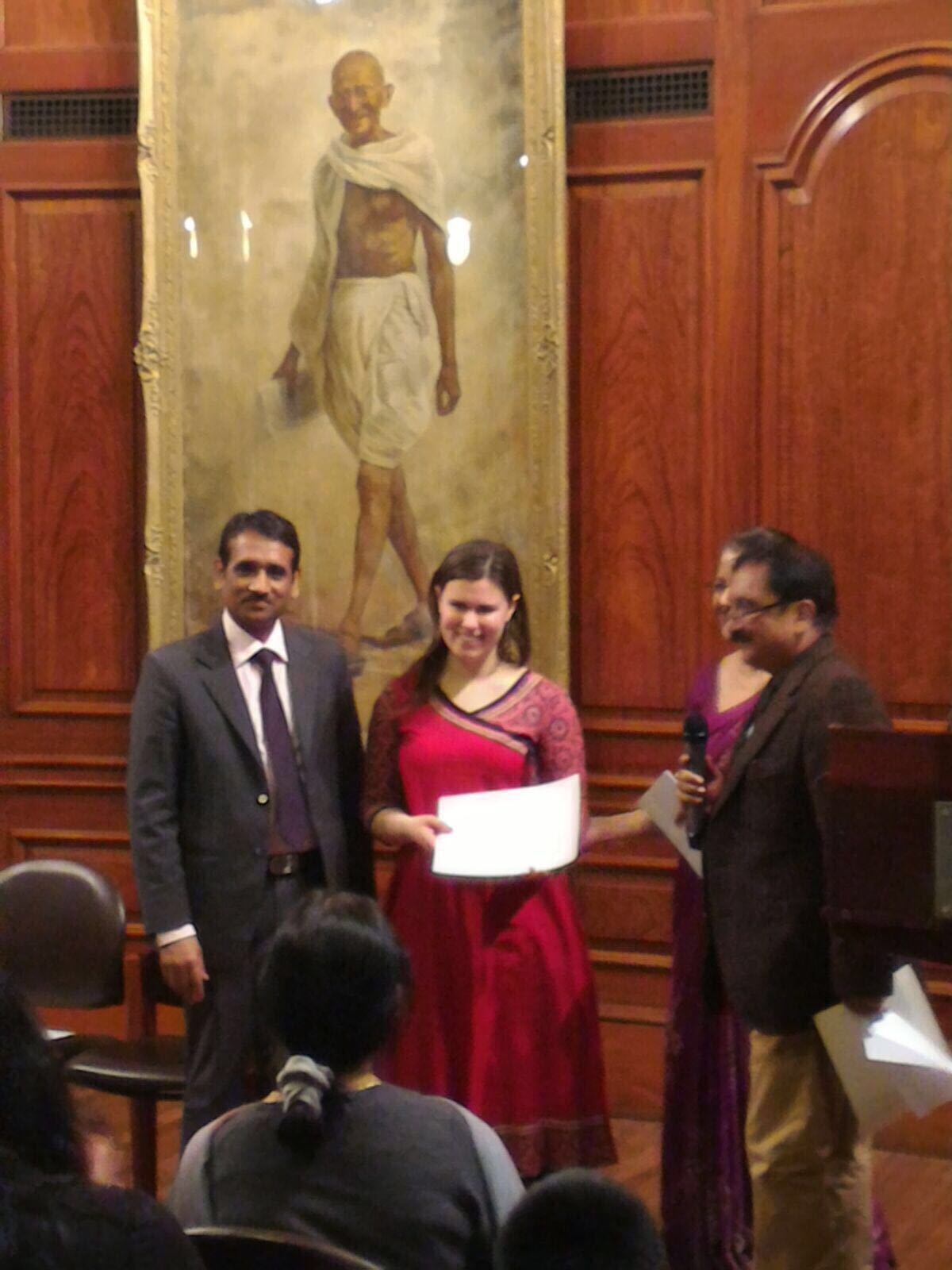
Alyssa McVey, pursuing her research degree in biochemistry at the University of Cambridge, won in the 13+ category. She spoke to Asian Voice, saying that she felt really nervous, especially about forgetting her speech, but kept reciting the speech in her head whenever she'd start to feel nervous.
“I had to give a short speech on one of five topics. I chose the topic, “bandar kya jaane adarak ka svad,” which is a Hindi proverb that describes those that don’t know something cannot appreciate or understand its value.
“I wanted to start learning Hindi after I first visited India three years ago. I had a really positive experience seeing the country for the first time and meeting my friends and their families and learning about their culture and lifestyle. They were all very welcoming. Going forward, once I am fluent in Hindi, I see it as a way to communicate with millions of more people than I could before, and perhaps learn more about India.
“Even though I started learning Hindi because of my love for 'Shahi Paneer' and Bollywood, there is a good possibility that it could open opportunities professionally for me once I complete my degree through collaborations in either industrial or academic research.
Alyssa takes Hindi lessons at Bhartiya Vidya Bhavan in London, and watches Bollywood movies, listens to Hindi and Punjabi songs and tries to converse with her desi friends. But Hindi is not an easy language for a British to learn.
The biggest challenge of learning Hindi is pronunciation, said Alyssa. There are so many sounds in the Devnagari alphabet that do not exist in English. And Naomi Canton, a freelance journalist, a linguist currently living in Hertfordshire, in their second year Hindi language education at the Bhavan agrees about the difficulties.
“The most difficult part first of all was remembering how to write the Devanagari script, as well as the gender of words. Then it became remembering which ‘sh’ or which ‘d’ to use in dictation as there are several. Being able to pronounce certain sounds like ‘bh’ and ‘th’ and ‘dh’ and to distinguish between them is also really hard as our mouths and tongues are not used to it and we just have ‘t’ and ‘d’ in the English language.
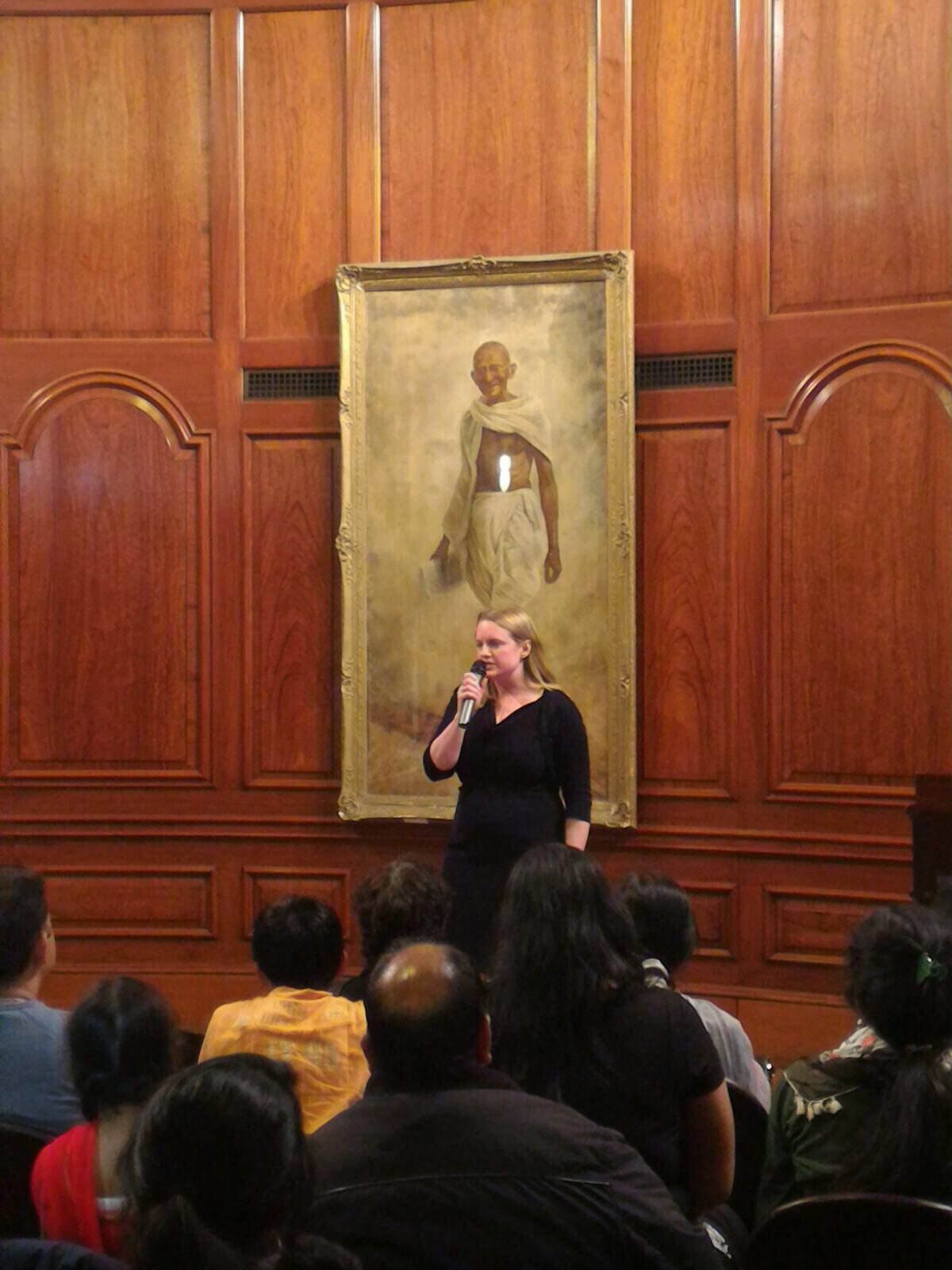
But the real challenge for Naomi was remembering an entire 3 minute speech in foreign language off by heart and then delivering it without a paper copy or any prompts in front of an audience at India House, that included several senior members of the Indian Government.
Some of the students delivered their speeches really well with humour and smiles, and for many like Naomi it helped build her confidence. Many British Asians were keen that their children learn their mother tongue and are connected to their roots, making special efforts to take them for classes on weekends or in the evenings.
“I first travelled to India as a backpacker when I was 19. That was when my love of the country started. I have then been travelling back and forth to India ever since including living there for three years from 2007 to 2010 to work as a journalist there. I was a Special Correspondent at The Hindustan Times in Mumbai.
“You don't need to speak Hindi to get around India, though you do need it to understand Bollywood films which I adore!. I am also a linguist and I love languages. I studied French and German at ‘A’ level and read Japanese at the Oxford university. I especially like languages that are a challenge. Hindi is quite a difficult language so I find it mentally stimulating to learn.
“It is mainly attending the weekly Hindi class at the Bhavan and doing the homework. I also meet an Indian lady once a week and we do private Hindi-English conversational exchange. I really enjoy that especially teaching her English and teaching her British customs as she has recently moved here. She teaches me Indian customs too and we have forged a great friendship through our weekly conversation class.”
It is not just personal friendships that grow stronger through languages. Brexit may also improve financial opportunities for the two countries and knowing Hindi would definitely help. According to Naomi, “India being an emerging superpower is the future so to have an Indian language under one’s belt is an investment for the future especially now with Brexit happening, I imagine the UK will be doing much more trade with countries like India once we have left the EU.”