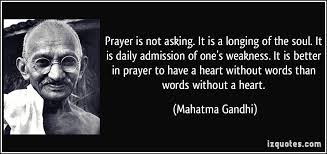
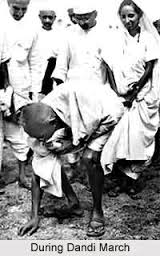
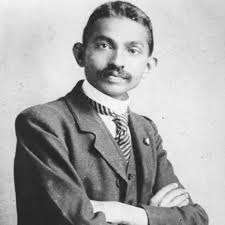
Yes, you read it right. Gandhi is relevant in 21st century. At a time when the world is plagued by terrorism & extreme fanaticism, ecological destruction, consumerism, materialism, greed, religious conflicts, revenge & counter-revenge and threatened by nuclear war, Gandhi and Gandhian values of simple living and his message of peace & non-violence is the need of the hour to overcome intolerance & violence. This is a modest attempt to let the world know that “You can kill Gandhi but you can't kill his legacy”.
GUJARAT BORN
Mohandas Karamchand Gandhi was born in Porbandar in Gujarat on October 2, 1869.
POWER OF PEACEFUL PROTEST
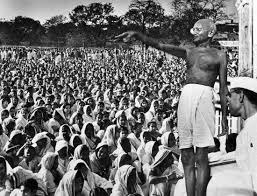
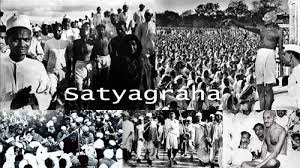
When Gandhi was leading the struggle for Independence, he insisted that the means of protest used by his followers should be non-violent, even if violence was used against them. In this way they were able to change the heart of the opponents and make their point. Gandhi called this method of protest “satyagraha”. In today’s struggles for justice and peace, the moral force of truth and non-violence can win victories in the court of world public opinion.
SOLUTION TO UNEMPLOYMENT
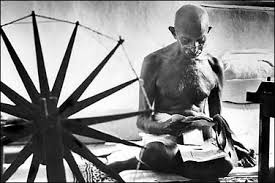
In order to solve the problem of unemployment in rural India, Gandhiji urged that Indians should stop buying imported cloth from England, and should instead spin and weave their own cloth. His message is so relevant today.
REDUCE CONSUMPTION
After Gandhi was gone, it was found that his possessions included just his glasses, a pair of sandals, a homespun cloth (his only garment) and a watch – the bare minimum needs. What Gandhi had tried to show is that the commonly assumed connection between wealth and merit is false. At a time when we are facing a crisis of diminishing resources, Gandhi’s philosophy of simple living and high thinking is very relevant.
Fossil fuels, water, metals, land – everything will become scarce in the future. This will force a change in lifestyle – more towards simplicity and less towards consumerism.
FOR THE POOR
Today's world is characterized by intolerable economic inequalities, both between nations and within nations. The rich are becoming richer, while the poor are getting poorer. Nearly half of the world’s population – more than 3 billion people – live on less than $2.50 a day. More than 1.3 billion live in extreme poverty – less than $1.25 a day. 1 billion children worldwide are living in poverty. According to UNICEF, 22,000 children die each day due to poverty.
Gandhi’s concern for the poor can serve as an example to us today, as we work to achieve a more equal world. He said, “There is enough for every man’s need, but not for every man’s greed.”
BRIDGING RELIGIOUS DIFFERENCES
One big problem he faced to free India from British rule was disunity and distrust, even hate, between the Hindu and Muslim communities. Each community felt that after the British are gone, they might face violence from the other. His struggles with this problem are highly relevant to us today when there’s so much religious and ethnic differences in the world.
GANDHI AND RELIGION
Gandhi finds kindred spirits in the vegetarian movement and at the Theosophical Society which help him to return to the traditional Hindu principles of his childhood: vegetarianism, no alcohol and sexual abstinence. Influenced by the society, Gandhi formulates his own ideas about the essential unity of all peoples and religions.
Gandhi has often acknowledged Bhagavad Gita’s profound effect on his life. Gandhi interpreted that action without expectation of fruit was the essence or quintessence of the entire work. Self realization or liberation may be the goal of Hindu philosophy. But for Gandhi, Gita’s stress is on attaining liberation through selfless action. Renunciation of all desires of action was ultimate message, according to Gandhi.
RELIGIOUS VALUES
Gandhi believed all religions are based on the concepts of truth, love, compassion, non-violence and the Golden Rule. When asked whether he was a Hindu, Gandhi answered, “Yes I am. I am also a Christian, a Muslim, a Buddhist and a Jew.”
Golden Rule: “Do unto others as you would have them do unto you.”
At a time when there are conflicts based on religious differences, Gandhi and his thoughts are so relevant today. The need of the hour is to have a leader like him in the world.
ENDS AND MEANS
For Gandhi the “means to the end” was more important than the end itself. Gandhi’s advocacy of non-violence is closely connected to his attitude towards ends and means. He believed using violent methods for achieving a desired result would invariably result in an escalation of violence.
To the argument that “the end justifies the means”, Gandhi answered firmly: “They say that ‘means are after all means’. I would say that ‘means are after all everything’. As the means, so the end. Indeed, the Creator has given us limited power over means, none over end...The means may be likened to a seed, and the end to a tree; and there is the same inviolable connection between the means and the end as there is between the seed and the tree. Means and end are convertable terms in my philosophy of life.”
INFLUENCED WORLD LEADERS
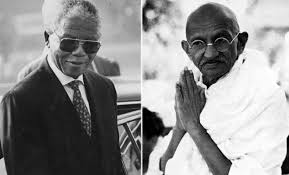
Martin Luther King, Nelson Mandela, Tibetan Dalai Lama, Myanmar’s Aung San Suu Kyi were greatly influenced by Gandhi’s thoughts and principles.
US President Barack Obama too was deeply influenced by Gandhi. He said, “I might not be standing before you today as President of the US had it not been for Gandhi and his message he shared that inspired America and the world.”
MANDELA ON GANDHI
Mandela learned from Gandhi the essential virtues of forgiveness and compassion, values that served him and his country very well on his assumption to power.
The world marvelled when Mandela and his colleagues eschewed any spirit of revenge and achieved the “miracle” of national reconciliation as they proceeded to establish a non-racial democratic government in May 1994.
Mandela, who had become the symbol of resistance even while imprisoned for more than 27 years, said in the 1990s: “The values of tolerance, mutual respect and unity for which he (Gandhi) stood and acted had a profound influence on our own liberation movement, and on my own thinking.”
Gandhian philosophy, he said, had enabled them to mobilise millions of people in the defiance campaign. It “contributed in no small measure to bringing about a peaceful transformation in South Africa and in healing destructive human divisions that had been spawned by the abhorrent practice of apartheid.”
Mandela said: “In a world driven by violence and force, Gandhi’s message of peace and non-violence holds the key to human survival in the 21st century.”
SOUTH AFRICA IN 21ST CENTURY
Once ruled by the white minority, South Africa today is a parliamentary representative democratic republic with a black person at the helm (President Jacob Zuma). Their Finance Minister is an Indian-origin (a Gujarati), Pravin Gordhan. Till a few weeks ago, their national Test cricket captain was Hashim Amla, an Indian-origin Gujarati Muslim.
If Gandhi and Mandela’s principles were not implemented to the core in South Africa, these positive changes in the rainbow nation would not have taken place.
KING ON GANDHI
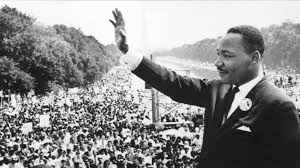
Interest in Gandhi spread widely in the West in the 1950s with the civil rights movement led by the Rev Dr Martin Luther King, Jr, in the US.
In the famous “I have a dream” speech in 1963, Dr Martin Luther King Junior said: “I have a dream that one day this nation (America) will rise up and live out the true meaning of its creed. We hold these truths to be self evident that all men are created equal.”
It was Martin Luther King’s dream that saw Americans break the walls of racial discrimination and prejudice. Americans of colour finally stood shoulder to shoulder with others. Many years later (in 2008) it was that dream that saw a man of colour run for presidency and win. Barack Obama made history by becoming the first black man to rule from the White House.
Martin Luther King had fought a hard long battle to ensure integration of African American community into the mainstream. And his inspiration was none other than Mahatma Gandhi. “I was so deeply moved by Gandhi and Gandhian techniques. I was deeply influenced by Gandhi.”
GANDHI ONLINE
Another testimony of the influence of Gandhi is the countless number of scholarly studies on his life and thought published each year. The number of websites on Gandhi and the content of those websites have greatly risen over the years, and the number of those accessing those websites too has increased.
GANDHI’S PHILOSOPHY
Satyagraha is the philosophy of non-violent (or “passive”) resistance employed by Gandhi in forcing the end of the British Raj – but first wielded against racial injustice in South Africa.
The interest in satyagraha led to the study of the views of Gandhi on other aspects of life and encouraged movements for simple life, deep ecology, animal rights and respect for all religions.
THE INCIDENT THAT CHANGED HIS IDENTITY
In 2006, at a Sathsang session in USA, renowned Indian author and philosopher Sadhguru narrated an incident that changed Mahatma Gandhi. At the session titled, 'What Makes Gandhi a Mahatma?', Sadhguru said, "When Gandhi started off, he was a man of limited talent. He could not make a living, even though he was a qualified lawyer.
"When he went to fight his first case in a court in India, he said: “I stood up to argue my case and my heart sank into my boots.” This was his expression. And, of course, he lost the case. Then he decided that law is not for him. He must seek some other profession because he doesn’t have the courage to stand up and speak in a courtroom.
"Now, does this sound like the tall leader that we all know today as the Mahatma – the man who moved millions of people?
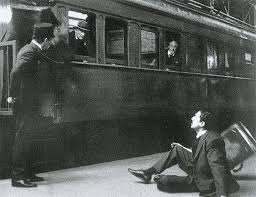
"He then went to South Africa. He was doing okay as a lawyer. And one day he bought a first class ticket in a train and got in. After some time a white South African got in, but he didn’t like a brown-skinned man (Gandhi) sitting in the first class compartment. So he called the ticket collector who asked Gandhi to get out.
"Gandhi said he has a first class ticket. The ticket collector said it doesn’t matter. “Just get out”. Gandhi said: “No, I have a first class ticket, why should I get out?”
"In no time, they threw Gandhi out of the train with his luggage. Gandhi fell on the platform. Bottling up his anger, he sat there for hours. He thought to himself: “Why did this thing happen to me? I have got a first class ticket, why was I thrown out of the train.”
"Suddenly he identified himself with the large predicament of the society at large. Till then his survival, his job, earning money was everything to him. All of a sudden he identified himself with a much larger problem that existed and this skinny person from Gujarat became an unstoppable colossus.
"He broke that little identification and move into a much larger identity.
"Probably there has never been another man on this planet who moved as many people as Gandhiji moved, that too applying non-violent means. Never before a conquering force (the British) has been made to vacate the land they held sway for years without firing bullets at them or using violent means. We know from history that people who have conquered land won’t give up easily. But the British leaving India was made to look as if they went easy. Although it didn’t happen so easily, there was no fighting or bloodshed. That’s because Gandhi could move people into that kind of action, a kind of passive action.
"Shooting other soldiers who are carrying guns is one thing, but standing on the street and willing to be beaten down on the heads, falling down, then another line of people coming and giving their skulls to be broken again and then another line and so on – is a completely different kind of strength. This is not easy. It takes a deep inner strength to do that. Fighting and dying is different, but without fighting, going and getting killed is a different thing. And that’s what he managed to do.
"The change in him was – from a small identity of himself, his family and wanting to make a living, his identity just exploded identifying with the larger problem of people that was there at the time.
"The message of his life is this transformation in him. He could have just survived like any other lesser mortal of his time and perished, but no – he did not succumb to the temptations of easy life. Rather he took the less trodden path and set an example by doing something more than survival.
"In short, there’s no problem if you don’t do what you cannot do. But if you don’t do what you can do, that’s tragic."
UPLIFTMENT OF WOMEN
Equality for women within the Indian society was a principle Gandhi passionately believed in and preached. Although the situation of women, especially in rural areas need to be improved a lot more, significant improvements in the status of women has taken place throughout India.
Women are now frequently participating at the top strata of society and politics alongside men – a few notable examples would be Indira Gandhi, Uma Bharati, Sushma Swaraj, Arundhati Roy, Mayawati, Mamata Banerjee, Jaya Lalithaa and many others. The sight of women in professions which were restricted to men even half a century ago is now common. The Chipko Movement was led primarily by women both at the grassroots level and also at the top by personalities like Gauri and Ganga Devi.
WHO KILLED GANDHI?
On January 30, 1948, Mahatma Gandhi walked to his evening prayer meeting. It was 5.10pm. Leaning on his two young friends (grandnieces), Abha and Manu, he crossed the lawns. A man came forward as if to greet him. Gandhi responded with a Namaste. Just then the man took out a gun and shot Gandhi in the chest three times at point blank range. Gandhi stood still for a second and murmured “He Ram!” and fell on the ground.
The assassin was Nathuram Godse, a Hindu fanatic, who plotted the assassination with Narayan Apte and six others. Nathuram Godse and Narayan Apte were hanged on November 15, 1949, in the Ambala Jail in Punjab.
On Gandhi’s death, Pandit Jawaharlal Nehru said: “The light has gone out of our lives…Yet I am wrong, for the light that shone in this country was no ordinary light… and a thousand years later that light will still be seen in this country and the world will see it. For that light represented the living truth.”
Well, Nehru couldn’t have been more apt in paying tribute to Gandhi with these words. As long as the ideals remained in our hearts, Gandhiji’s light would live.
However, it is so ironical that the apostle of peace and non-violence had to meet such a violent death.
WHY GODSE KILLED GANDHI?
A few of the reasons for killing Gandhi were:
* Gandhiji supported the idea of a separate State for Muslims. In a sense he was responsible for the creation of Pakistan.
* In spite of the Pakistani aggression in Kashmir, Gandhiji fasted to compel the Government of India to release an amount of Rs 55 crores due to Pakistan.
* The belligerence of Muslims was a result of Gandhiji's policy of appeasement.
* In 1919 people of India wanted General Dyer to be tried for the Jalianwalla Baugh massacre. Gandhiji refused to support this demand.
* The whole of India wanted Gandhiji to intervene and save Bhagat Singh, Rajguru and Sukhdev from the gallows. Gandhiji stubbornly refused on the grounds that they were misguided freedom fighters, and theirs was an act of violence.
* During the Tripura Congress, Subhash Chandra Bose was elected as president with majority, however, Gandhiji supported Pattabhai Sitaramayya forcing Bose to resign.
* Sardar patel was elected by majority as the first Prime Minister but Gandhiji insisted on Nehru.
WARMING & NUCLEAR WAR
Gandhi’s thinking could not be more relevant at a time when we fear we are moving closer than ever towards nuclear Armageddon and irreversible global warming. Also, if humans are ever to achieve a stable global society in the future, they will have to become much more modest in their economic behaviour and much more peaceful in their politics. For both modesty and peace, Gandhi is a useful source of ideas.
SOLUTION TO CONFLICTS
Today we read about killings in Iraq, Syria, Pakistan, Afghanistan, Middle East and other places which is nothing but part of revenue and counter-revenge. Gandhi's experiences both in South Africa and in India convinced him that the solution to this problem is by an unilateral act of kindness and understanding from one of the parties involved in the conflict. Gandhi’s famous quote – “An eye for an eye makes the whole world blind” – just sums up the story.
Martyrs' Day
January 30 is observed as Martyrs' Day in India. The date was chosen as it marks the assassination of Gandhiji in 1948.
Flag hoisting at Indian High Commission
As part of Republic Day celebrations on January 26, India's national flag (Tricolour) was hoisted at the Indian High Commission in London at 10am.
Meanwhile, the Indian High Commission in association with India League has organised a function at Tavistock Square in the London Borough of Camden on January 30 to mark the Martyrs' Day.
Navtej Sarna, the Indian High Commissioner to the UK, will preside the function. India League Chairman CB Patel, MPs, Peers, Mayor of Camden and others will be the other dignitaries on the dais.
The function will kick-off by paying floral tributes to the statue of Mahatma Gandhi which will be followed by speeches by the dignitaries on the dais.
A one-minute silence will be observed to mark the Martyrs' Day.
Students of Bharatiya Vidya Bhavan's will recite Bhajans on the occasion.
India League
India League is a Britain-based organisation that evolved from the Commonwealth of India League, which was established in 1922 with the aim of campaigning for complete independence for the Indian people.
The League remains internationalist in its outlook, reaffirming its view that India's fight for independence was a part of the larger global campaign against imperialism and capitalism prevalent today.
His Life is His Message
Gandhi's is the extraordinary story of how one man's indomitable spirit inspired a nation to triumph over tyranny.
A man who owned nothing and gained everything. With his philosophy of simple living and high thinking, the apostle of peace and non-violence spread the message of Satyagraha to counter injustice and oppression. He was like a candle that enlightened the world and sacrificed his own life.
The greatness of this man was his simplicity.
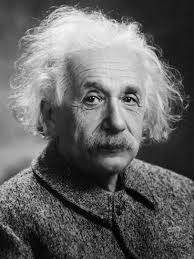
Asian Voice takes this opportunity to pay tribute to him by laying a wreath lifted from Albert Einstein.
“Generations to come will scarce believe that such a one as this ever in flesh and blood walked upon this earth.”
(Extracts of this article are sourced from Isha Foundation)