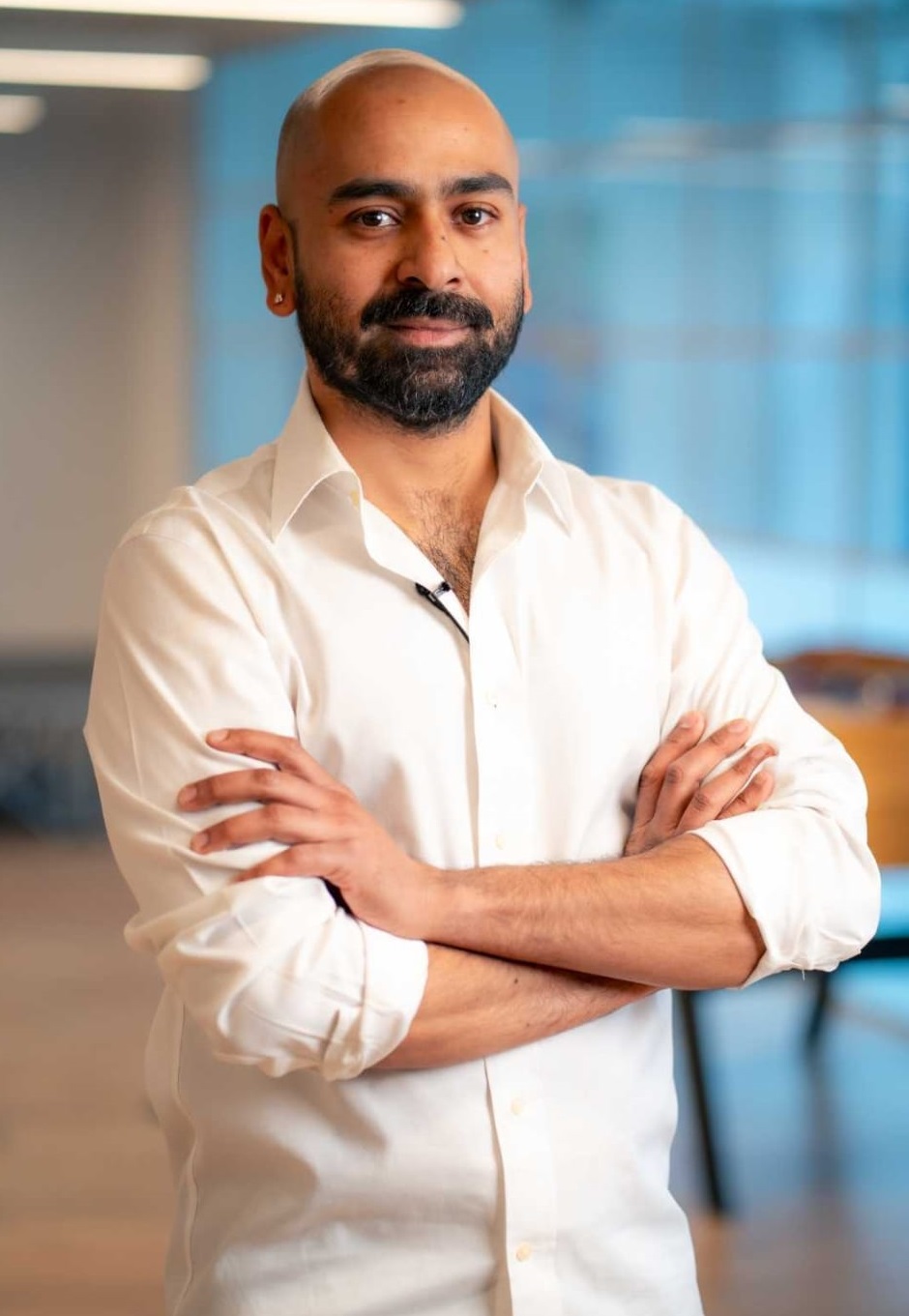
We have come a long way in the field of biosciences which has advanced in increasingly nuanced ways. Ranging from breakthroughs in vaccine development to the regeneration of limbs and cell and gene therapies, scientists have been able to move beyond even earlier astonishing concept such as the editing of genes to determine one’s eye colour or growing a human ear upon a mouse. Co-founder and CTO of Crane Biosciences, Sujaan, spoke to us about his specific contribution to the contemporary landscape: the enhanced efficiency of the treatment of difficult physical diseases such as cancer and Alzheimer’s via the refinement of RNA delivery or nanotechnology. The pioneer commented: “through our research, we discovered that most gene therapies fail in clinical trials not because the therapy itself is flawed, but because of issues with the delivery vehicle. Gene therapy has two essential parts: the therapeutic instruction (DNA or RNA), and a delivery system—typically viruses or synthetic particles—that carries the payload to target cells. The problem is that the immune system often recognizes these delivery vehicles as foreign, launching an immune response that destroys the therapy or, in extreme cases, even causes patient deaths. We quickly identified delivery as the primary bottleneck in gene therapy development. To confirm this, we spoke with over 100 experts across pharma and biotech, and they unanimously echoed that delivery remains one of the biggest pain points.”
***
Sujaan, together with his co-founder, Luca, had approached Entrepreneurs First, an accelerator for start-ups, to receive the funding that facilitated these remarkable findings, which they were later able to officially solve in the form of Crane Biosciences. “For context: nanoparticles are tiny objects in the nanometer scale—this is the same scale as viruses or cellular components and so they can interact directly with biological systems. At our workplace, we’re inspired predominantly by nature: we’ve developed a method to create nanoparticles from red blood cells—the most abundant cell type in the human body. These nanoparticles closely mimic natural extracellular vesicles (EVs), which cells naturally use to communicate by packaging and sending molecular messages. Our particles can carry therapeutic DNA or RNA and deliver them safely to targeted organs: what’s exciting is that our nanoparticles have an unmatched safety profile. They're stable at room temperature, are not detected as foreign by the immune system, and have demonstrated the ability to deliver payloads to high-value targets like the brain. That opens the door to tackling diseases like Alzheimer’s, Parkinson’s, and brain cancer at their root cause—something that’s been incredibly difficult until now.” Here, the precision of Sujaan’s nanotechnology is also invaluably unique. The CTO has built on his own independent work in academia, which “focussed on how malaria parasites invade red blood cells,” having completed his PhD at the prestigious Francis Crick Institute, and been awarded a Marie Curie Fellowship.
However, Sujaan’s shift towards gene therapy was intimately catalysed by the passing of one of his “closest friends due to a genetic disease with no cure during the COVID lockdowns: this was also an unusual time that offered space to think outside the traditional academic box. That loss made me determined to apply my knowledge to an area where it could make a real-world impact.” Much of the scientist’s work then is inspired by dwelling amenably in the underlying mechanism of life. “From a young age, I’ve been fascinated by nature,” he stated: “to me, science is simply the curiosity to understand nature and all its wonders. I’m grateful to have spent 15 years studying fundamental biology before transitioning into applied science—what we call ‘technology’. I believe the most impactful technology is the kind that most closely resembles nature and works in harmony with it.” The warm-hearted innovator grew up in India, attending school in Kolkata, and completed the first part of his higher education across Delhi and Mumbai. He moved to the UK to pursue his studies after being granted a scholarship by the EU. Today, Crane Biosciences “teams up with pharmaceutical companies and other startups that already have therapeutic payloads and want to deliver them safely to a specific organ for a respective disease. The role of CTO means constantly working on sharpening cell-targeted delivery and reducing off-target effects, in a way that is beneficially patient-focussed.” Finally, Sujaan shows us the awesome power of altruistic tech: to not only positively reclaim but also truly revolutionise the world around us.
Do you feel that the rise of scientific and medical entrepreneurs is partially a progressive symbol of the times in the sense that individuals are able to massively impact industry and evolve it from within in a way that was not happening before?
Absolutely. Medical entrepreneurship is being democratized in a way we’ve never seen before. In the past, only a handful of large pharmaceutical companies had the resources to bring new therapies to market. Now, startups are playing an increasingly vital role.
This shift breaks monopolies, introduces diverse ways of thinking, and—most importantly—makes life-saving treatments more affordable and accessible.
Who are you currently working with to ensure that billions of lives are saved worldwide?
One project we're particularly proud of is funded by the UK government via the Innovate UK Smart Grant. We’re engineering our nanoparticles with specific molecules on their surface so they can selectively bind to and destroy cancer cells—without harming healthy ones. It’s a major step forward from the “carpet bombing” approach of traditional chemotherapy.
We're also engaged in other collaborations under NDA that we can't yet disclose.
Who have been some significant scientific influences on you?
I’d like to mention two people. First, my PhD supervisor, Mike Blackman. He’s the most meticulous scientist I’ve ever met—an exceptional communicator and a truly kind human being. He allowed me to pursue unconventional ideas and bring in a paradigm shift in the field through my publications.
Second, Iravati Karve, renowned as India’s first woman anthropologist. She came to Germany for her PhD in 1927 under Eugen Fischer. Her research debunked Nazi race theories supported by Fischer, and though she was punished academically for challenging the system, her courage and commitment to truth left a deep impression on me.
What has been a highlight moment?
A standout moment was when our biodistribution data came in and showed we could deliver RNA directly to neurons in disease-affected areas of the brain. Effective and safe brain delivery is considered the holy grail of gene therapy. And we achieved it—that was a major milestone.
W: https://cranebio.com/