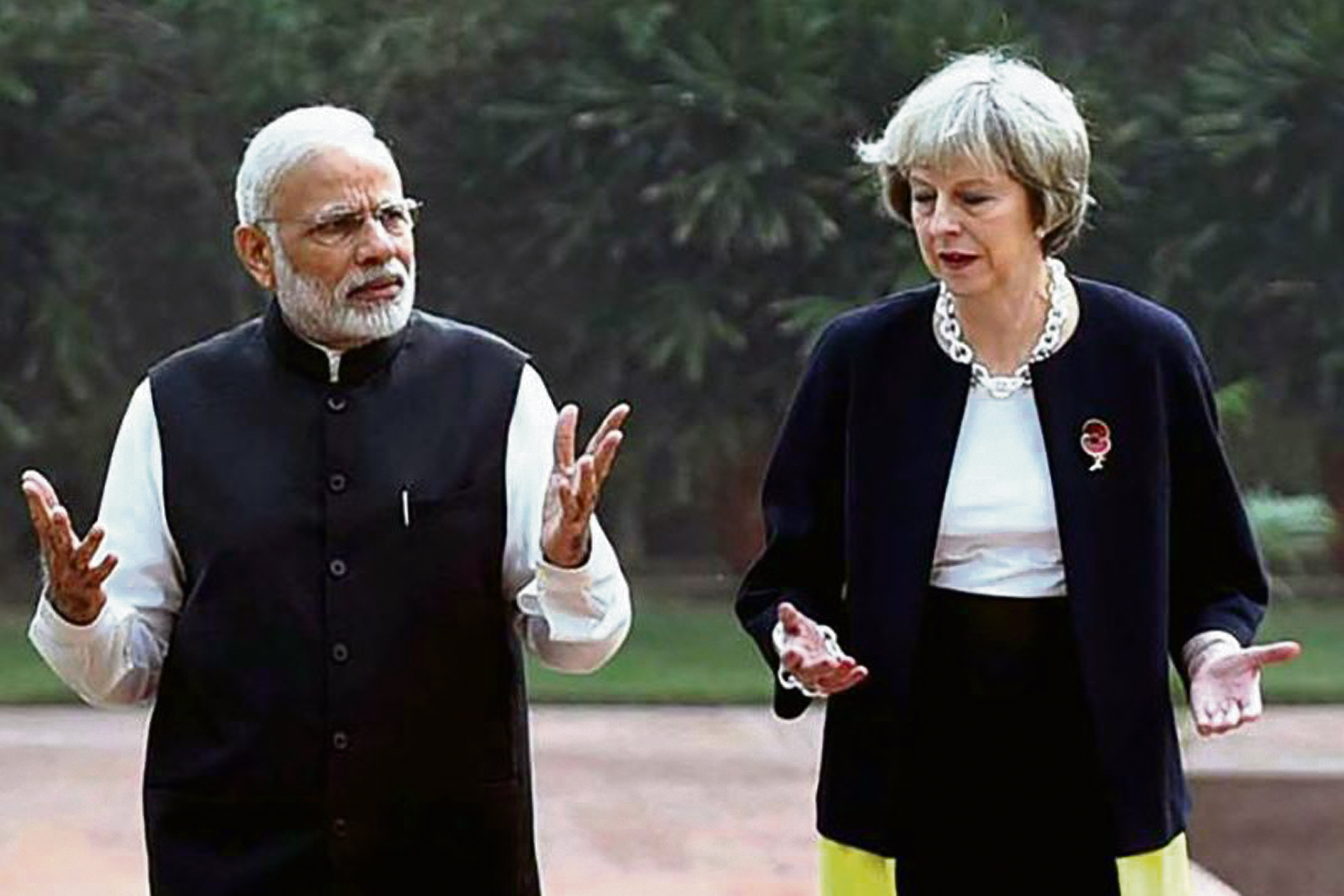
Theresa May touched down in Delhi this week for her first trade mission as Prime Minister.
The aim of this mission is to continue the rebooting of the UK-India relationship that began when Narendra Modi was elected Prime Minister in 2014.
There will be discussions on security and defence, but ultimately this is an economic visit; a chance to build ties with the fastest growing economy in the world.
The Prime Minister knows that strengthening links with India is a vital part of Britain’s future, especially as we start the process of leaving the European Union.
Crucially the Prime Minister has eschewed the ‘usual crowd’ of businesses who tend to accompany foreign leaders on these sorts of visits.
Gone are the CEOs and Chairman of huge corporations who can quite easily enter foreign markets without Government support. Instead she is accompanied by dozens of small businesses looking to export to India.
This shows Theresa May understands both how we need to rebalance Britain’s domestic economy, but also how to approach our future international trade.
Small businesses are the vital backbone of our economy. Britain’s 5.5 million SMEs account for nearly 16 million jobs in the UK – 60% of all private sector employment.
One of my very first contributions to the House of Lords was to establish a committee examining what the Government does – and can do – to support exporting amongst SMEs.
Only around 12% of Britain’s small businesses export, and the majority of those that do limit themselves to the ‘easier’ markets, rather than focusing on the fastest-growing.
For Britain to truly rebalance its economy, we need to vastly increase the number of exporting SMEs, and to retarget their work towards the markets of the future.
But many SMEs simply don’t know the opportunities that are out there. For larger companies it is much easier; they can easily afford the scoping costs involved in starting in a new country.
Which is why it has always seemed odd to me that, when a Government Minister takes a trade mission abroad, they look to the companies who are already trading their rather than opening the door to others.
So I was absolutely delighted to see Theresa May break with tradition. The symbolism of her visit is exactly right: India is going to be a major ally for Britain, and it is Britain’s SMEs that will drive both our international trade and domestic economy in the future.
I congratulate the Prime Minister on her judgement, and I hope that she will continue to make regular trips to India with the SMEs that are our future exporters.
I hope too that she’ll emphasise the amazing support the Government offers exporters. Not only can they receive tailored support from the Department of International Trade, they can also access an unrivalled level of financial support from UK Export Finance.
Leaving the European Union will undoubtedly change many things, but we mustn’t make the mistake of thinking that how we were doing things before was the best way. With her visit to India this week, Theresa May is showing us what a better future could look like; we should all support her efforts.