Two teenagers have been sentenced for the manslaughter of 80-year-old Bhim Kohli, who died following a brutal and unprovoked attack in Braunstone Town, Leicestershire, last September. The case has sparked widespread anger across the UK’s Indian community, particularly among British Punjabis, who say the justice system has once again failed a victim of racial violence.
A 15-year-old boy has been sentenced to seven years in custody. A 13-year-old girl, who was 12 at the time of the assault, received a three-year youth rehabilitation order with a six-month curfew and mandatory community service. Due to their ages, their identities are protected by law.
The pair were convicted in April at Leicester Crown Court. Justice Turner, in his sentencing remarks, described the attack as “cowardly and wicked,” but stopped short of classifying it as racially aggravated, despite the boy reportedly hurling racist abuse at Kohli while physically assaulting him. The girl filmed the attack, laughing and encouraging the boy throughout.
Kohli, a beloved grandfather, retired businessman, and longtime resident of the area, was taking his daily dog walk in a local park when he was accosted. He died from injuries including a broken neck and three fractured ribs.
The judge said he was “sure Mr Kohli did nothing to deserve this,” but his decision not to label the attack as racially aggravated, and the comparatively lenient sentence for the girl, has deeply upset many in the community.
Mid Leicestershire MP Peter Bedford and Alberto Costa, MP for South Leicestershire, have written to the Attorney General's Office (AGO) calling for the sentences to be looked at.
Outrage among British Asians
British Asians, particularly Indians in Leicester and other urban centres, have expressed shock and disappointment over the outcome. Many feel that the justice system has failed to take racial motivation seriously.
There is a sense of betrayal and the messaging is clear: These children laughed as they attacked a defenceless old man, hurled racial abuse, and filmed it. Yet one walks free, and the judge refuses to call it what it clearly was — a racist attack.
For many British Indians who consider themselves more British than Indian, having been born and raised in the UK, this incident is a painful reminder that visible minorities are still not fully accepted. Is the community being pushed back into the shadows of the 1970s, when racist attacks were routine and fear was part of everyday life and should we simply accept this as the new normal?
Criticism has also been levelled at the police, both in this case and others. Before being fatally attacked, Mr Kohli had told police he witnessed an assault on another Asian man yards from his home two weeks earlier.
He spoke to officers in August after he saw two white boys aged 12 and 13 racially abuse a man and throw a large rock at him near the same park where the 80-year-old encountered his own attackers.
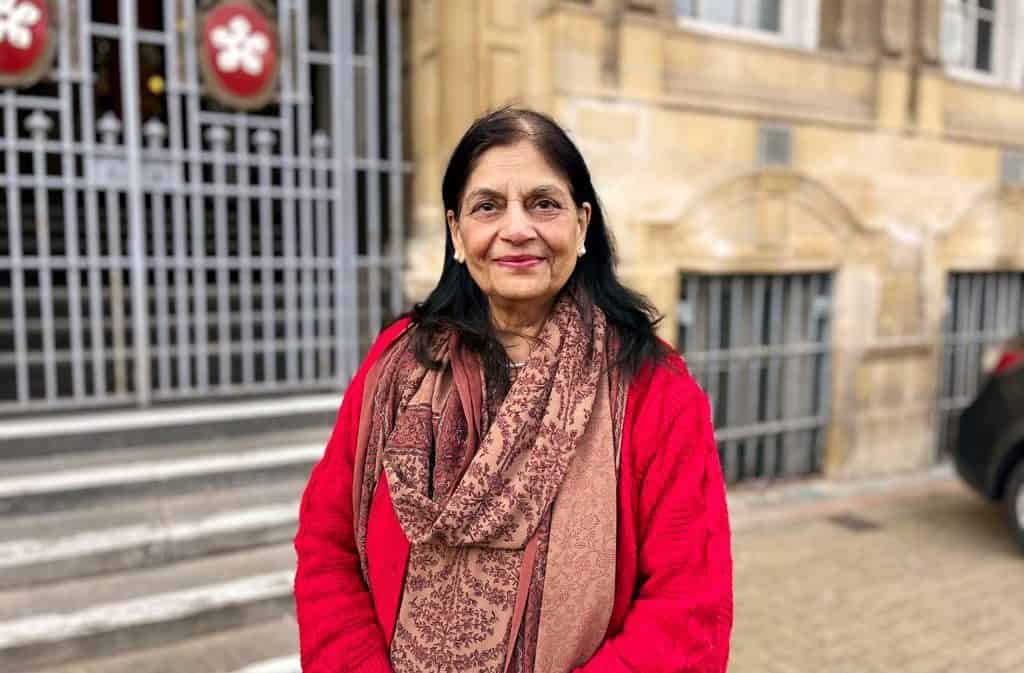
Cllr Dr Manjula Sood MBE, Assistant City Mayor - Community Cohesion of Leicester, in an interview with Asian Voice expressed deep condolences over Mr Kohli’s death and said, “Although the judge ruled it wasn’t racially motivated, many of us know it was. Immigration and history matter here. The government says it wants a fair, controlled system focused on skilled people, but much damage has already been done.
“The worst influence is social media and platforms like TikTok should be banned. Look at what this girl did. She filmed a defenceless, elderly man being beaten to share it online. Where’s the humanity?”
She told us that some neighbours had already reported concerns to the police before the incident happened. “The Leicestershire Police does a great job but sometimes, some cases can fall through the cracks. This is why I believe we must urgently focus on instilling human values in children so they grow up understanding that harming another person is not a joke or entertainment.”
She further added, “Yes, a 12- or 13-year-old is still a child, but not so young that they don’t know right from wrong. Parents, community leaders, police, social services; everyone has a role to play. If a family is struggling, social services should be involved. We need a coordinated campaign. The media can play a big role by supporting educational programs that promote discipline and human values. Otherwise, more lives could be lost unnecessarily.
“This man was murdered in a brutal, senseless, and deeply traumatic way. The entire neighbourhood is still in shock. He was a well-respected member of the community—so much so that people now want to name the local gate in his honour. He was simply going about his daily routine when this happened.
“In my opinion, these children acted like thugs. If someone can think of killing another person, especially out of racism, at such a young age, then they need to be disciplined. Human values must be taught—urgently.”
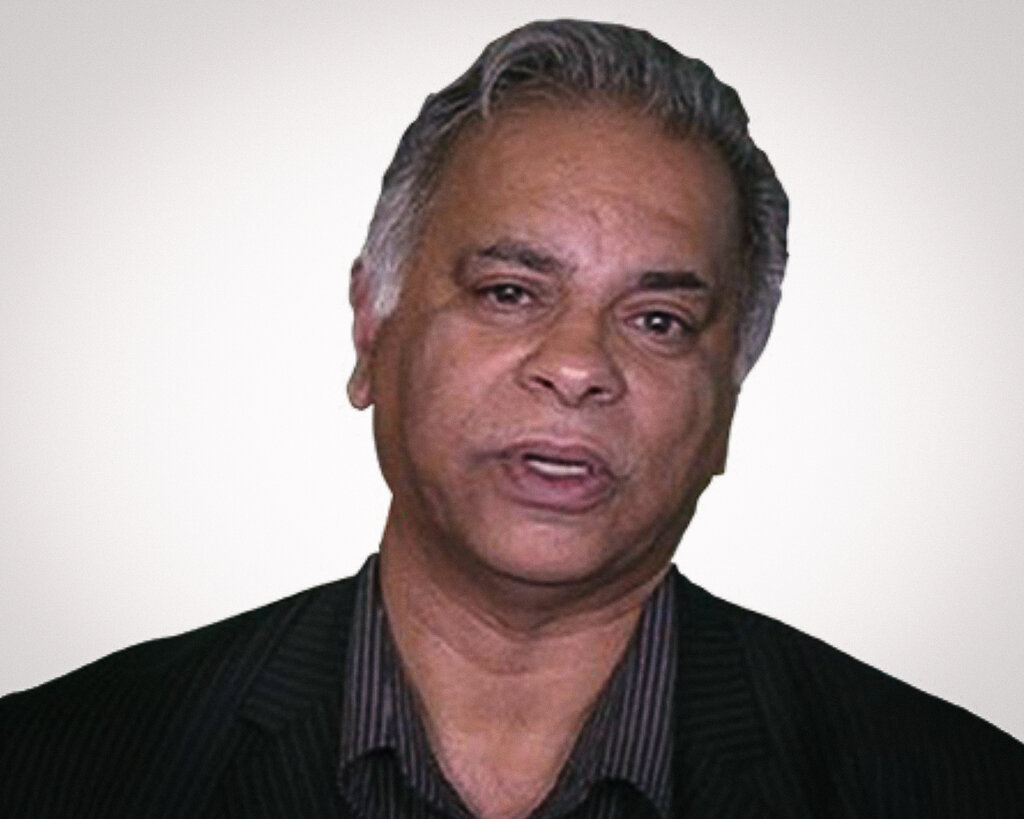
Activists and families have spoken of a worrying trend: attacks on visibly Indian and Hindu individuals that are either downplayed or not investigated with the urgency they warrant. Suresh Grover, a member of The Monitoring Group, a grassroots organisation with over 40 years of experience helping people and sharing lived experiences, said, “Our primary thoughts are with the Kohli family whose pain and loss of their loved father and grandfather is unimaginable.
"The appalling murder of Bhim Kohli, a peace loving elderly Asian gentleman, brought horror to the local community and raised the alarm bell nationally on the prevalence of violent racism in our society. He was vulnerable, defenceless, on his own when he was abused and set upon simply because of his colour.
"However what is also shocking is the manner in which criminal justice agencies have failed him and our society.
"He was a victim of racially motivated abuse, both prior and during the attack, but this issue has been ignored. Further, despite the fact that two assailants were jointly involved in the incident, only one was charged. It's reasonable to ask if this would be the case if the victim was a white pensioner and the assailants people of colour?
"Racist hate crimes impact communities and not just individuals and the failure to deal with it thoroughly leads to mistrust. It seems that the lessons of Stephen Lawrence Inquiry have been forgotten by the agencies charged with protecting us in Leicestershire - this practice only serves to devalue our lives.”
More recently, a brutal assault in Harrow, which left three university students of Indian and Hindu background hospitalised, underscores the alarming rise in racially motivated attacks. The teenagers, aged 18 and 19, were playing cricket when they were approached by three men, reportedly in their 30s, who questioned them about their ethnicity and religion before launching an assault.
One student suffered a fractured eye socket and was beaten unconscious while on the ground. The Metropolitan Police are treating the incident as racially aggravated grievous bodily harm (GBH).
Kanti Nagda OBE, founder of the Sangat Advice Centre in Harrow, expressed deep shock over the incident. Speaking to Asian Voice, he said he is in contact with the police to gather further details and ensure that appropriate and effective action is taken.
Calls for accountability
The daughter of Bhim Kohli, Susan Kohli, delivered an emotional victim impact statement after the sentencing, saying her family would never feel safe again. “Our house feels so empty without him,” she said. “When they are released, they still have full lives ahead. We cannot rebuild ours. More could have been done to prevent my dad from being killed.”
Many agree with her. They argue that the boy and girl’s actions were not only cruel but symptomatic of a deeper problem in British society: the casual dehumanisation of visible minorities and the leniency shown when violence against them is dismissed as misjudged “youthful behaviour.”
There is even more outrage over the 13-year-old girl only being given rehabilitation when she was equally involved. Cllr Dr Sood commented on this saying, “The girl, too, should be held accountable. Many feel she was equally, if not more, responsible. She filmed the attack, likely intending to share it on social media. If she had been a sensible 12-year-old, she would have sought help, not filmed violence. Whether the attacker was her friend or not, she had a choice—and she chose wrong.
“She shouldn’t be allowed to walk free without consequence. If that happens, it sets an example for other children: that if you’re underage, you can get away with anything. That’s the real danger.
“I'm not advocating physical punishment, but there must be firm discipline. I’m a former primary school teacher, and I’ve seen how important it is to stay on top of children’s behaviour.”
Vinod Popat, Community Advocate & Broadcaster from Leicester commented, “I am deeply saddened and disturbed by the brutal attack on Bhim Kohli, a respected elder of our community. This is not just an isolated act of violence—it is a painful reminder of the rising tide of racially aggravated hostility that many in our community are facing.
“The legal outcome has left many of us shocked. The decision not to charge the female involved and the classification of this as a non-racially aggravated crime—despite reports of racial slurs—sends a chilling message: that our pain, our vulnerability, and our right to equal protection under the law are not being taken seriously.
“Time and again, we witness a pattern of minimisation by law enforcement and the justice system when it comes to crimes with racial undertones. This failure fuels a growing sense of abandonment and fear among law-abiding Asian communities across the UK, particularly among our elders.
“We are not asking for special treatment—we are asking for fair treatment. Equal justice must not depend on ethnicity or perception. We urge the authorities to reflect deeply on what this case represents, and to begin rebuilding the broken trust with meaningful action, transparency, and reform.”
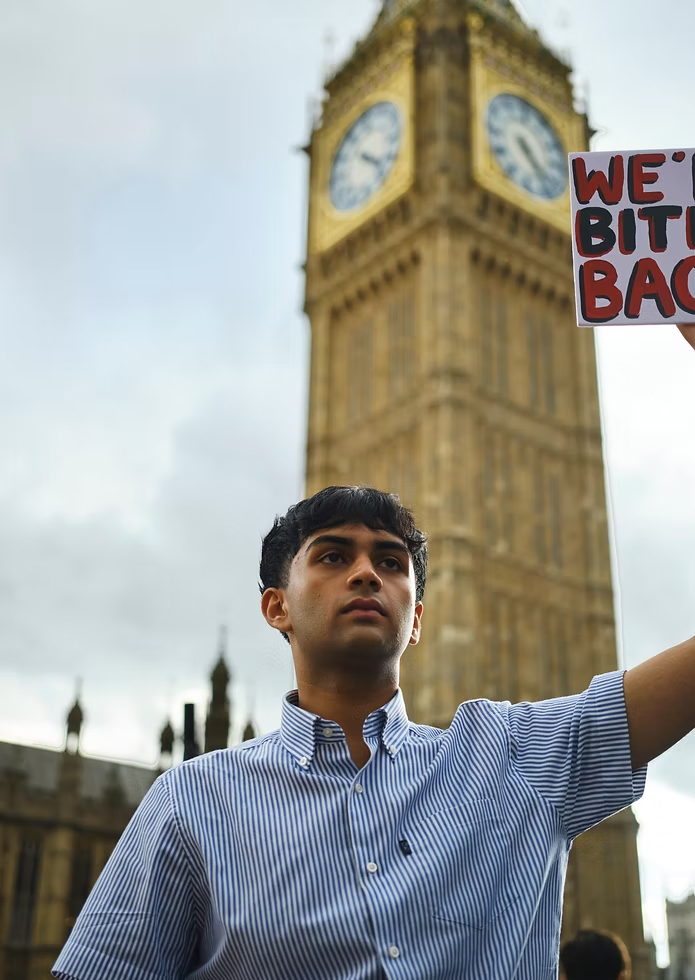
Dev Sharma Food Activist & Member of the UK Youth Parliament said, “I was shocked when I first heard about the killing of Mr Bhim Kohli. Like so many others, I immediately thought of my own grandparents. He was a kind, dignified elder and someone who should have felt completely safe walking through his own neighbourhood. Instead, he was violently attacked in broad daylight. And now, we’re left asking if justice really been done?
“This feels like justice falling short, not just for Mr Kohli’s family, but for every one of us who sees our elders in him. It’s hard to accept that this wasn’t treated as a racially aggravated crime, especially when we know racial slurs were reportedly used. And it’s even harder to explain how only one of the teenagers was sent to custody, while the girl who filmed and encouraged the attack was not charged.
“Honestly, I’m not just surprised by the leniency. I’m hurt. I’m hurt by how easily the racial element has been brushed aside. Because that silence speaks volumes to our community.
“This sentence is difficult to understand and even harder to explain to a grieving family and community. As a British Asian and someone who works closely with the community, I know how many of them already feel unseen. They feel like their lives and their loved ones’ lives aren’t protected equally. This case only deepens that sense of unfairness. And that’s dangerous. It creates resentment. It erodes trust. It tells people they don’t matter.
“I send my full support to Mr Kohli's family. I am so sorry for your loss. You deserve answers, not silence. You deserve justice that acknowledges your pain, not a version that minimises it. I will do everything I can to support you. And I hope the Attorney General reviews this sentencing, not just to explain it, but to reconsider it.
“This can’t just pass quietly. Because if this is allowed to stand, what message does that send the next time an elder is targeted in our community?”
Additionally, in an interview, Susan expressed deep frustration with what she saw as a lack of parental responsibility. She called on the police to hold the parents accountable, questioning why they had not done more to monitor or discipline their children. “The parents have a part to play,” she said. “From what we heard in court, these children were out at all hours. They were on their phones past midnight. Where were the parents?”
She added, “How can a 12-year-old and a 14-year-old do something like this to an elderly man? Did they not stop to think what if this had happened to their own parents or grandparents? Hold the parents accountable. Bring them to court as well.”
Cllr Dr Sood agrees that it is the parents’ duty and responsibility. “That’s why we are parents. If a parent senses that something isn’t right with their son or daughter, there are many ways to help them. Get in touch with the school for instance. Schools are there to help. They can offer educational improvement plans and provide support to children”, she said.
She further added, “This wasn’t the first time these young people had abused him—they had subjected him to racist abuse before. The police should have gone to the parents and informed them of the complaint after the neighbours complained.
“Normally, I must say, the police are very good. No one is perfect, of course, but they generally do work well with communities. Perhaps, in this instance, the local neighbourhood police didn’t act because they saw the offenders as just children. Sometimes, authorities don’t fully realise how serious a situation can become, or how deep the damage might go—even when something feels clearly harmful to others.”
Unpacking the roots of racial violence
According to Dr Rukhsana Farooqi, an independent social work expert, there are multiple layers to this tragedy. Recalling her own experience, she said, “I’ve worked as a social worker in Leicester, and in certain parts of the city, racism and prejudice are deeply entrenched. At times, I have felt unsafe working alone. I have friends who were attacked by a gang of white youths during a night out in the 1980s. The images of ‘the alien,’ ‘the other,’ and ‘the immigrant’ are powerful and persistent. It is essential to explore the role of the far right in these areas, especially in how they exploit and indoctrinate young people. This mindset may well be intergenerational.”
Dr Farooqi also stressed the need to understand how immigrants are perceived by youth in the UK. “Tanika Gupta’s play and book ‘The Empress’ explore racism during an overlooked period of British history. We must examine the impact of government immigration policy and how it is portrayed by the media.”
She added, “This summer, we saw far-right mobs setting fire to hotels housing asylum seekers. Meanwhile, small boats are consistently framed as the greatest threat to the nation. In the tragic case of Mr Bhim Kohli, the role of social media must be investigated—not just in the lives of the perpetrators, but also their parents, peer groups, and other significant influences. Media reports suggest a troubling culture in which abusing other Asians was seen as acceptable. This needs deeper exploration.”
“As a social worker, I would want to understand what was happening in the homes of the two young people involved. I would explore their relationships with parents, any patterns of intergenerational abuse, the security of their attachments, and the messages they were receiving from influential adults and peers. Beyond the home, I would look into their school attendance, academic performance, peer influence, and engagement with substances such as drugs or alcohol. I would also examine the role of the local police—whether these young people were known to them, and how similar incidents in the area have been handled.”
For British Indians, and minority communities more broadly, this is a moment of reckoning. The message from Leicester and Harrow is clear: the UK must confront rising racial violence with honesty, not excuses. Community leaders are calling for better police training, more rigorous investigations into racial motivations, and an overhaul of how hate crimes are prosecuted.