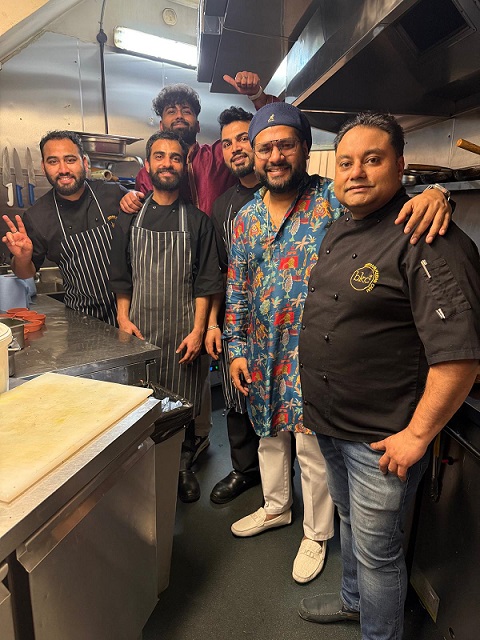
From the vibrant streets of Kolkata to the cutting-edge culinary scene of London, Subhajit Mitra’s journey is a testament to cultural authenticity, relentless passion, and global hospitality excellence. As a seasoned hotelier, restaurateur, and innovator, he is the visionary behind two of London’s most distinctive dining experiences—BKC (Biryani Kebab Chai) and Coupette.
Launched in 2022 after a year of meticulous planning, BKC was built on a solid foundation shaped by a team with over two decades of hospitality experience. Subhajit carefully assembled skilled chefs from India to ensure uncompromising quality and authenticity, believing that a restaurant’s success begins with its people. Despite the challenges of the post-Covid landscape, BKC has continued to thrive, driven by a clear vision and unwavering dedication to making its mark as a standout name in the market.
During Poila Boishakh, BKC hosted a sold-out Bengali tribute evening that left a lasting impression on guests. Reflecting on the event, Subhajit shared, “The atmosphere was incredible—we received overwhelmingly positive feedback, both in person and on social media. We captured guests’ reactions throughout the night, and the response was fantastic. While every dish held meaning, the Kosha Mangsho paired with Basanti Pulao was undoubtedly the star of the evening.”
The event also highlighted the deep-rooted culinary connection between Bengal and Awadh. “Awadh has long influenced Bengal’s food culture,” Subhajit explained. “BKC began with a focus on Awadhi cuisine, especially drawing from Lucknow. As a Bengali, I’ve always seen how Awadhi flavours have shaped our own traditions. Our biryani reflects that Bengali essence, and dishes like Galouti Kebab naturally fit into this shared heritage.”
Highlighting upcoming additions to BKC’s regular menu, Subhajit shared, “One of the new dishes we’re excited to introduce is the classic Bengali Fish Fry, which will officially launch with our May menu. While the Poila Boishakh menu was curated as a special celebration, it also serves as a source of inspiration for our evolving offerings. We’re committed to bringing more Bengali dishes especially those influenced by Awadhi flavours into our regular menu.”
He also spoke about BKC’s growth plans: “Our central kitchen currently supports our two outlets, and we’re set to expand with two more locations in the next six to eight months. We’re also enhancing our catering services, which gives us the flexibility to offer regional specialties and bespoke menus for private events, allowing guests to enjoy authentic Bengali flavours beyond the restaurant setting.”
Discussing why Bengali cuisine, despite its richness and complexity, hasn’t fully taken off in London, Subhajit explained, “Unlike many other regional cuisines, Bengali food requires a high level of specialised skill. Dishes like ‘Bhapa Ilish’ or ‘Chingri Maach’ are delicate and demand experience to execute properly. One of the biggest challenges here is finding chefs who can consistently deliver that authenticity. This lack of expertise is often why some restaurants, like Little Kolkata or Calcutta Street, have struggled to maintain consistent quality; it all comes down to skill and kitchen discipline.”
He added, “Talent is one of the biggest challenges in the restaurant industry. At BKC, we've addressed this by ensuring our executive chef is directly involved in the business. Our core team is not just staff, they're stakeholders in our journey. This sense of ownership has helped us create a culture of commitment and long-term vision. We've built our operations around strong foundations, bringing in the right people and making them integral to our success.”
Subhajit also pointed to the growing interest in regional Indian cuisines, particularly among non-South Asian diners. “From the start, our concept was designed with a diverse audience in mind. Given our location, we focused on appealing to non-Asian customers, and Bengali cuisine worked perfectly—it’s not overly spicy but full of nuanced aromas and balanced flavours. We’ve had no complaints about heat levels, which shows we struck the right chord. The first six months were critical for fine-tuning our flavour profile, and we’re confident we’ve created something accessible yet authentic.”