When the first wave of Covid-19 hit India, Pakistan, Bangladesh, and Sri Lanka, the British Asian Trust raised an appeal to see how it could support people, focused largely on migrant workers in India. The trust tried to figure out logistics in order to provide ration bags, direct cash transfers through its NGO partners on the ground.
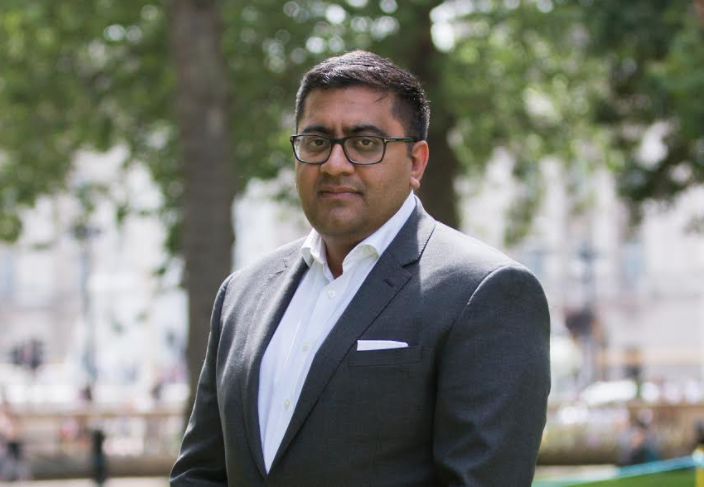
Speaking exclusively to Asian Voice over a Zoom call, Hitan Mehta, Executive Director of British Asian Trust told us that towards the end of April 2020, suddenly there was so much going on in their India team. He said, “We were basically starting to say, listen, this is getting pretty horrific. And by Wednesday or Thursday of that week, we were looking for data trying to understand what's going on on the ground, speaking to our NGO partners getting over you from people that we knew on the ground, we were starting to see people dropping out of meetings as well.”
Because the first wave was at its peak, there was something going on at home or some issue happening here and there with everyone.
Fateful Friday
Hitan further added, “Suddenly, we were starting to think, this is becoming a bit more of a problem. And then by the Friday, it was pretty obvious that this had become a real issue. We spent that weekend Saturday and Sunday gearing up for an appeal. Our team in India basically started to look for partners on the ground. One we understood the issue was around oxygen. The one thing that started to become apparent was that the Indian government had reached out to the UK Government and said, here's our list of requirements.
“By that Friday, the Indian government did sort of release a list of things that they required, but the NGO sector was also crying out for oxygen concentrators. And so we decided to partner with an organization called Was, based in India, recommended by other partners. Over that weekend, we rapidly did due diligence on the organization so that we were comfortable.
“We knew that the money would be used well, and we were starting to understand where the money was going to go with our price point for large concentrators, small concentrators, and we're very clear in our message here in the UK to the UK public that the British Asian trust had launched an emergency appeal for oxygen and became known as the India oxygen appeal, essentially.
“And we had very clearly identified that this is what we were going to do.”
Support from the Royals
Mentioning the stupendous and immediate support that the British Asian Trust received, Mehta told us, “As soon as we launched our Royal founding patron, His Royal Highness, Prince Wales put out a message for the people of India made his own contribution to the appeal to the trust himself. And then we found ourselves in a position that we would literally, you know, with images coming out of India, of people queuing at hospitals and everything else. The UK public started wanting to, you know, going listen, what can we do?”
Mehta mentioned that it wasn’t just the diaspora that came forward to help, and said that we all have “underestimated the power of the UK public.”
He and his colleagues did over 70-80 media interviews and started receiving calls from the UK public. Hitan said, “People that we'd never heard of, had seen the appeal on the media. And suddenly, they wanted to give some money. We then also had other media partners who suddenly also came out as well.”
Free Radio and TV advert slots
The managing director of Sunrise Radio rang him up and said that he could have 100 spots a day on the radio for free. Manish Tiwari who runs a company here called Here and Now helped in getting advert slots on TV 24. “He created a video advert for us at their own cost. And then they started playing that as well. So suddenly, I don't know where all these things were starting to happen. And people just coming together, and it didn't matter,” Hitan told the newsweekly.
Donations from non-Asian UK public; children donated pocket money
It was also the period of Ramadan. People raised money for the trust from mosques, temples and gurudwaras.
Interestingly, the Indian Cricket Supporters Union, essentially a fan base outside of India, is called the pirate army. They rang up Mehta and offered to help in raising money.
The most heartfelt contribution came from children. Mehta said, “Suddenly, we had children sending their pocket money, we had pensioners giving their pension funds. We had one chap from Scotland an English gentleman, a Scottish gentleman rang up and he spoke to us and he said, Listen, I nearly died of Covid here in the UK. I want to do something to help people there. I'm sending you 60,000 pounds. Right? I mean, you know, this has come from, like we didn't go out looking for these people. And then JK Rowling’s The Volant Trust got in touch and they made a six-figure contribution as well. So suddenly, you know, the one thing that we shouldn't underestimate is the generosity of the UK public.
Special mention for the High Commissions
Mehta also appreciated the collaboration between the two high commissioners between the United Kingdom and India. The British High Commissioner to Delhi, Alex Ellis, and Gaitri Issar Kumar, the High Commissioner at the London got together on a call.
Hitan said, “They got all the corporates, all the leaders from the community together on a call. I happened to be invited as well. There was this endorsement of the trust that if anyone was looking to find a way of donating their money, they could feel free to get in touch with the trust. They will help facilitate that.”
Companies like Accenture, Morgan Stanley, BlackRock, a lot of companies with Indian employees, both here in the UK and in India came forward to help.
Cutting through the worldwide shortage and search for concentrators, the British Asian Trust partnered with someone in India who already had concentrators coming into the country.
“At the end of all of this, we raised 5 million. We deployed it successfully 4835 concentrators, I think, is a total figure. We also built a couple of oxygen plants. Nick Kotecha based here in the UK, decided to build an oxygen plant for one of the hospitals.
“Every Indian in the United Kingdom knew one person, if it wasn't a family member, it was a friend, if it wasn't a friend, it was a friend of a friend, like you knew someone who had suffered as a result of all of this,” Mehta added.
A very humble and modest Mehta didn’t hesitate in mentioning that it wasn't just British Asian trust. He said that several international VIPs, a whole number of other organisations raised funds from here and deployed them successfully.
Undeterred help despite personal losses
The trust has teams in Mumbai and in Delhi. Mehta told us that unfortunately, during the crisis, Salim, who's their India director, lost his father during the crisis. “Saleem went around Mumbai, drove around for three-four places, but couldn't find oxygen canister to bring home, and unfortunately lost his father during the crisis. Even though they've had challenges at home, each one of them knew that there's a crisis in the country, how am I supposed to be helping at this stage? Let's not worry too much about the family. Let's get on with our job over here.”
The power of community
A gutted Mehta concluded that “People really did come together. And here in the UK, we have seen it from all levels, right. So whether it's politicians, whether it's business people, whether it's individual community members, grassroots Indians, you know, even Pakistani people ringing up, because, again, our work has been everywhere, people ringing up saying, Listen, I want to make a contribution, I want to help with drums on units a month where I should be giving already give some of my funds.
“It's been very heartening to see we also had lots of faith communities as well. So the Indian Jewish Association, which CB Patel actually is on was one of the founding members of they came together, they raised money
“I know of mandir vaccination centres where people of all communities, all faiths have turned up and got their vaccination.
“I went to a mosque to get mine. At the end of the day, I don't think over here, anyone cares. Everyone's like, listen, we just want to do this together and get out the other side.”
Despite all the efforts, Mehta thinks there is still much to be done.
He said, “These are the psychological scars left behind by all of these children who've been left without parents. We have children who are now trapped at home, you know, schools haven't been open for 18 months, where what are children doing? What is the long term range effect of all of this? And then livelihoods? How do people get back into economics? How do you get them back into a job? Because without that, you know, what are they supposed to do? So, again, I think those issues have not gone away in the very short term like I remember waking up every day going Listen, you know, I like to hear the report out of India in the morning you know, and I'm I get more and more depressed You know, when we cross 400,000 a day and remain there for a couple of days I was like, listen, this is mad. You know, there is no coming back from this right like and the biggest fear I think many of us were feeling from over here was if this goes into rural communities, it can rip rural communities apart within days.
“People came together, there is no doubt.”