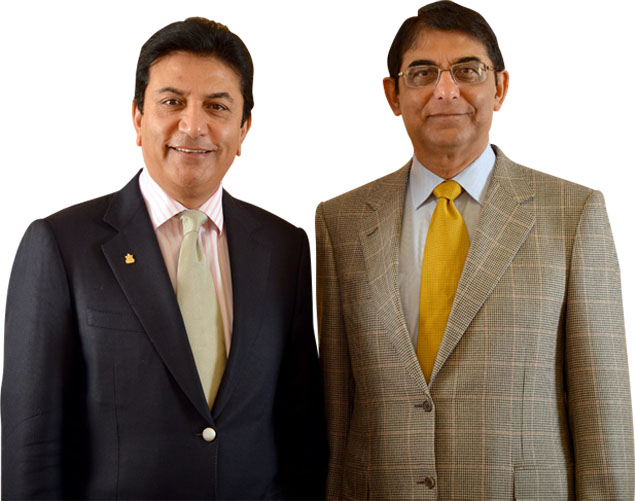
Recent attacks on businessmen Bhikhu and Vijay Patel in The Times, a publication of international repute and arguably at the forefront of responsible journalism, and the Daily Mail, raise serious concerns about the nature of tactics employed to publicise alleged errors in NHS medicine pricing. Unfortunately, and rather intriguingly, running parallel to the story is a blatant attempt to publicly vilify the reputation of brothers Bhikhu and Vijay Patel. One cannot but wonder, and sadly so, if this is driven by a rabid love for sensationalism.
The story should have been confined to Atnahs, a company set up in 2013 by Bhikhu and Vijay Patel who bought the rights to branded medicines and sold them as generic drugs. The process involves moving the drug within the NHS pricing policy from category C, with a cap on profit margins, to Category A where the company can set their own prices. All this was done within the NHS guidelines. The allegation that prices were increased to unreasonable levels by a number of companies, leading to huge losses to the NHS is now being investigated by authorities. Atnahs confirmed that it is not aware of any investigation into its business and that it acquires the rights to make medicines at a significant upfront cost and then spends significant money on ensuring the medicines are in line with the latest regulatory, medical and technical standards. These investigations are sure to run their course and the findings will be placed in the public domain once that is done.
However, some sections of the media seem to be in a great hurry to play the hangman even before the official verdict is delivered. Tracing the lives of Bhikhu and Vijay from when they first arrived in the UK as teenagers, till the current episode, there seems to be a covert attempt by sections of the media to tarnish their well established success stories.
The wealth created by Bhikhu and Vijay Patel did not begin in 2013; it spans 40 years. They only created Atnahs in late 2013, investing £50m to acquire a set of pharmaceutical assets in both the UK and internationally. The UK assets generated £18m revenue and the international assets £19m in 2015.
Vijay arrived in Britain from Kenya at the age of 16 with just £5, a handful of O-levels and a fierce determination to succeed in life. After graduating from the College of Pharmacy in Leicester, in 1975 Vijay opened his first pharmacy in Leigh-on-Sea, Essex. By 1982 he owned six shops and sales had doubled. Bhikhu, an architect by training, joined the company at this stage to give much-needed help to the greatly increased workload generated by such rapid growth. Over the next two decades the business grew organically into a chain of retail pharmacies. The Patel brothers disposed of the retail chain in 2001.
Whilst building the retail chain the Patel brothers also began to establish their property portfolio. They identified the value that could be built through owning property by buying their retail outlets and soon applied these principles to other real estate projects. They now own a property portfolio with a value of around £200m.
It was also whilst running the retail chain that they identified another opportunity: to buy in bulk to reduce costs; they soon went from supplying products to their own chain of pharmacies to supplying third parties. They established Waymade Healthcare in 1984, primarily to act as a pharmaceutical wholesaler and distributor.
By the 1990s the family had identified a huge opportunity to import pharmaceuticals from Europe in order to make cost savings and supply the market at more competitive prices. They overcame numerous regulatory hurdles and other challenges in order to set up a pioneering parallel imports business within Waymade. Waymade supplied a cross section of customers, including hospitals, retail pharmacies and other wholesalers.
In 2003, they established a separate international pharmaceutical company, Amdipharm, to focus on the acquisition of off-patent pharmaceutical assets from large pharmaceutical companies. Again the Patel brothers identified a gap in the market and focussed on products that were no longer core to other companies. Considerable capital expenditure was made by the family to acquire the portfolio of assets and to carry out the necessary regulatory and technical work to transfer the licences and to set up a distribution network globally. By 2012 the business had a turnover of £110m, of which 70% was derived from international sales. In October 2012, they sold Amdipharm to a private equity firm. The Patel brothers had no further management involvement from this point onwards.
In 2013, the Patels set up their family office, Waymade Capital, to manage their diversified interests and investments.
The Patel brothers have been involved in a number of charity projects over the years, many of which they actively participate in, including establishing water wells and medical camps and recently donating £1m to De Montfort University, Leicester, for students in financial need. They set up the charitable Shanta Foundation in 2013 and it funds UK and international projects with a focus on emergency shelter, education and healthcare.
What is presented above is a timeline of how the brothers, Bhikhu and Vijay Patel, built their business empire – completely above board. In contrast the mainstream media would like to have us think otherwise. Why?
Yes, Atnahs is a matter which is pending before the authorities. But the question is- does the Atnahs episode, whatever the outcome, tells the whole story?