The UK and India have finally signed the much anticipated and significant trade deal which delivers on the mission of growing economy, raising living standards, and putting money in people’s pockets in the UK. The Free Trade Agreement (FTA) negotiations that had started in January 2022, during the Tory government, has now been concluded on renewed terms by the Labour government, within one year of them taking office.
Business and Trade Secretary Jonathan Reynolds and Indian Commerce Minister Piyush Goyal held final talks in London last week after relaunching negotiations only two months ago. Negotiators across both sides have worked around the clock since February to get this deal done, which is the biggest and most economically significant bilateral trade deal the UK has done since leaving the EU, and the best deal India has ever agreed.
The deal is expected to increase bilateral trade by £25.5 billion, UK GDP by £4.8 billion and wages by £2.2 billion each year in the long run. At least 1.9 million people with Indian heritage call the UK their home and striking this deal will strengthen the vital partnership between our two democracies.
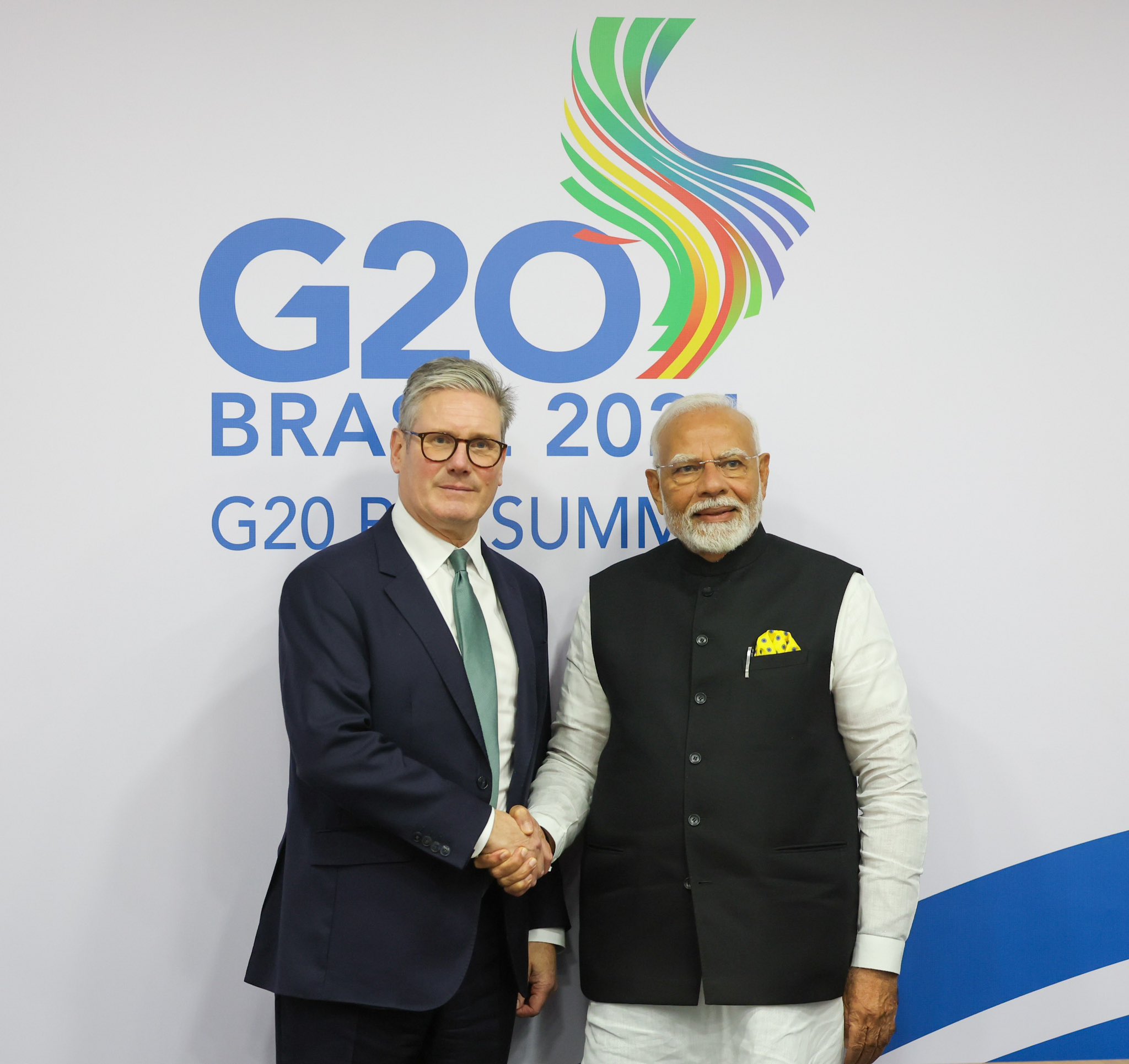
A Downing Street spokesperson said that Prime Minister Keir Starmer spoke to Indian Prime Minister Narendra Modi on Tuesday 6 May. The leaders began by celebrating the landmark UK-India Free Trade Agreement – a deal which will add billions to the UK economy, boost wages and deliver on Labour government’s Plan for Change.
The statement from No 10 further added: "In a huge economic win for the UK, delivering for working people and British businesses, Prime Minister Starmer underscored the need to go further and faster to get things done, to secure and renew our country. Through pragmatism and purpose, the leaders noted that this historic deal is the biggest the UK has done since leaving the EU, and the most ambitious India has ever done. Prime Minister Modi also thanked Prime Minister Starmer for his decisive leadership in getting the deal over the line.
"Turning to the terrorist attack in Jammu and Kashmir last month, Prime Minister Starmer reiterated his deep condolences at the tragic and senseless loss of life.
"Prime Minister Modi extended an invitation to India, which the Prime Minister was pleased to accept and said he looked forward to visiting India at the earliest opportunity."
Right after that, taking X, India’s Prime Minister Narendra Modi in a post said: “Delighted to speak with my friend PM Keir Starmer. In a historic milestone, India and the UK have successfully concluded an ambitious and mutually beneficial free trade agreement, along with a double contribution convention.
“These landmark agreements will further deepen our comprehensive strategic partnership, and catalyse trade, investment, growth, job creation, and innovation in both our economies. I look forward to welcoming PM Starmer to India soon.”
UK's Prime Minister Keir Starmer in a statement said, “We are now in a new era for trade and the economy. That means going further and faster to strengthen the UK’s economy, putting more money in working people’s pockets.
“Through this government’s stable and pragmatic leadership, the UK has become an attractive place to do business. Today we have agreed a landmark deal with India - one of the fastest growing economies in the world, which will grow the economy and deliver for British people and business.
“Strengthening our alliances and reducing trade barriers with economies around the world is part of our Plan for Change to deliver a stronger and more secure economy here at home.”
Business and Trade Secretary Jonathan Reynolds added, “This government’s number one mission is growing the economy as part of our Plan for Change so we can put more money in people’s pockets.
“By striking a new trade deal with the fastest-growing economy in the world, we are delivering billions for the UK economy and wages every year and unlocking growth in every corner of the country, from advanced manufacturing in the North East to whisky distilleries in Scotland.
“In times of global uncertainty, a pragmatic approach to global trade that provides businesses and consumers with stability is more important than ever.”
The Indian Minister for Commerce and Industry Piyush Goyal said, “This Agreement sets a new benchmark for equitable and ambitious trade between two large economies. It will benefit Indian farmers, fishermen, workers, MSMEs, startups and innovators. It brings us closer to our goal of becoming a global economic powerhouse. This FTA is not only about goods and services, but also about people, possibilities and prosperity. It protects our core interests while opening doors to India’s greater participation in global value chains”.
The Indian Commerce Secretary Sunil Barthwal emphasised that this FTA is a game changer and will set India further on the path of rapid economic growth and benefit India’s global integration. This is the most comprehensive free trade deal ever entered into by India and will be the gold standard for our future engagements.
UK Foreign Secretary David Lammy told Asian Voice, “India was one of the first countries I visited when I became Foreign Secretary and in March, I invited Minister Jaishankar to be my first guest at Chevening.
“Our relationship with India is going from strength to strength and today we have made history by agreeing a landmark new trade agreement that will build on our thriving trading relationship, already worth £43 billion annually.
“We have always said that driving growth is the number one mission in this Government’s Plan for Change. Today’s deal is evidence of that, creating prosperity for Brits and Indians alike for generations to come.”
Benefits for businesses of all sizes
Through this FTA, UK businesses will gain a competitive edge over international competitors when entering India’s enormous market as it gets even bigger, forecasted to become the third largest global economy within three years. Indian tariffs will be slashed, locking in reductions on 90% of tariff lines, with 85% of these becoming fully tariff-free within a decade.
This comprehensive and forward-looking agreement is the culmination of intense negotiations aimed at deepening trade and investment ties across a range of sectors, including goods, services and technology. It is designed to promote sustainable and inclusive economic growth, ensure resilient supply chains and generate high-quality employment in India.
In an unprecedented achievement, India has secured an exemption for Indian workers who are temporarily in the UK and their employers from paying social security contributions in the UK for a period of three years under the Double Contribution Convention. This will make Indian service providers significantly more competitive in the UK.
However, the NHS will not benefit from this trade deal, and the points-based immigration system remains unaffected.
With India agreeing to reduce tariffs on a whole host of products including whisky, medical devices, advanced machinery, and lamb, making UK exports more competitive, barriers to trading will be dropped. Based on 2022 trade alone, this amounts to India cutting tariffs worth over £400 million when the deal comes into force, which will more than double to around £900 million after 10 years. Whisky and gin tariffs will be halved from 150% to 75% before reducing to 40% by year ten of the deal, while automotive tariffs will go from over 100% to 10% under a quota. Other goods with reduced tariffs, which can open markets and make trade cheaper for businesses and Indian consumers, include cosmetics, aerospace, lamb, medical devices, salmon, electrical machinery, soft drinks, chocolate, and biscuits.
British shoppers could see cheaper prices and more choice on products including clothes, footwear, and food products including frozen prawns as UK liberalises tariffs. Exporting now is expected be easier than ever before as India agrees to release goods as quickly as possible after arrival at customs, work with the UK on one streamlined portal for trade and publish customs procedures and laws online in English.
In addition, new digital commitments will support electronic contracts and transactions. These changes could particularly support small and medium-sized businesses, making it easier for them to enter the Indian market. New commitments will also help protect consumers from spam texts from India, which could include requiring opt-out or prior consent. The deal has also secured India’s first ever chapters on anti-corruption, consumer protections, labour rights, gender, and development.
Key Highlights of the UK-India FTA:
- The FTA is a modern, comprehensive and landmark agreement which seeks to achieve deep economic integration along with trade liberalisation and tariff concessions.
- The FTA ensures comprehensive market access for goods, across all sectors, covering all of India’s export interests. India will gain from tariff elimination on about 99% of the tariff lines covering almost 100% of the trade value offering huge opportunities for increase in the bilateral trade between India and the UK.
- The FTA provides positive impact on manufacturing across labour and technology intensive sectors and opens up export opportunities for sectors such as textiles, marine products, leather, footwear, sports goods and toys, gems and jewellery and other important sectors such as engineering goods, auto parts and engines and organic chemicals. This will substantially improve Indian goods competitiveness in the UK vis-a-vis other countries.
- The FTA will have significant positive gains for employment in India.
- India will benefit from one of the most ambitious FTA commitment from the UK in Services such as IT/ITeS, financial services, professional services, other business services and educational services, opening up new opportunities and jobs.
- The FTA eases mobility for professionals including Contractual Service Suppliers; Business Visitors; Investors; Intra-Corporate Transferees; partners and dependent children of Intra-Corporate Transferees with right to work; and Independent Professionals like yoga instructors, musicians and chefs.
- Immense opportunities for talented and skilled Indian youth will open up in the UK which is a major global centre for digitally delivered services due to its strong financial and professional services sectors and advanced digital infrastructure.
- India has secured significant commitments on digitally delivered services for Indian service suppliers, specially in professional services such as architecture and engineering, computer related services and telecommunication services.
- The exemption for Indian workers who are temporarily in the UK and their employers from paying social security contributions in the UK for a period of three years under the Double Contribution Convention will lead to significant financial gains for the Indian service providers and enhance their competitiveness in the UK market that would create new job opportunities as well as benefit large number of Indians working in the UK.
- India has ensured that non-tariff barriers are suitably addressed to ensure free flow of goods and services and that they do not create unjustified restrictions to India’s exports.
- The FTA seeks to promote good regulatory practices and enhance transparency that are in sync with India’s own focus on domestic reforms to enhance the ease of doing business. Tariffs cut on the UK’s large and varied advanced manufacturing sectors from aerospace and automotive, electrical circuits, and high-end optical products.
- The clean energy industry will have brand new, unprecedented access to India’s vast procurement market as the country makes the switch to renewable energy and continues to see growing energy demand.
- Reduced tariffs on medical devices that take the UK’s complex supply chains into consideration will unleash new opportunities for the UK life sciences sector.
- World-class UK services sectors – who export just over £500 billion worldwide will now benefit from market certainty when trading into the growing Indian market.
Welcoming the 'transformational’ trade deal
Policy Chairman of the City of London Corporation, Chris Hayward, said: “India is a key strategic partner, and this deal reflects our shared ambition to deepen trade ties, boost investment, and build lasting collaboration. The City of London Corporation has long championed stronger UK-India relations, exemplified by the launch last year of the UK-India Infrastructure Financing Bridge which I co-chair in partnership with the Indian Government—leveraging our expertise in financing and scaling projects to help meet India’s growing infrastructure needs. I look forward to advancing this important work during my visit to India this autumn.”
Lord Mayor of London, Alastair King, said: “This deal marks a significant step forward in our historic and evolving partnership with one of the world’s most influential economies. This agreement will open up new doors for collaboration in innovation, green finance, and professional services—areas where the City of London is a global leader. Together, we can unlock opportunities that drive sustainable growth, create skilled jobs, and deliver shared prosperity for both our nations.”
Sanjiv Puri, President-CII said: “The CII commends the Government of India for finalising the landmark India-UK Free Trade Agreement, a major milestone achieved under the leadership of Prime Minister Narendra Modi.
"This transformative accord reflects our shared commitment to deepening economic ties, bolstering technology collaboration, diversifying global supply chains, and fostering a more business-friendly environment.
"Guided by the 2030 Roadmap, the timely agreement will help advance a comprehensive strategic partnership between India and the UK, steering bilateral trade towards the ambitious target of USD 100 billion by 2030.
"The CII and Indian Industry would collaborate with all stakeholders to leverage the vast opportunities this historic FTA presents, further stimulating growth, innovation, and prosperity in both nations.”
Keshav Murugesh, Chair CII UK India Business Forum (UK IBF) said: "The formal signing of the UK-India Free Trade Agreement is a landmark moment, solidifying the natural partnership between our two nations. This comprehensive agreement will immediately unlock substantial economic benefits, driving increased trade across goods, services, and, critically, technology. The formalised partnership in key areas like AI will be a catalyst for innovation, creating high-skilled jobs and cementing the UK and India's positions as global leaders in this transformative field. This agreement serves as a powerful confirmation that deep relationships and friendships between countries are ultimately forged through trade, education, travel, strong business partnerships, and a clear understanding of each other's cultures. This is indeed an exciting new chapter for the UK-India partnership."
Saif Malik, CEO, UK and Head of Coverage, UK, Standard Chartered said: “The UK-India Free Trade Agreement is a significant achievement. It will create new opportunities for UK and Indian businesses, enable greater access to one of the world’s largest and most dynamic markets, and drive growth and innovation across the UK-India corridor. We welcome this strong commitment to partnership and prosperity.”
Richard Heald, OBE, UK-India Business Council Chair said: “The UK India Business Council (UKIBC) welcomes the signing of the Free Trade Agreement between the United Kingdom and India. This marks a significant milestone in the deepening of economic and strategic ties between our two nations. “It matters when the fifth and sixth largest economies in the world reach a trade agreement. Such an agreement is illustrative of the positive momentum in the UK-India relationship, the commitment and ambition of both Governments, and the opportunities for greater trade, investment and collaboration between our countries.”
Rain Newton-Smith, Chief Executive, CBI, said: "India is one of the UK's most important and longstanding partners given our significant trading relationship and rich history. The CBI has always been highly supportive of efforts to sign a comprehensive trade deal with India, with businesses seeing myriad opportunities in the Indian market.
"In its mission for growth, it is right that the government seeks to strengthen and expand the UK's trading relationships with partners around the world. Today's announcement is a beacon of hope amidst the spectre of protectionism: free and fair trade will always be critical for kickstarting growth and boosting productivity.
"The UK Government should be commended for its commitment to delivering a trade deal which safeguards our national interests, protects high standards, and delivers market access for UK firms. The CBI looks forward to working with the government to ensure firms are able to make the most of this deal going forward.”
Anuj J Chande OBE, Corporate Finance Partner & Head South Asia Business Group, Grant Thornton UK Advisory & Tax LLP, commented: “This agreement marks a seminal moment in the trading history of both the UK and India. It really opens the way for huge strides forward in our bilateral trade. At a time of great change and uncertainty in international trade this announcement is rare, and very welcome, good news”.
“It is great news that the negotiations have been concluded, and resolution reached on some key issues such as visas, social security contributions, tariffs on UK goods including whisky and cars. Given the historic economic and political ties between the two countries, it is particularly pleasing that we have concluded on negotiations before the US , with whom India is also negotiating an FTA .
“And against the backdrop of the tariff uncertainty and gloom caused by the Trump administration, this is a shining light and points the way for how the rest of the world outside the US may trade with each other going forward.
“Notably, the negotiations which have lasted just over 3 years is relatively short period compared to the previous India /EU negotiations which UK was part of which lasted over 13 years and never concluded. The agreement should be a big boost to trade between the two countries which is at a modest level (last year trade between the UK and India totalled £41bn)The government has said the deal would boost that trade by an additional £25.5bn a year by 2040. This will give UK SME’s S and corporates much better access to the fastest growing economy and an increasing middle-class population of 300m plus.
“This is also great news also for the City. London remains a major financial centre and can offer access to finance to help India fund its economic growth . Having worked in this corridor for 34 years, since the liberalisation of the Indian economy, for us this marks a major milestone in our India-UK journey.”
Markus Kessler, Managing Director, UPS UK, Ireland and Nordics said: “We welcome the announcement of this important agreement between two countries that are both vital markets in our global network. We look forward to continuing to help businesses of all sizes across the UK reach new customers in one of the world’s most populous and dynamic countries.”