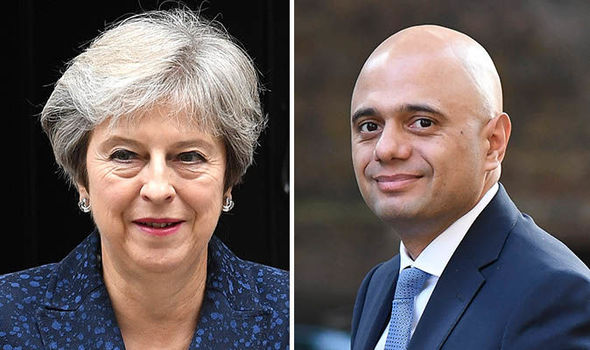
Theresa May's cabinet yesterday agreed a post-Brexit visa system based on the skills and wealth of migrants - but with no preferential access for EU nationals. Ministers backed a plan put forward by Sajid Javid, the home secretary, which is now expected to be among the key announcements at next week's Conservative Party conference.
Skilled workers will be favoured over unskilled ones, as will those from countries that have struck a free trade deal with the UK. This will include EU nationals but could be extended to Americans, Canadians and others.
In a boost for Mrs May, no major concerns were raised by ministers about how the divorce talks are progressing, despite hard-Brexiteers ramping up pressure on her to back a Canada-style free trade deal.
The only person who referred to a Canada-style deal was Prime Minister herself, The Guardian reported. She also said some EU leaders were being more helpful than others behind the scenes, but did not say who.
Cabinet sources said no ministers had spoken out against her Chequers plan for Brexit - despite EU leaders humiliatingly rejecting the blueprint at a summit last week.
The meeting will bring an element of relief for the under-pressure leader, who goes to New York on Tuesday for a UN meeting before heading to the Conservative Party Conference, where the immigration plan is expected to be unveiled.
Sources told MailOnline Chancellor Philip Hammond raised concerns about the speed with which the flow of migrants from the EU would be stemmed - but the view of the Mr Javid and Mrs May carried the argument.
A Downing Street spokeswoman said Cabinet had been briefed by Migration Advisory Committee (MAC) chairman Professor Alan Manning on its recent report on ties to the EU.
'Cabinet was told by Professor Manning that the MAC was recommending that, in the post-Brexit immigration system, EEA and non-EEA nationals should be part of one universal system,' the spokeswoman said.
A key conclusion was that high skilled migration is of greater economic benefit than lower skilled migration, and as such the MAC recommended that the new system should make it easier for higher skilled than lower skilled workers to come to the UK.
Earlier this month the MAC concluded there should be 'no preference' for nationals from the bloc under a new immigration system. This will reassure those who want a level playing field for immigrants from the Commonwealth and elsewhere.
But it insisted high skilled workers should still be welcomed to Britain - and it should be easier for them to get in than those with lower skills. Net inflows from the EU have been running at 86,000 a year - but that figure is down from close to 200,000 before the referendum in 2016.
The premier told ministers that there was 'no future relationship that will prevent a hard border between Ireland and Northern Ireland, maintain the constitutional integrity of the UK and respect the referendum result that does not include frictionless trade', according to the spokeswoman.