The DH certainly dropped a bombshell just before Christmas when it released a letter addressed to Sue Sharpe, the CEO of Pharmaceutical Services Negotiating Committee. This letter was given to her in an open meeting in the presence of other pharmacy representatives from organisations such as Pharmacy Voice, AIMp, CCA, NPA, Royal Pharmaceutical Society, General Pharmaceutical Council and surprisingly the Association of Pharmacy Technicians UK.
In my forty years of pharmacy this was unprecedented. In the past all negotiations with the PSNC would have been behind closed doors. Let me share with you what I personally read in this letter. At first it appears that the DH intention is to be to divide and rule pharmacy. But I believe it is more than that. The letter does call for a consultation on a series of proposals for implementation by October 1st this year. I cast my mind back to October 2007 where after months of negotiation with the PSNC, the DH announced cuts of £480m from Category M and pharmacy had a notice period of less than a month to react. This time at least we have a 9 months head start before we feel the financial pinch.
The second thing that surprised me was that this letter was not signed by the head of pharmacy at the DH but by Keith Ridge our Chief Pharmaceutical Officer, but more surprisingly co-signed by Will Cavendish, the Director General Innovations Growth & Technology at the Department of Health. Personally I had not heard of Will Cavendish before but do know now that he is an Oxford graduated economist that has spent time in policy implementation at the Cabinet Office before taking up the current role at the DH. Therefore it is essential that his understanding of pharmacy is fully brought up to speed. No doubt he is responsible for the implementation of this programme.
I have always believed that the future of pharmacy is clinical, digital and remote and so the content of the letter was not a surprise. However, the fact the DH proposes to do everything at the same time is of a big concern.
So let's examine the core content of this three-page letter - and these are
Clinical - the DH wishes pharmacy to make greater use of community pharmacy and pharmacists in prevention of ill health; support for healthy living, support for self care for minor ailments and long term conditions, medication review in Care Homes and as part of a more integrated local care model. After years of arguing that pharmacy is under-utilised, this would normally have been received with open arms as a great piece of news. After all why undergo four years of pharmacy education and a year of pre-registration training to simply dispense prescriptions. At a period when there is a shortage of doctors and nurses and abundant pharmacists, it is the time for pharmacy to step up and play its rightful role of helping the NHS.
If this was the only proposal then I don't expect there would be any objection from single pharmacy owner as it's in the long term interest of pharmacy as a whole.
In a period when the DH is looking for a £22 billion saving in the NHS, this proposal of making better utilisation of pharmacy to help take pressure off the GPs and the hospital would have had every pharmacy owners' full support.
In this letter the DH announced a 6% reduction in pharmacy remuneration in the year April 2016 to March 2017.
The intention being that the whole 6% totalling £170m would be taken out over 6 months from beginning October 2016.
The letter went on to say that this was the maximum they would take out in the year, implying there would be more to follow.
So let’s examine how much more is likely to be taken out. The NHS target of £22 billion saving announced by Simon Stevens in the NHS forward plan was in a 5-year plan and hence it’s safe to say that all the funds they intend to take out from pharmacy would be within 5 years.
The clue lies in the rest of the 3-page letter. The letter goes on to say that all establishment payment totalling £25,000 per pharmacy is to be phased out. With over 11,500 pharmacies this amount totals to £270 million. So there is every likelihood of at least another £80 million will be withdrawn from pharmacy over the next 5 years, bearing in mind £20 million is being put back for integration funds. On average that will work out at approximately £15,000 per pharmacy going up to £25,000. This reduction in establishment payment will affect every single pharmacy in England.
Furthermore the DH has started wider consultation to look at various other elements of the existing pharmacy contract. The DH is questioning whether patients with long term stable chronic conditions such as blood pressure, etc. need to have a prescription every month or can they be prescribed 3 months supply at a time. They may well need to balance this with drug waste. This would lead to freeing up doctors' time but unfortunately also means that there will be a reduction in the number of prescriptions dispensed by pharmacy and hence reduced profits.
The other recommendation for reducing pharmacy burden and reducing the cost of dispensing is to change the law by October 2016 so as to enable pharmacy to send their prescriptions electronically to a central dispensing hub, possibly operated by full line wholesalers. These hubs are fully automated warehouses where dispensing is done by using robotics. Current legislations do not allow pharmacy to send prescriptions to another pharmacy belonging to another legal entity to dispense.
The fourth major point for consultation is better utilisation of digital technology. They intend to change the law to make it easy for patients to have their prescriptions electronically to online pharmacies directly from doctors surgery and hence bypass the bricks and mortar pharmacy situated next to doctors surgery. All in all this is a fundamental threat to community pharmacy as we see it. The minister of pharmacy was quoted as saying that as many as 3,000 pharmacies may possibly close if these recommendations are all implemented. Never in history has a pharmacy minister implied about pharmacy closures, so the threat needs to be seriously taken by the pharmacy sector.
All the pharmacy bodies and the whole profession have united to fight back and many are confident that some of these proposals may be watered down, and some revisited.
I am hopeful that once the DH realises that pharmacy does far more for patient care than is obvious to the DH, they may not be so keen to throw out the baby with the bath water. I know for a fact that Day Lewis spends £2m a year on deliveries and Lloyds spend £20m and since every single pharmacy in the country delivers free of charge to the patients it is fair to estimate the total cost of deliveries to be in the region of £100 million.
I personally do not believe that the £170m and the further sums intended to be taken out will not be taken out. I am a non-executive director of an NHS hospital and I have seen how much financial pressures have been brought onto them to save £22billion. What I hope is that the DH sees pharmacy as an investment and commissions further services in community pharmacy to help keep people stay healthy and out of hospitals and GP surgeries. I have no doubt that this investment will pay dividends. Hospital A&E cannot cope and I sincerely believe, that one severe flu epidemic could cause numerous amounts of deaths. I question the rationale of having fewer brick and mortar pharmacies for patients to visit in an emergency when they are unable to get an appointment in GP surgeries and the hospitals may not be able to cope. Many A&E are struggling to meet the waiting time target as it is.
The DH also recently announced that GP surgeries would get additional funding to employ pharmacists in GP surgeries. The government has at the same time proposed in this letter that an investment fund of £20 million will be set up and this figure will go over the next 5 years. We should ensure that all of this money does not go to GP surgery pharmacists alone and that hopefully a fair amount of it will end up back in community pharmacy. I do believe that there is a business case for community pharmacy to provide pharmacy cover to GP surgeries to relieve pressure on GPs and also visiting nursing homes where a lot of the elderly patients, on a high amount of medication, may not be taking them correctly.
Personally, I believe that it would have been better to have had community pharmacy provide this service to GP practices as we would have done it, not only far cheaper, but patients would have a choice to go to the surgery or to a pharmacy for this service for a follow up. Why clutter up a GP practice when there is a better choice. Furthermore, more GP practices can buy as much or as little “pharmacists” time as they want. Some GP practices may not be keen to employ full time pharmacist. What happens when the pharmacist goes sick or is on holiday, or indeed leaves. Whereas on the other hand if Community Pharmacy was to provide the service, we would guarantee full cover and leave the option open for the patient to pop into the pharmacy for follow on visits.
I have always maintained that the future is, clinical, digital & remote. In conclusion pharmacy is getting recognised as an integral part of the NHS and will need to be more clinical in the future, but needs to step up and embrace it.
The days of relying on income from just procurement and dispensing are numbered. Pharmacy will have to carry out far more services such as flu vaccinations, diabetes screening, health checks, weight management, medication advice, domiciliary visits and other minor ailments and much more. Patients should not be visiting GPs and cluttering the A&E for these services and minor ailments. Pharmacy can do far more, but with limited resources in terms of manpower and NHS income, this change will not be easy to manage for many pharmacy owners.
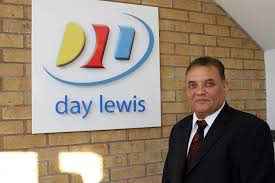
At Day Lewis we own 275 pharmacies and our reduction of revenue in the first year alone is £3.4 million and possibly rising to £5 million in the fifth year. I cannot see how we can recover from this loss of income and at the same time be expected to invest for the future. But not doing is not an option as we do not wish to stand still and therefore at Day Lewis we will be looking for further efficiency gains including reduction in non-people cost and hopefully driving synergies with other pharmacy chains. Tinkering with current models will not be enough and as the DH embarks on making drastic changes. We intend to be innovative and look for innovative ways of bringing back sustainable income. We shall be investing more money in training of our pharmacists and technicians as we expect them to carry out more services both in the NHS and in private sector.
Digital: As consumer shopping habits change we will invest in technology that will enable more on-line interfacing with our patients. We are currently in the final stages of launching an interactive website focused more on managing repeat prescriptions and providing other essential services, as well as offering a range of products on a click and collect basis from our pharmacies. These will be mainly products and ranges that we are not able to display in our pharmacies. EPS can be a great threat as it takes away the advantage of having a pharmacy adjoining the health centre. Digitally capturing these patients and enabling them to electronically manage their own repeat prescription is important.
I believe that we are in for a very bumpy ride for the next 5 years and the journey reminds me of my white water rafting experience last Christmas in Costa Rica. But I do believe in pharmacy and that in the long term it will be smooth sailing and reflecting back on the exhilaration of what we have gone through and where we are going. However, if the DH gets it wrong then pharmacy and patients may not come out too well. It is not what the DH intends to do that concerns me, it is the how. The DH should listen to the pharmacy sector, and ensure that they do not have unintended consequences whilst they are pulling so many levers at the same time that may leave the pharmacy landscape beyond recognition.
Pharmacy is now like a pool full of crocodiles with a ladder with 11,500 pharmacies clinging on to them. The ladder is slowly going down into the water. Those who do not innovate and change will remain at the bottom of the ladder and are likely to be eaten up by the crocodiles. The fittest will be at the upper end and will remain safe.
So let's turn to pharmacy as a career. It is not all doom and gloom for the non pharmacy owners. With the shortage of other health care professionals pharmacists are in more demand. I believe a day will come when many pharmacists will be working in GP surgeries and A&E. The role of pharmacists will be widened and not just on dispensing.
The future for pharmacists is bright as they will be more clinicians than being simply businessmen.