With Thursday’s all-important referendum dominating news across the continent, the British public is being made painstakingly aware of the enormity of the consequences. Leave, and the nation will be plunged into immediate political chaos, face decades of economic turmoil and potentially instigate the collapse of the European ideal. Remain, and millions will feel disenfranchised and terrified over an impending migrant crisis that could threaten the nation’s way of life.
The hyperbole of the rhetoric is startling. The Leave campaign have abused the politics of fear in a fundamentally irresponsible manner, with race baiting and mud slinging becoming the staple of most speeches. Despite the murder of MP Jo Cox, Nigel Farage and other Leave campaign leaders have refused to ratchet down the incendiary tone. The Remain side has been forced to combat the aggressive, negative campaign with their own negative and defensive tactics. Both David Cameron and BAME MPs have been forced to discuss negative, rather than positive issues.
James O’Brien spoke out on the LBC radio waves following the murder of Jo Cox, attempting to expose what he deemed to be incendiary “political debate” pushing the public “to the brink of murder”. The point he makes is abundantly clear and utterly valid. He provides overwhelming evidence of media coverage bombarding us every minute of every day with claims that our “very existence is under siege” and that “we’ve got no chance of protecting ourselves” unless we “reclaim our country”. O’Brien slams the politicisation and securitisation of innocent people - most notably incoming migrants from the Muslim world - that incites irrational and emotional responses from the wider public.
The Brexiteer camp is most at fault for the vicious rhetoric. Anti-migrant propaganda has been rampant throughout the campaign, tarnishing the wider issues of the debate. Nigel Farage’s recent endorsement of the “Breaking Point” poster is clearly a racially-motivated, targeted attack designed to turn man against man and create racial animosity. Baroness Sayeeda Warsi described it as part of a “nudge-nudge, wink-wink xenophobic racist campaign [that] may be politically savvy or useful in the short term but it causes long-term damage to communities”. So upsetting was the poster that she has officially left the Leave campaign. Employment minister and Leave campaigner Priti Patel has also denounced the poster describing it as “wrong, wrong, wrong”. Thomas Mair (the deranged murderer of Jo Cox), while clearly an extreme example, has claimed he was inspired to carry out the attack over fears created by race-baiting on the part of the Leave campaign - naming himself in court as “Death to traitors, freedom for Britain”.
But migrants are not the only intended targets of the Vote Leave campaign. The Spectator recently released it’s comprehensive anti-EU manifesto article, claiming that the current incarnation of the Union “represents…the Habsburg Empire in its dying days” and has turned in to a “bloated bureaucracy that has outgrown all usefulness”. But perhaps most inflammatory is its claim that the EU represents a “globalised elite telling the governed what to think”, implying that the EU is an Orwellian-style global governing body that is attempting remove the free will of millions, thus turning them in to mindless zombies.
This racially-charged rhetoric has forced the Remain campaign to engage in a campaign that is less issue-orientated and more emotional in character - Chancellor George Osborne has called for more reason and fact and fewer “baseless assertions”. David Cameron has accused the other side of creating a “hostile and intolerant climate” by focusing on the migration issue while blaming Nigel Farage of “taking Britain backwards, dividing rather than uniting and questioning the motives of anyone who takes a different view”. In a recent FT interview, former PM John Major described the entire debate as “a battle between economics and emotion”. Commenting on the unpleasant nature of the referendum campaign the FT has warned of a new wave of “nationalist violence” incited by the “ugly mood” created by the “focus on immigration”.
BAME MPs in the UK have also been forced to comment and defend minority groups from bigotry. In a recent piece on the Guardian website, BAME MPs have warned that the economic consequences of leaving “would hot minority communities the hardest”. They went on to state that a victory for Nigel Farage and the Tory right would give momentum to those who seek to scrap anti-discrimination laws and workers’ rights, setting back the progress of ethnic minority communities by “generations”. Labour MP Chuka Umunna wrote in a column for Asian Voice recently that not only is “Britain better off in Europe” but it is also “good for other Commonwealth countries as well”. Finally, Rushanara Ali - a former shadow minister for education - claimed that “Nigel Farage is no friend of Britain’s ethnic minority communities”.
So what does this all mean? What is the issue and end-product of all this vitriolic fear-mongering? Our great fear is that this will lead to an unbridgeable divide, an irreparable split. Regardless of the outcome of this referendum, advocates and supporters of both sides will be left scarred and bitterly disappointed. There is no doubt there will be a prolonged and protracted battle after the result. If we believe current polling data, this vote will be won by a minimal margin (the FT’s most recent poll on Monday morning had the two sides tied at 44/44, while the most recent YouGov poll has Remain ahead 44/43). This will create a massive faction of the populous that will be unhappy with the outcome. Half the nation will feel aggrieved. We face the certainty that, after being inspired by brutal and inflammatory rhetoric, the defeated side will lash out, further tearing apart an already divided nation.
===
Asian Voice Readers' Poll
In an independent study by Asian Voice, 43.4% people said they would want UK to stay within Europe, as opposed to 33.84% who would want to leave EU and 22.75% who have not decided.
===
British Indian councillors unite publicly
71 British Indian councillors from across the UK and across the political spectrum have united to publicly pledge their support for the cross-party 'British Indians for IN' campaign and to make the case for the UK remaining a member of the European Union.
Councillors spanning the whole of UK believe that being a member of the European Union significantly benefits the country not just economically, but in terms of security, trade and our presence globally, and are actively campaigning in their local areas to secure the 'Remain' vote on the 23rd of June.
Areas represented by the supportive councillors include wards in England, Wales and Scotland, and councillors represent the Conservative, Labour, and Liberal Democrat parties respectively.
Councillor Geetha Morla, from Milton Keynes, said that her decision was an easy one: “For me, there is no question about whether or not Britain should remain a member of the EU. The European single market is by far our biggest trading partner, providing jobs and ensuring lower prices in our shops. Our membership also means we have a seat at the table to determine the rules of doing business and that we can collaborate on issues such as the environment. By contrast, a vote for Brexit is a leap in the dark and a huge gamble on an uncertain future.”
Balwant Chadha, councillor for Cumbernauld North in North Lanarkshire and the country's first Sikh Justice of the Peace, told the campaign: “I strongly believe that Britain is in a much stronger position remaining in E.U and safer not only economically and culturally, but is able to lead people in European countries to improve their quality of life.”
Sandwell councillor Preet Gill made the historical case for Britain remaining, stating: “Britain has a history of engaging with the world and standing up on matters of international laws against country's. With its rich diversity it cannot and should not be a country that becomes insular but continues to be outward facing and addressing matters like immigration, terrorism and the economy with the EU as together, we are stronger and better.”
Leicester City Councillor Vijay Singh Riyait believes that Britain's membership of the EU is critical to our long-term prospects, commenting: “Britain's future economic and social well being relies on us being an integral part of the EU and working to tackle the big issues facing us all such as climate change, migration and security with our Europeans friends.”
Councillor Kamaljit Singh Chana, from Harrow Council, said the choice for him is simple: “I want a seat at the table whereby I can effectively contribute to an issue, influence and set strategy that will affect my country.”
Looking to the future, Councillor Mukesh Malhotra from Hounslow said that his vote to remain would be a vote for his children and grandchildren: “Our membership of EU supports jobs and investment and helps deliver social justice. I stay remain for the benefit of my children & grandson in the future.”
Conservative MP Alok Sharma, who is co-ordinating the 'British Indians for IN' campaign, commented: “There are around 1.2 million British Indians voters across the UK and our votes could be absolutely crucial in determining the outcome of the EU referendum on 23 June. It is clear that very many people and business leaders within the British Indian community agree that voting to remain in the UK is the right choice for our country and our community. Please make sure your vote counts as we are better off and safer as member of the EU.”
A significant majority of councillors contacted have been in favour of Britain remaining in the European Union. To see the full list of supporting councillors, go to www.asian-voice.com.
What will happen if Britain votes for a Brexit?
According to The Hindu, key impact would be on UK laws. According to a 2010 House of Commons Library study, around 17% of U.K.’s laws are the result of its membership in the EU. Much of this has to do with agriculture, fishing, environmental policies, and trade.
For example, British farmers have to meet the EU standards of quality control to export to member countries. EU’s agriculture policy lays down the law on GM crops, animal husbandry and even how much of his field a farmer must leave fallow to get subsidies.
Another example is the fishing policy. There is a 200-mile fishing zone around the UK coastline. Under EU law, UK fishermen can fish only up to a specific quota and fishing fleets from other EU countries are given equal access to the zone. The UK boats get an exclusive 12-mile zone. Now if the UK left the EU, the 200-mile zone will be back in its control though it may have to have individual agreements with countries that want to fish there.
With agriculture, British farmers will lose the EU subsidies. But the British government will probably help out there. The other areas where the EU laws reign are in the fields of criminal justice, data protection, immigration and broadcasting, human rights among others. If the Brexit happens, then Britain will have to negotiate with the EU on a case-by-case basis.
A 'no' result might also take a toll the country's political scenario, given that the Prime Minister himself is a EU supporter.
Should India worry about it?
Though India has refrained from officially commenting on the crucial June 23 referendum, it remains deeply vested in the outcome. The Hindu point out that the first concerns the welfare of a nearly three-million strong diaspora of Indian-origin U.K. citizens, while the second concerns the interests of a large moving population of Indians who come to Britain ever year as tourists, business people, professionals, students, spouses, parents and relatives.
There are 800 Indian companies in the UK — more than the combined number in the rest of Europe. Britain's exit from EU may affect Indian companies’ appetite for investing in the U.K., particularly those seeking access to the European market.
======
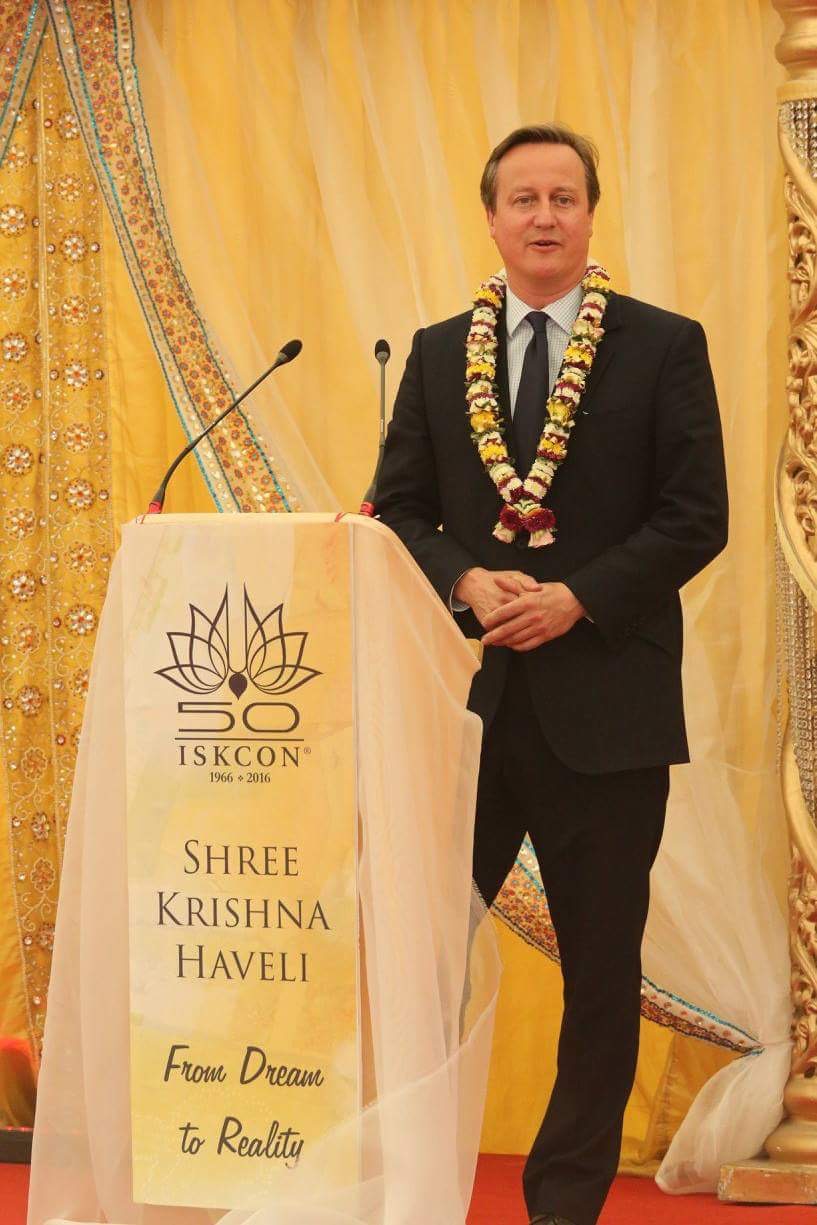
Prime Minister David Cameron and Chancellor George Osborne speak about the importance of commonwealth voters and urge the community to vote Remain.
=====
Tribute: Jo Cox, an MP with a common touch
========