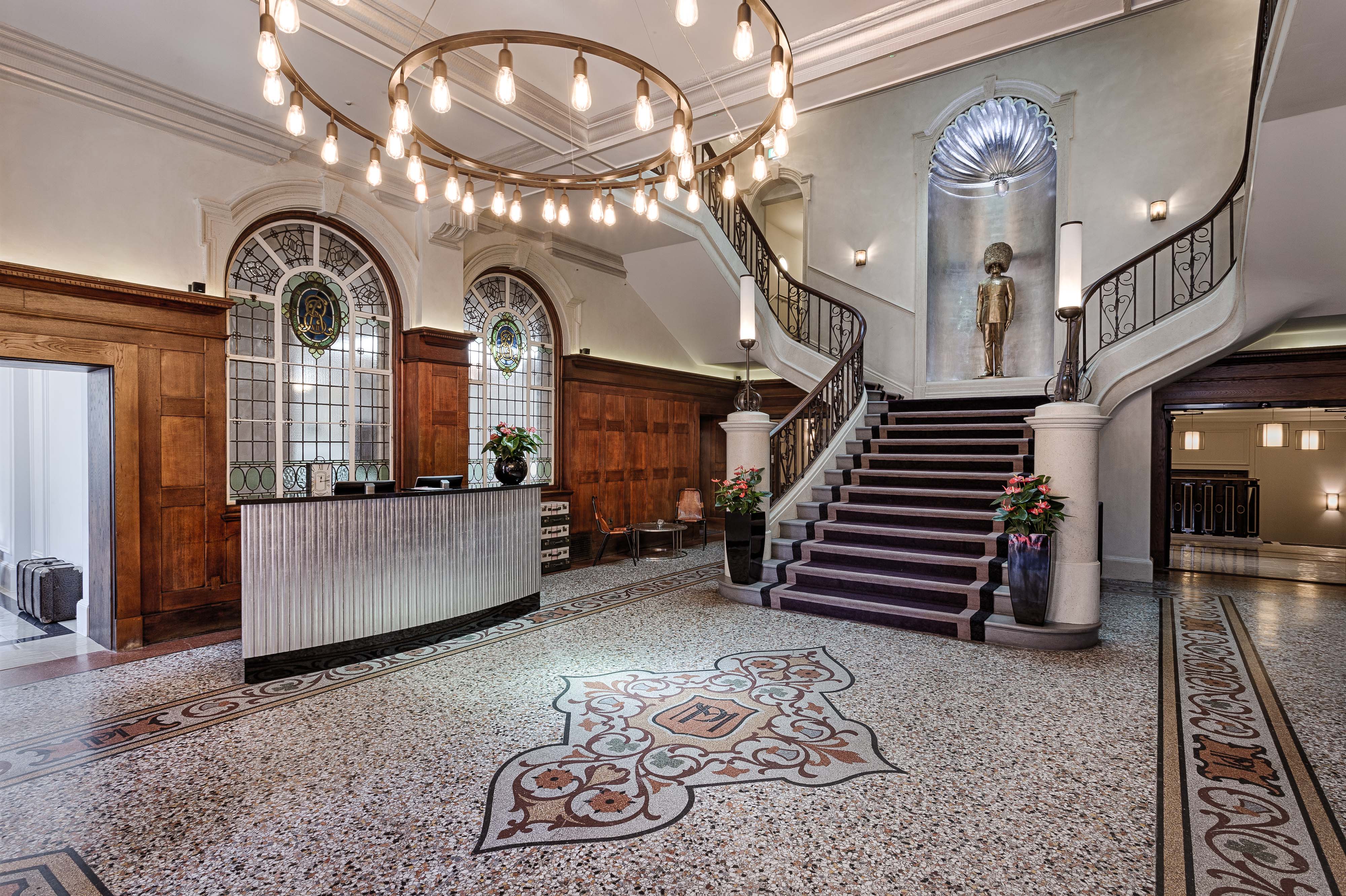
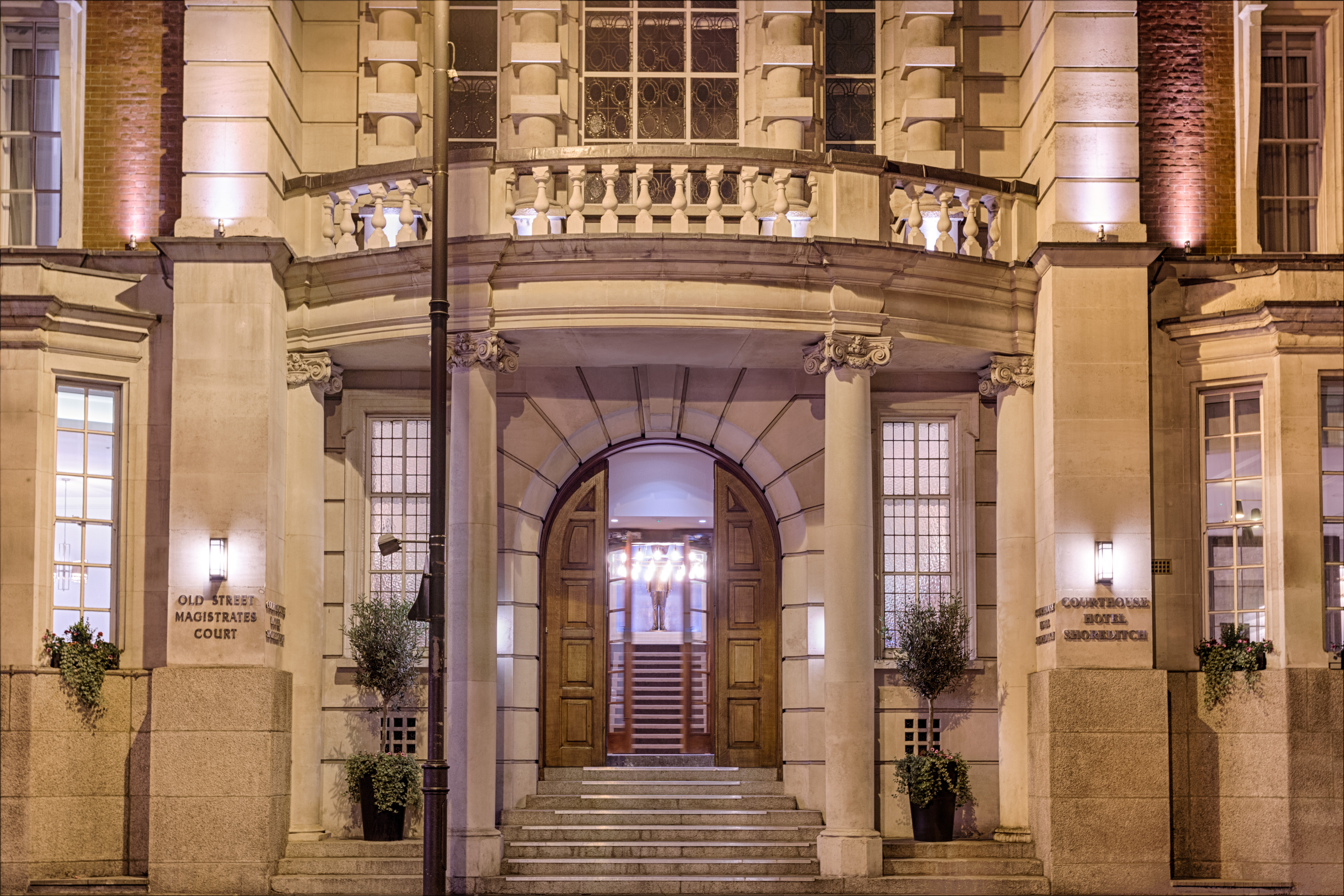
Hotelier Joginder Sanger's new swanky Courthouse hotel is a building with class, grandeur and elegance, right in the heart of Shoreditch. It has 128 rooms, 11 event spaces holding up to 800 people, 196-seat screening room, 2-lane bowling alley, luxurious spa with pool and fitness suite, a unique 'historical' restaurant concept and 3 bars, including a rooftop one.
Joginder Sanger, one of the most successful Indian entrepreneurs in the UK, owns a few prestigious hotels in London which include the new Courthouse hotel in Shoreditch, The Bentley in Kensington, The Washington in Mayfair, Courthouse Doubletree by Hilton in West End and the recently acquired Palms Hotel, various properties, travel agencies and a life insurance company.
The Courthouse Hotel in Shoreditch is steeped in history, including being in an archaeological priority zone. Shoreditch, as an area, is famed for its buzzing nightlife and eccentric charm and this new hotel blends the grandeur of a Grade II listed Baroque-styled building, with a laid-back personalised service, forming a perfect alchemy.
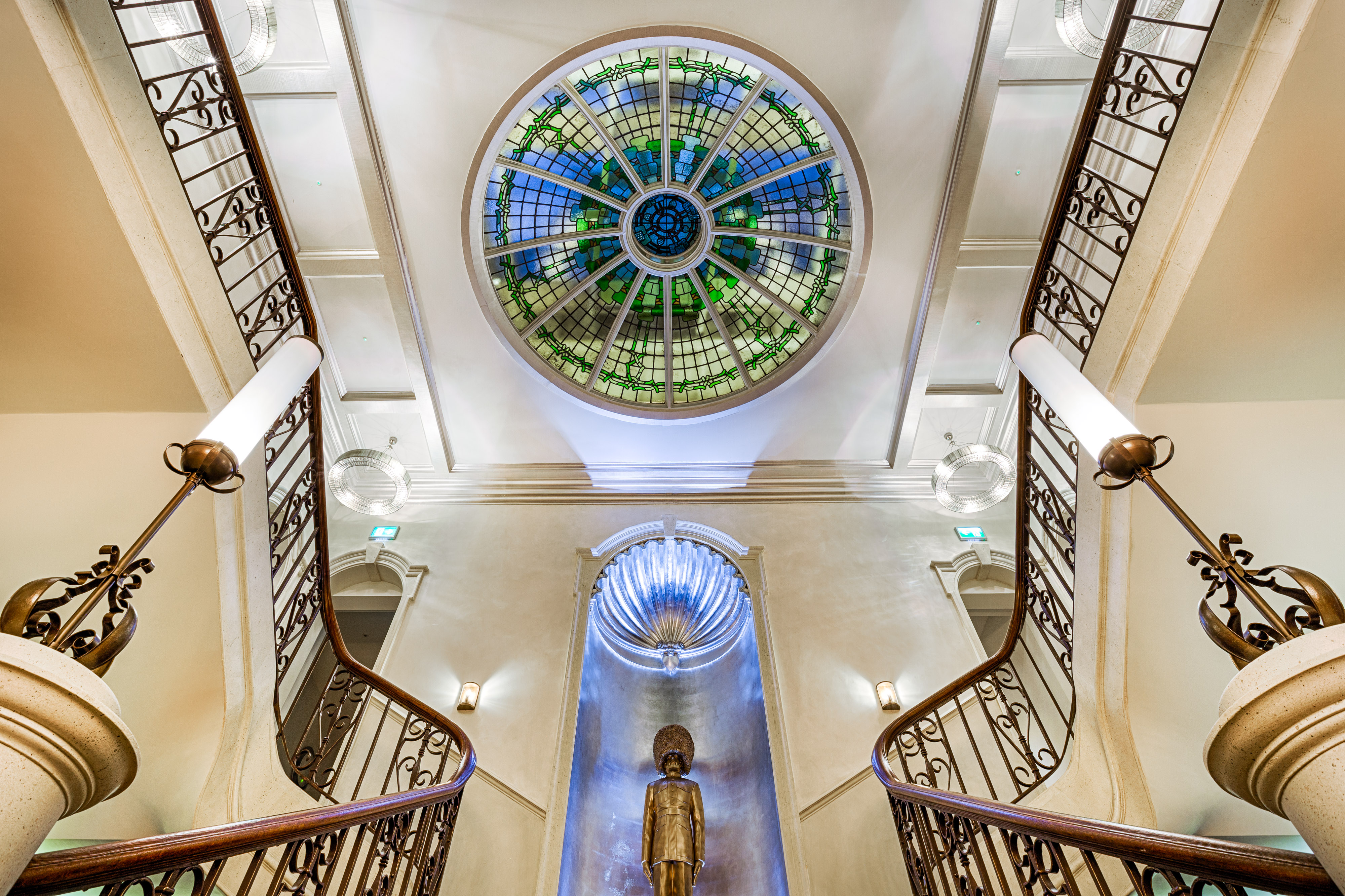
The Shoreditch Courthouse hotel used to be the Old Street Magistrate’s Court and Police Station in Shoreditch Conservation Area, designated by the London Borough of Hackney. The unique building now offers a retreat from the hustle and bustle of the city into a world of comfort and well-being and retains the original entrance doors, floors, stained glass and wooden cladding.
John Dixon Butler (1861–1920) had been appointed Principal Architect and Surveyor to the
Metropolitan Police in 1895, and it has been noted that he was responsible for designing many of the police stations and court houses in London, including this one. The architectural influence of John Butler is mostly reminiscent to that of the Edwardian Baroque style.
Old Street Police Court was one of the original public offices opened in 1792. It was situated in Worship Street, Shoreditch. Part of its district was taken in 1889 to form the North London Police District. The court was moved to Finsbury Square in 1902 until a new building was opened in Old Street in 1906. The name of the court was then changed to Old Street.
The term 'Police Court' was found to be misleading. It gave the impression that the Metropolitan Police controlled and administered the courts, which was never the case. The word 'police' was being used in its original meaning of 'pertaining to civil administration', 'regulating', etc. In April 1965 (following the Administration of Justice Act 1964) the London Police Courts with their stipendiary magistrates were integrated with the lay magistrates to form the modern Inner London Magistrates' Courts.
The magistrates court left the building in about 1999 and the police in about 2008.
In and around the building back in the day
Constructed in 1903-05 by architect, John Dixon Butler, the eastern half of the building contained the police station, which included accommodation for a married inspector on the 1st floor and for 40 single men on the 2nd and 3rd floors, with a kitchen and mess room, and rooms for storing, drying and brushing clothes and boots.
The western half of the building contained two court rooms, with a public entrance in the centre of the street front, and a separate entrance for magistrates to the west. The two halves of the building were rigorously separated internally. Court No 2 on the 1st floor served as the main juvenile court for east London from c. 1909 to 1925.
The main internal connection between the two halves was from ground-floor cells at the rear of the police station (18 for men and 11 for women) to Court No 1 at the rear on the ground floor and Court No 2 on the 1st floor over the central front entrance.
A large yard at the rear of the building, entered by gates to the east, from Old Street, and at some distance to the west, from Hoxton Street, gave access to the cells and the policemen's parade room. Additions and alterations are documented in 1914, 1935, 1937, when a garage was added in the yard, and in 1939, 1961 and 1967.
A basement area to the rear was enlarged during construction. Subsequent additions and alterations were made over the century, notably in 1939, when Second World War civil defence accommodation was installed in the basement. In 1967 the rear basement of the police station was protectively enclosed to make a ‘working museum’ of firearms.
Did you know?
As well as holding and sentencing notorious criminals the police station also held Eric Arthur Blair, author of “Nineteen Eighty-four” and “Animal Farm”. Blair is better known by the pen name George Orwell.
In 1965 the Kray twins were held in custody at this Old Street Magistrates Court over demanding money by menaces.
A remarkable success story of an industrious Indian
Joginder Sanger, one of the most successful Indian entrepreneurs in the UK, has won many awards in recognition of his outstanding and lifelong dedication to philanthropic work in the UK and abroad.
Like many, his success too didn't come easy. Hailing from village Apra near Jalandhar in Punjab, Joginder Sanger came to England in 1961 in search of better life and opportunities. After a few months, his father called him back to India when he found out that Sanger worked in a factory. However, going back, working in the farm full time as well as looking after other affairs was not difficult except that sometimes he used to feel that people believed that he was back in India as he failed in England. So he reached a point where he said “Enough is enough, I'm going back to England”, and came back to the UK to fulfil his ambition.
After experiencing life in England, where even an ordinary working person can live a decent comfortable life, differences in the lifestyles became very apparent to him. But he worked exceptionally hard to make ends meet. His first job was in a factory and during his first three-four years in England, he worked in various jobs, including as a bus and a train conductor.
A person who is shy by nature, Sanger has widely participated in community work and projects. From the 1960s, he helped the Indian Workers' Association as well as Hindu Society in South London. Up until 1993, he was Chairman of the Indian Sports and Cultural Association to promote kabbadi and Punjabi hockey. Today, he is most well-known for his role as Chairman of the Bhartiya Vidya Bhavan, which promotes the rich Indian arts and culture, and as a leading light of Balaji Temple near Birmingham which promotes the Indian Vedic culture and traditions as well as inter-faith harmony. When Sanger joined the Bhavans, the organisation was in severe deficit, but in a short while he raised enough money to last them for a while. He is also a patron and/or trustee/donor of various other cultural/religious/social societies/organisations such as Gujarat Hindu society in Preston, Khalsa College in Hayes, Singh Sabha Gurudwara in Southall, Sanatan Hindu Cultural Society & Temple in Bradford and Indian Gymkhana Club in Hounslow, to name a few.
His business is ably supported by his son Girish and daughter Reema. In his public life, Sunita, his wife, plays a very helpful role.