Under provisions in Clause 9 of the Nationality and Borders bill, nearly six million individuals could be stripped of their British citizenship without warning. An online petition signed by over 250,00 people is urging the government to remove Clause 9 from the Nationality and Borders Bill.
Clause 9 of the bill, “Notice of decision to deprive a person of citizenship,” which was updated earlier this month, exempts the Government from having to give notice if it is not “reasonably practicable” to do so, or in the interests of national security, diplomatic relations or is otherwise in the public interest.
However, the Home Office has said those deprived of citizenship will still have the right to appeal. Ever since 2006, the UK has had the power to strip dual nationals of their British citizenship. Shamima Begum’s case from 2019 has set precedent, who was born in London, was stripped of her UK citizenship due to her connections with the ISIL (ISIS).
The then Home Secretary Sajid Javid had argued that although Begum did not have a foreign passport, she would not be stateless because of her Bangladeshi ancestry. However, Bangladesh, which she had never visited, said she had no claim to the South Asian nation.
According to The Guardian, in response to the new clause, the Home Office has said: “British citizenship is a privilege, not a right. Deprivation of citizenship on conducive grounds is rightly reserved for those who pose a threat to the UK or whose conduct involves very high harm. The nationality and borders bill will amend the law so citizenship can be deprived where it is not practicable to give notice, for example, if there is no way of communicating with the person.”
Nearly six million people could be stripped of their British Citizenship
A report published by New Statesman has alarmed Britons, stating that nearly six million people in England and Wales could become eligible to be stripped of their British citizenship without warning, under new plans proposed by the government. New Statesman analysis of data from the Office for National Statistics also finds that two in every five people from non-white ethnic minorities (41 per cent) are likely to be eligible for deprivation of citizenship, compared with just one in 20 people categorised as white (5 per cent).
The publications’ analysis of data from the 2011 census has found 5,604,000 people in England and Wales that are likely to be eligible for deprivation of citizenship, including an estimated 408,000 people born in the UK. The figure could be as high as 5,994,000, depending on the nationality of the individuals’ parents.
Media reports suggest that a Home Office spokesperson went on record and said: “The premise of this article is fundamentally misleading.
“Removing British citizenship has been possible for over a century and is always a last resort against the most dangerous people to protect our national security and public safety. It is rare, cannot leave anyone stateless and always comes with a right to appeal.
“This change is simply about the process of notification and recognises that in exceptional circumstances, such as when someone is in a war zone or informing them would reveal sensitive intelligence sources, it may not be possible to do this.”
The report also claims that if you combine these estimates with census data on ethnicity by country of birth, estimates suggest that non-white ethnic minority residents are eight times more likely to be eligible for deprivation of citizenship than white residents of all backgrounds. This implies that almost half of all Asian British people in England and Wales are likely to be eligible (50 per cent), along with two in five black Britons (39 per cent).
Don’t undo decades of good work
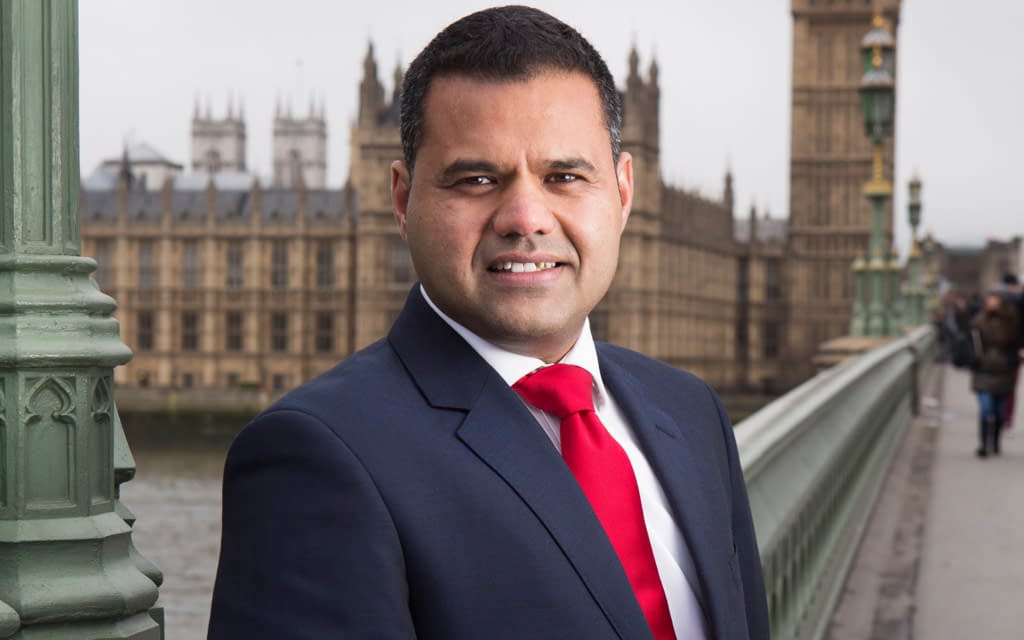
Speaking to Asian Voice, London’s Deputy Mayor for Business and Co-Chair of Labour Friends of India, Rajesh Agrawal said, "The strength of Great Britain lies in its diversity and plurality. Government policy has failed to promote the interests of British citizens, safeguard the UK's security and defend our core values. The Bill will have a disproportionate impact on Asian communities. We should be careful not to undo decades of good work done to bring communities closer together and help them be better integrated."
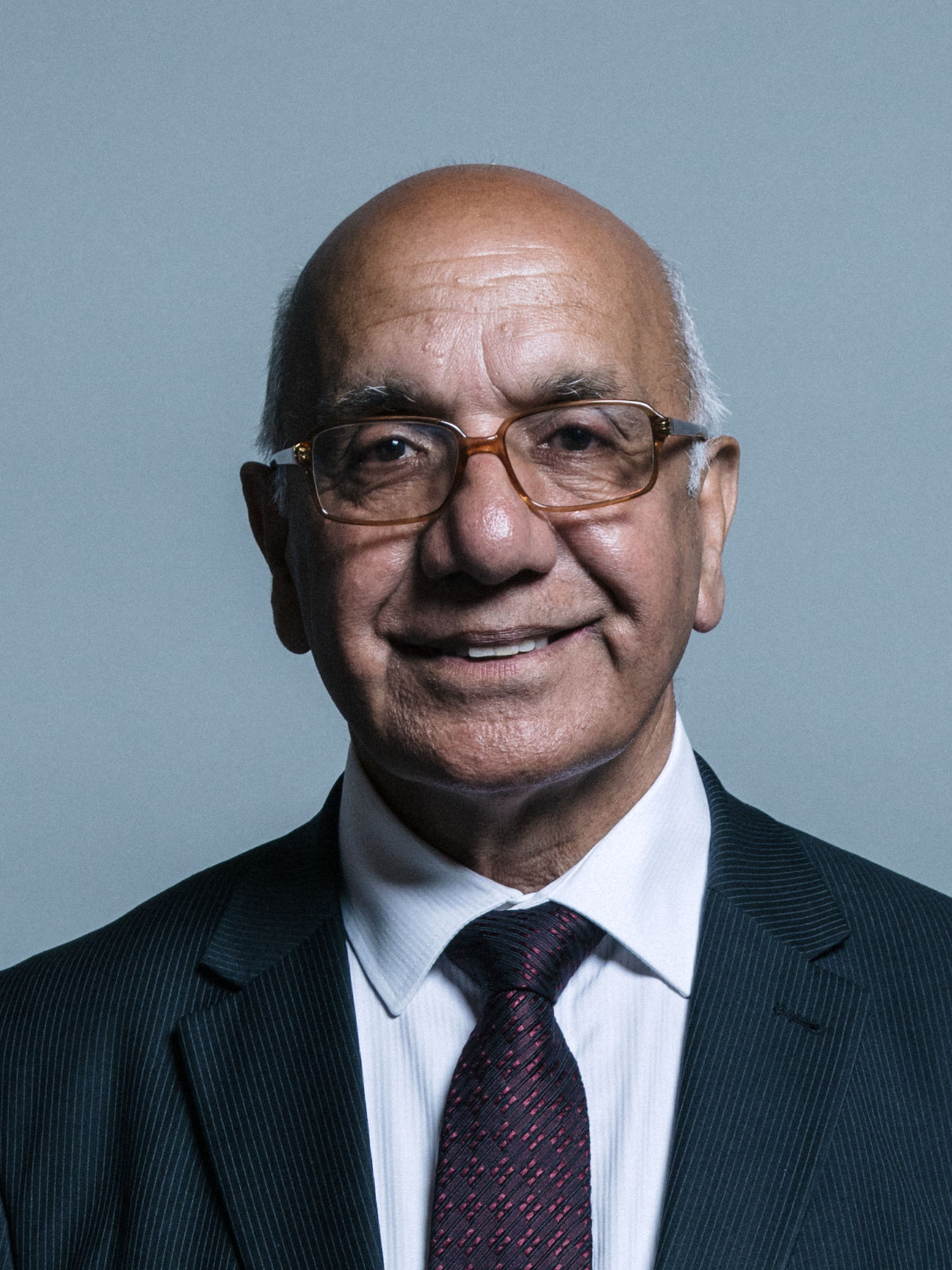
Labour Party MP Virendra Sharma told us, “Like many of your readers, I too am worried about the Nationality and Borders Bill. I have voted against the Bill in Parliament when I last had the chance and will do so again. The Bill is a failure, it punishes the most vulnerable, divides our community and criminalises compassion. As the Bill currently stands, it would criminalise Lifeboat volunteers for saving drowning men and women.
“The Nationality and Borders Bill also makes it harder for people to make a home in the UK and so I have added my name to amendments to undo that. I am supporting changes that would make it easier to apply legally, and changes to reduce the cost of applications so that the cost is no more than the cost of processing applications.
“The current system also makes people suffer for years and years while they wait for a decision, I have also supported an amendment to introduce a binding six-month decision period to end that scandal. This Bill is racist, it aims to make BAME people who make their home in the UK unsafe, and scared for their futures. This is a political tactic to scare us into silence on political issues, I will continue to oppose the Bill in Parliament.”
Former Labour Party leader Jeremy Corbyn tweeted, “Today, on #humanrightsday we have huge challenges to deal with: The Police & Crime Bill; The Nationality & Borders Bill; The Health & Social Care Bill; The Elections Bill...I could go on…We stand in solidarity with all human rights defenders, both here, and beyond our borders.”
Meanwhile, a social media user critiqued Sir Keir Starmer’s silence, saying, “In 24 hours, Starmer has tweeted 3 times about a Christmas party, but not once about the racist, inhumane, nationality and borders bill which puts the UK outside international law and which has today been voted through parliament. This is not someone who is fighting racism.”
Bill ‘not racist’
Sharing his two cents on the bill, Lord Dolar Popat told the newsweekly, “I do not consider the Nationality and Borders Bill to be racist. It is part of the Government’s plan to provide a fair immigration system for all. As I have mentioned in my book “A British Subject” this is the best country in the world for immigrants – and we want to continue to make it so. This country is open for all – but only through the official route, not for those who abuse the system. By introducing stronger sentences, people will be prevented from abusing the system and make it easier for genuine immigrants and asylum seekers to enter the country.”
Conservative Councillor Ameet Jogia said, “The Nationality and Borders Bill aims to introduce a number of measures to make the Immigration system fairer. This includes introducing new maximum life sentences for people smugglers, stopping illegal arrivals from gaining immediate entry and establishing powers to process asylum claims offshore for those who arrive via illegal routes.”
Frances Webber, the vice-chair of the Institute for Race Relations, told the New Statesman, “It’s a profoundly racist law. If you’re born here and you don’t have any foreign citizenship, you can do whatever you like. You might go to prison, but you will always have your citizenship. If you don’t have citizenship, what other rights do you have? As Hannah Arendt said, citizenship is the very right to have rights.”
Most diverse cabinet has introduced the most racist bill
Commenting on the bill, the Writers of Colour have gone on record to say,“Arguably the most ‘diverse’ cabinet in the history of UK politics has introduced possibly the most racist and regressive pieces of legislation this country has seen in decades. The Nationality and Borders Bill should force us all to rethink representation politics – if we have not already, and to accept many of the premises that sustain the quest for ‘equality’ are ill-conceived. As part of this, recognising that we are all capable of reproducing racism within systems and indeed, that systems cannot function without the participation – passive or active – of those it harms, is crucial. We all need, and this may hurt, even more, to come to terms with the fact, ‘diversity’, ‘equality’ and ‘inclusion’ will not save us. In fact, they are today more likely to do many of us harm, than to help us achieve any semblance of justice.”
It might be right to go down memory lane and remember that during the Ugandan expulsion, had the Asian community had proper representation, they would have not been left to fend for themselves back in Africa. Today, while some of the key positions in the UK Cabinet are held by the likes of Sunak, Javid, and Patel, the larger cabinet is still underrepresented by Asians. Giving a glimpse of that, in her speech at the House of Commons, Labour and Co-operative Party politician serving as the Member of Parliament for Feltham and Heston, Seema Malhotra said that the Nationality and Borders Bill seeks the removal of clause nine tabled by the Home Secretary seeking to deprive UK nationals of citizenship without notice.
Speaking on behalf of fellow community members, Seema said, “This is an extraordinary amendment that has caused shockwaves across the communities and particularly in Feltham and Heston, it has really affected the South Asian community. I'm grateful to all who have written to me and signed the petition has almost 150,000 signatures.
“I was born in Britain in Hammersmith in West London. I grew up in Hounslow. It appears that the law as drafted, I could theoretically in future be deprived of my citizenship with no notice and potential without appeal because my parents were born in another country, even though they became British nationals and serve their community with distinction.
“Perhaps the minister in his closing remarks, will be able to say whether or not this can ever be able to happen to anyone because what it appears is that this is the thin end of their polling wedge, members of my extended family were also amongst those who are expelled from Uganda and with massive exposures of the Indian community and I'm sure the minister will understand why this has caused such concern.
“The Home Secretary's clause would amend the British Nationality Act 1981, which currently requires the state to give notice or give a person a written notice of their deprivation order, the reasons for the order and the person's right of appeal. Clause nine, subsection to specify circumstances in which the Secretary State would be able to deprive a person of their citizenship without notice, briefly, including that the Secretary doesn't have the information to give notice, or it would not be reasonably practical to give notice for any other reason, or for giving notice if giving notice would not be in the interest of national security relations with another country or otherwise in the public interest. Now tell me what relations with another country means?
“If in theory, a foreign government with whom the government is negotiating a trade deal says that they want British decision British citizenship revoked from a group of people that they would like to see returned back to their country of origin as a condition, possibly for political reasons. The Home Secretary could in theory do it and without saying why it is not what is likely that this is about it is what becomes possible, and there is no practical reason for this change.
“The present rules governing notice allow for deputy current citizenship deprivation letters to be delivered to the individual's last known address I cannot support this new clause from the Home Secretary, which has breathed a huge distrust and insecurity into the lives of millions living peacefully and law-abiding citizens in this country, that the state could have this power and without needing to give an explanation that may not just affect them, but also their children and grandchildren.”
UNHCR reacts
The United Nations High Commission for Refugees (UNHRC) believes the UK’s Nationality and Borders Bill would penalise most refugees seeking asylum in the country, creating an asylum model that undermines established international refugee protection rules and practices. According to the UN body, the Nationality and Border Bill Committee stage completes in October, after which it will pass through Parliament and The House of Lords, to become law if voted through with a majority. UNHCR has raised serious concerns about the plans. Through the publication of comprehensive legal analysis, UNHCR has warned that the Bill undermines the 1951 Refugee Convention, the agreement which has protected refugees for decades and of which the UK is a signatory. At the same time, if implemented, the policies would risk the lives and well-being of vulnerable people. UNHCR believes this Bill would undermine, not promote, the Government’s stated goal of improving protection for those at risk of persecution.
“It is entirely possible for the UK to protect its borders, and security, while implementing fair, humane and efficient policies towards asylum-seekers in line with the 1951 Convention. These are not mutually exclusive, said Rossella Pagliuchi-Lor, UNHCR Representative in the UK.
Solidarity Knows No Borders
The Solidarity Knows No Borders (SKNB) network emerged when migrant justice organisers across the UK collaboratively wrote the Fair Immigration Reform Movement (FIRM) Charter. This process was held by Migrants Organise and involved those most impacted by the Hostile Environment immigration system and their friends, communities, campaigners, caseworkers and many others. We used our imaginations to start outlining an alternative vision. The SKNB network links up to over 50 migrant justice organisations. “The Borders Bill is designed to divide us. To make us feel weak, isolated, hopeless. But this fight is not over!’ their official Twitter handle posted as a reaction to the ongoing debate.