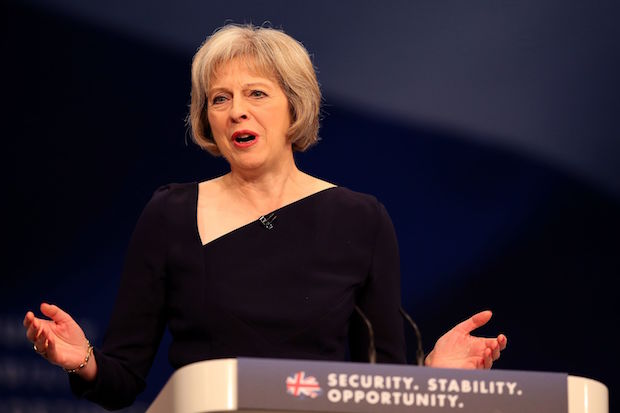
Theresa May has set Britain on course to leave EU by 2019. She pledged to trigger the formal two-year exit negotiation by March 2017. In her first significant speech on the subject, saying the UK would become a “fully independent, sovereign” country in the clearest sign yet that she wants a clean break from Europe's single market.
The Prime Minister told the cheering Conservative supporters at the party's annual conference that Britain insists on taking full control of immigration and refused to accept the jurisdiction of the European Court of Justice.
Although Mrs May's team denied she had decided to leave the single European market, EU sees the free movement of workers and oversight of a single court as indispensible pillars of a common market.
According to The Times, Mrs May started the Brexit countdown at the opening of the Conservative conference in Birmingham as:
- Philip Hammond, the Chancellor prepared to put Britain on a renewed austerity drive by saying that current levels of publioc borrowing are unsustainable.
- David Davis, the Brexit Secretary, waved aside warnings that 75,000 City jobs will be lost when Britain brexits EU.
- The Scottish National Party said that it could block a so called Great Repeal Bill to move all EU law on the UK statute book.
Setting the deadline for triggering Article 50, Mrs May told EU leaders she wanted, “some preparatory work so that once the trigger comes we have a smoother process of negotiation.”
That reflects fear in Downing Street of a humiliating rejection when Britain finally spells out its opening demands. Ministers fear that elections in Germany and France next year will increase pressure on European leaders to be seen to be punishing Britain, though the PM making the case, added, it is in Europe's interest to ensure Britain's “smooth transition from the EU.”
In the meantime on Tuesday, as we went to print, the sterling fell to a 31-year low against the dollar, continuing its slide since Mrs May set out the details of the timetable for Brexit negotiations on Sunday. However, at the same time, the FTSE 100 share index has risen above 7,000 for the first time since May 2015.
Mrs May told BBC Radio 4 that the negotiations would be complicated and that while "life is going to be different in the future... I want to ensure it is a success".
She said businesses she had spoken to, including foreign companies with substantial workforces in the UK, realised the process would not be straightforward.
"Of course they know it is not going to be plain sailing and there will be bumps in the road and they want certainty as soon as possible about the future holds but the attitude I am hearing is... 'let's make sure we come together and grasp the opportunities that are available'."
Asked what kind of concessions the UK would have to make to retain full access to the single market, she said the UK should not be approaching the negotiations thinking what aspects of the EU membership it should keep, but should be thinking about what kind of relationship it wanted with the EU and the wider world as a "sovereign, independent" country.
"I am going to be ambitious as we go into discussions," she said. "I want British businesses to be able to trade with the EU and operate within the EU and EU businesses to be able to operate within the UK.
"It is not about the UK, in some sense, being a supplicant to the EU but the reciprocity here - a good trade deal is going to be a benefit to us and the EU."
Home Secretary Amber Rudd on Tuesday announced that the Government will consult on the next steps to reduce net migration from outside the EU. The Home Secretary has challenged universities, colleges and businesses to work with the Government on the best way to bring down net migration to attract the brightest and the best and protect our economy.
The Home Secretary will also announce that that the Government will deliver on another Manifesto commitment and introduce a new £140m Controlling Migration Fund, designed specifically to ease the pressures on public services in areas of high migration and support action to reduce illegal immigration, stop housing benefit going to people that have no right to be in the country, reduce rough sleeping by illegal immigrants, and crack down on the rogue landlords who house illegal migrants in the most appalling conditions. For people who are here legally the money will be used to provide more English language training to improve integration.
Mrs May said the authorities needed to be constantly aware of loopholes in the system but insisted there was no magic bullet to substantially reduce net migration - currently at more than 300,000 a year.
On the third day of conference, Defence Secretary Michael Fallon, Health Secretary Jeremy Hunt and Education Secretary Justine Greening are among the other speakers.
Critics have defined this as “Hard Brexit” , though Mrs May tried to rest the terms of the debate, claiming that the choice between hard and soft Brexit was “muddled thinking” and a “false dichotomy” between continued EU membership and wholesale rejection of trade with Europe. Mrs May's uncompromising stance to put soverreignty over market has delighted Brexiteers such as Boris Johnson. It is likely to make George Osborne and David Cameron, who have called for the best possible access to the single market- unhappy.
Speaking ahead of next week's court challenge seeking to overturn the goverment's decision not to put the start of the Article 50 talks to Parliamentary vote, Mrs May attacked those she said were trying to “subert democracy”.
She criticised Nicola Staurgeon, the Scottish first minister, who has suggested that Holyrood could veto over EU exit talks. Mrs May said, “There is no opt-out from Brexit.”
Domonic Grieve, the former Attorney General on Monday night questioned the significance of the move beyond “symbolism”. The cross party open Britain campaign has warned that Mrs May should not “expect any favours from Parliament” on her repeal bill.
The Great Repeal Bill encompassing the legislation that is needed to take Britain out of the EU and annul the European Communities Act 1972. This measure is to be introduced in the Queen's Speech next year, once enacted, would make the country free and independent once again, no longer pooling sovereignty with other nations. This, in essence is what the Referendum was about- control over our own destiny, though most EU rules will remain in place.
Mrs May wants the 'right deal' for Britain. Of course there are fundamental differences of opinion about that. Whatever the policy changes be by the new PM, the next few years will be dominated by Brexit. Mrs May's task is to chart a course between the two extremes and find a way that both holds her party together and benefits the country, while retaining a good relationship with Europe. It is a monumental task, she is beyond capable but she needs the support and confidence of her citizens. She has to reach out- in a direction her admirers may not have anticipated.