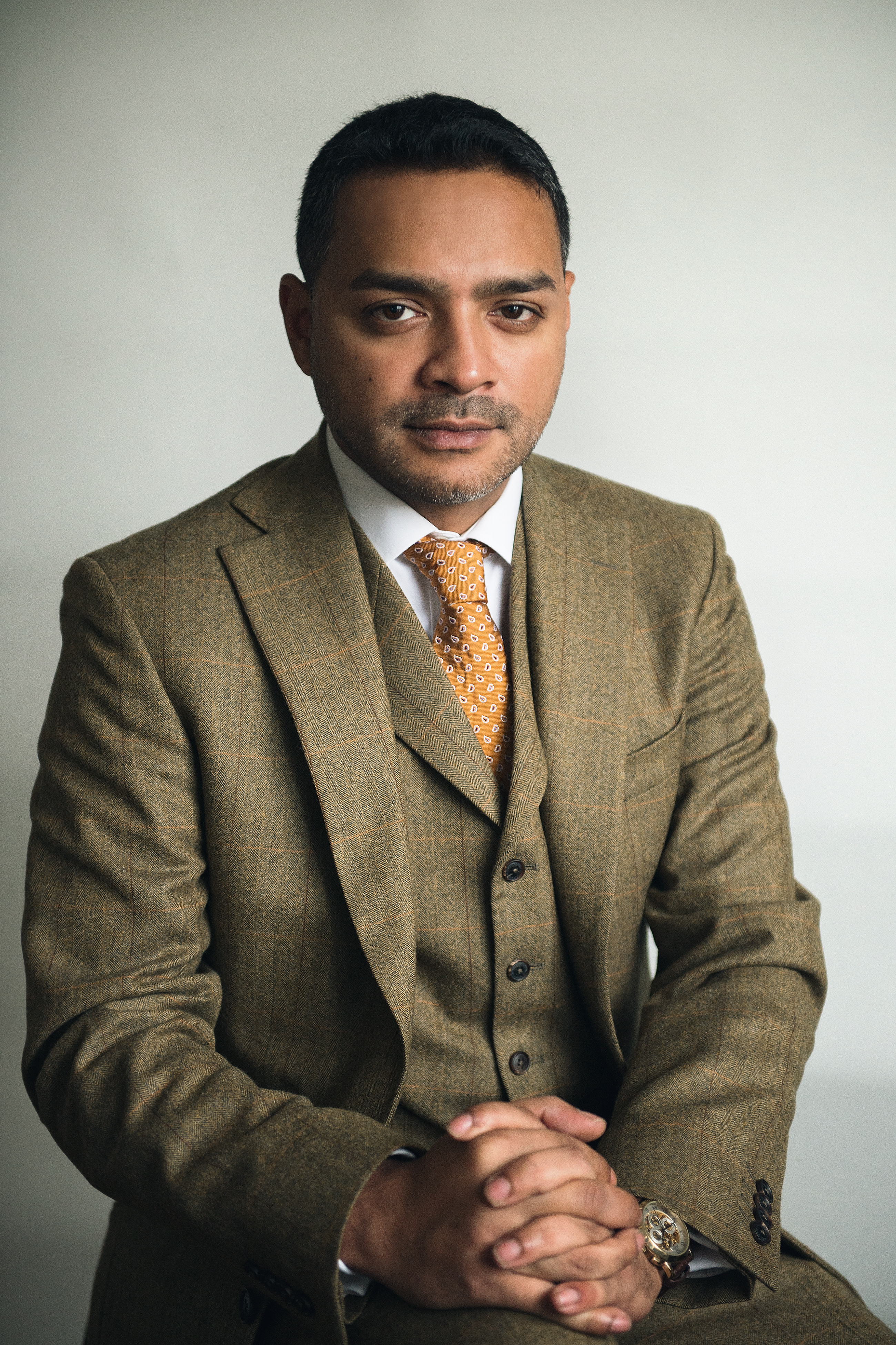
The holy month of Ramadan calls for peace, solidarity and strength. The kind of solidarity that Shamima Begum's parents are seeking from the UK's justice system by requesting for their daughter's return home even as they say that she may have done “wrong”. But more importantly, the strength that family lawyer, Tasnime Akunjee has been providing them with ever since accepting Begum's case pro-bono four years ago after she fled to join the Islamic State.
From stripping Shamima off her citizenship to now providing her with legal aid, Begum's case has perhaps been the most heavily reported on in recent times and cast a light on the murky area of Immigration Law. But Akunjee disagrees about how Shamima's case has set a precedent over the issue of 'creation of a second class of citizenship'.
“There have been a 100 odd cases of citizenship stripping since 2012 but between 1973-2002 there were no such cases. Although from 2002, 2006 and 2014 there are amendments that have been made to section 40 of the British Nationality Act 1981.
“Those amendments made particularly in 2002 and 2006 conspire to allow any Home Secretary to strip somebody off their nationality if they are deemed ‘not conducive of public goo’d so long as they are not left stateless. But, the 2014 legislation allows for a naturalised person to be stripped off their citizenship even if they are left stateless,” Akunjee explains.
The UK home secretary, Sajid Javid, revoked Begum’s British citizenship in February after she was found at a refugee camp in Syria. Depending on the various legislative frameworks of different countries around the world, there are over 7 million people in the UK who can be stripped off their citizenship and the overwhelming majority of these people would be from ethnic minorities (BAME). Under international law, it is illegal to revoke someone’s citizenship if it leaves them stateless. It was thought Begum had a claim to Bangladeshi citizenship through her family, but Bangladeshi officials have denied this, leaving her in a state of limbo.
Over the last few months, the UK has tried to wash their hands off their responsibility by bringing in Begums “Bangladeshi heritage” through which she could be prosectued in Bangladesh. However, Tasnime argues that Begum had never even visited Bangladesh before therefore, Bangladeshi citizenship never applied to her in any meaningful sense. Soon after arriving in Syria, she had married a Dutch citizen, Riedijk. Since then she had three children, two of whom have died. Their third child, born in February, could be entitled to Dutch nationality, but the underage union between Riedijk and Begum may not be recognised by Dutch authorities and she has no claim to the Netherlands today.
“The word husband doesn't apply here. Legally speaking, according to the Dutch and UK laws, he is a rapist because he engaged in a sexual relationship with a minor (she was 15 years old) when she “married” him,” Akunjee explains.
This means that legally, Begum can be prosecuted in no other country barring the UK. Today, even as legal aid is offered to Shamima for her appeal process, public sentiment in the UK remains that of utter resentment against her. A recent report by 'The Sunday Telegraph' citing intelligence sources in its claims also states that the Bethnal Green schoolgirl served in the Islamic State's “morality police” and “tried to recruit other young women to join the Jihadist group”. However, Akunjee is quick to refute these allegations and echoes his concerns around the “leaks and their validity”.
“Those statements are actually defamatory in nature. There is a big problem with intelligence v/s evidence because those reports state that they were gleaned from certain sources that were either Dutch or US in nature and based on questioning of other people from the camps. We don't know the circumstances of that questioning and I am quite concerned with the quality of the information which needs to be tested because there are two girls- Sharmeena Begum and Shamima Begum- both are of 'Bengali heritage', are similar in their appearances, are from the same school and both escaped to Syria. The problem there is to sort which of these claims have to be attached to which person.
Shamima Begum had three children in the span of four years. So, where was the time for her to be involved in the morality police in Raqqa as well as sewing suicide vests among other claims that were made by The Sunday Telegraph? While Shamina Begum had been the first woman/ pioneer to go to IS in December 2014 and had the influence over several other girls 3 of who left after her,” Tasnime explains.
Shamima Begum's case continues with the Special Immigration Appeals Commission (SIAC).