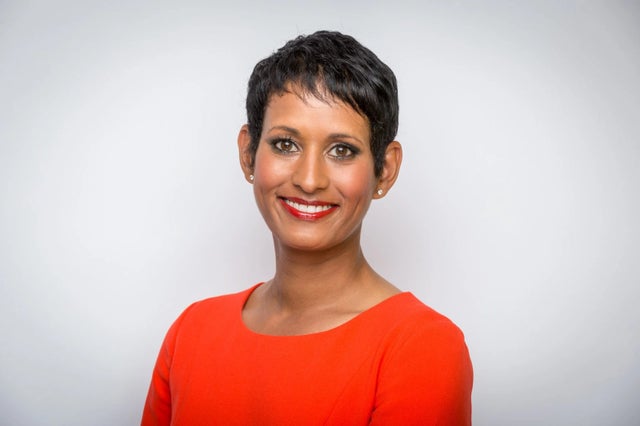
Mainstream media and its coverage of political news has become the centre of debate once again. This time a BBC journalist, Naga Munchetty has been reprimanded by the organisation for crossing the obsequious line of impartiality.
Earlier in July, American President Donald Trump had issued a statement asking Ilhan Omar, Alexandria Ocasio-Cortez, Ayanna Pressley and Rashida Tlaib- all women of colour to go back to their countries.
“Every time I have been told, as a woman of colour, to go back to where I came from, that was embedded in racism. I’m not accusing anyone of anything here, but you know what certain phrases mean,” Munchetty had cautiously told her co-presenter Dan Walker.
The original complaint was filed with the subject being “Blatant political bias from both presenters”. The media house had initially defended Munchetty, saying she “made it clear that she was making a general point and not accusing anyone of anything”. However, the complainant issued a second complaint demanding further investigation with reference to both the hosts. The complaint read,
“This could not possibly be construed as the making of a ‘general point’ by any reasonable person. I would like my complaint to be investigated again and a more honest reply sent please. If you are content for your supposedly impartial presenters to make biased political statements, just say so. If you are not, then my complaint should be upheld and words of advice given.”
Thus, last week the BBC had ruled that Munchetty had breached editorial guidelines in a conversation with co-host Dan Walker about Donald Trump. Following the ruling, a petition had been circulated which called the BBC to reverse its judgement on Munchetty attracted more than 13,000 signatures. On 27th September Friday, 150 black and minority ethnic public figures wrote to the BBC, protesting that “racism is not a valid opinion on which an ‘impartial’ stance can or should be maintained”. They further asserted, it was outrageous that a person of colour should be “expected to treat racist ideas as potentially valid”.
“Over many decades, our public attitudes to race have changed. Today, racist acts are widely condemned, rather than being condoned as they were in the past.
“To be told that this is not actually the case is a worrying prospect. The truth, however, is that racism still very much exists. It has evolved into what psychologists refer to as modern racism, which is more subtle and nuanced than the typical representations of racism. The criticism that Naga Munchetty has received is a clear sign that we are not prepared to look these facts in the face,” said Professor Binna Kandola, senior partner at Pearn Kandola and author of Racism at Work: The Danger of Indifference.
Simultaneously, there had been much uproar in the industry that both presenters should have faced flak for the above. Yet, only the journalist of colour is penalised and not her white, male co-host. BBC defends itself by insisting its hands were tied and the complaint was particularly issued against Munchetty. Now, the media house has reportedly crunched down on support for Munchetty within the company and banned staff from protesting in her defense. Trevor Phillips, former chairman of the Equality and Human Rights Commission, claimed in The Sunday Times that the corporation was breaching the 2010 Equality Act by warning employees not to sign the petition supporting Naga.
‘BBC minority staff are being told not to sign the letter or any petition and to stay clear of this one,’ he had said.
However, the BBC claims otherwise.
“The BBC is fully committed to complying with the Equality Act, and we are not aware of any failure to do so. Racism is not an opinion and it is not a matter for debate. Racism is racism. Naga has the very clear support of the top of the organisation,” said a BBC Spokesperson.
Yet, the bigger question that the media faces is how do you call out racism if you cannot call out racists? While Munchetty had made her general remarks, Piers Morgan had written in a column why in the Daily Mail why Donald Trump was being a racist. Nobody seems to have complained about that, though. And further more, he does not get punished about that either and perhaps, he is one example. The question remains, how do you call out on racism without calling out the racists?