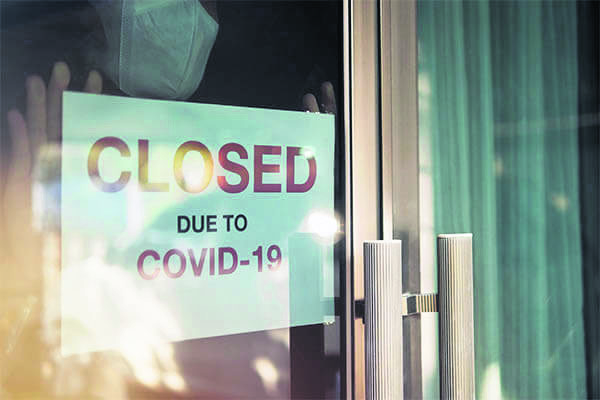
On Tuesday 28th July, Prime Minister Boris Johnson acknowledged that a second wave of Covid-19 had ensued across Europe heightening concerns about a second lockdown in the UK. Restrictions remain in Asian-dominated county Leicester along with industrial towns such as Luton and Blackburn. Yet, the Government appears keen to revive the economy especially a shattered hospitality sector. But are businesses prepared to go back to work?
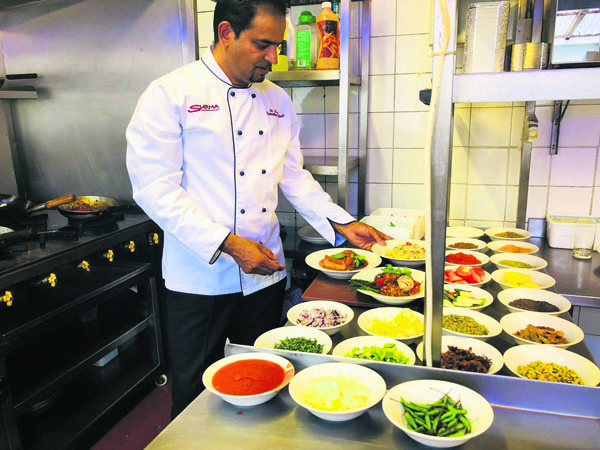
“The curry industry is struggling despite Government’s numerous schemes. High rent, changes in the recent congestion charges in the city of London and customers wary off catching infection despite implementation of safety guidelines means 50% of these curry houses will not survive. If popular restaurants like the Darjeeling Express cannot cope with the pandemic then how can indigenous and independent curry houses?
“I used to employ 14 people at my restaurant and now I have only six of them working for me. We are primarily doing takeaways because people are scared to dine in. And once the furlough scheme comes to an end, I don't know how we are going to fork out wages for our staff if the customer footfall continues to remain so low,” said Oli Khan, Vice President of Bangladesh Caterers Association (BCA).
50% curry houses may never re-open
BCA is an umbrella organisation representing 12,000 Bangladeshi restaurants and takeaway curry houses. The £4bn curry industry was already dying following the exploits of Brexit and staff shortages owing to a stricter immigration system. And the pandemic has only deepened the financial shortfalls for the curry house chefs and owners. Besides a drop in the customer turnouts, curry houses have now been burdened with the additional cost of ensuring new health and safety guidelines are implemented in the restaurant in line with the Public Health of England (PHE). From sanitisation of the restaurant to providing Personal Protective Equipment (PPE) for the staff and ensuring social distancing norms are in place, overheads for these curry houses have jumped manifold. And ever since restaurants were allowed to re-open on 4th July, most have relied on huge volumes of takeaway orders.
In a recent survey conducted by Kingfisher Beer 91 per cent of Britain’s curry houses have remained open in some capacity during lockdown, trading as take-aways, often offering delivery. This high number has made clear business owners are attempting to survive the crisis. The chancellor’s Eat Out to Help Out scheme has recorded a participation from 53,000 restaurants in the UK. As part of this scheme, diners who eat-in will benefit from a 50% discount upto a maximum of £10 per person on food and non-alcoholic drinks any Monday to Wednesday in August. And diners can take advantage of these schemes for unlimited times in the month. Speaking about his own restaurant, Oli said,
“We have a 120-seater restaurant and not enough people are coming to for dine in. And now we also have to implement extra staff to ensure cleaning standards and registration processes are followed through for contact tracing as the safety of our customers is of utmost importance to us.
“But we are not participating in this scheme presently as it involves a lot of hard work from registration to reclaiming funds from the Government. We are already struggling to survive. And we don’t want to add to our workload.”
Transition from physical events to social media content
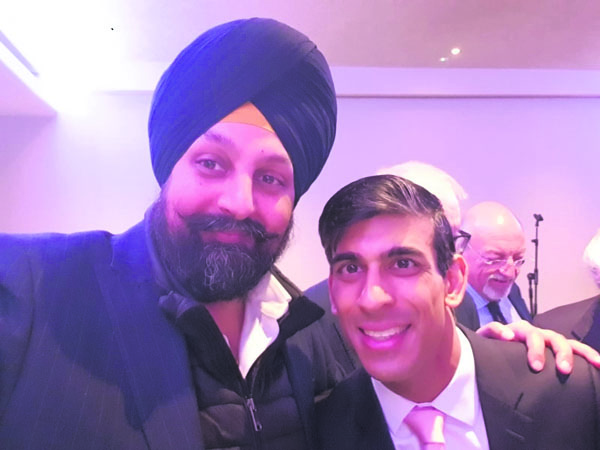
While curry houses chalk out financial strategies for survival, UK’s entertainment and culture industry is adapting with the transition from physical theatres and workspaces to generating more online content. Tony Shergill, is the CEO of BritAsia TV, one of the largest online platforms about fashion, lifestyle and music for British Asians. Besides producing fresh content, Tony also organises two of the biggest awards nights annually – Punjabi Film Awards and Brit Asia Music Awards. Traditionally most of these awards nights were hosted at prestigious venues in London including Wembley SSE Arena Stadium and JW Marriott or Grosvenor House. Speaking about how the pandemic has impacted his business, Tony said, “We have had to postpone both our events this year and even next year appears to be difficult with the uncertainty around a second Covid-19 wave. Even pencilling the dates for a venue next year is a problem and hosting virtual or online events does not have the same essence. People attend these events because they provide good networking opportunities, develop industry relations as well as enjoy themselves. And we are in the TV business.
“So, the pandemic has been a double whammy for me. Not only have I lost ground on our awards but the production element and content creation for TV at a time when there is a highest audience for television has also been hampered. But content creation and it’s delivery for TV from remote locations is a difficult process.”
Apprenticeship grants
Tony however, focusses on the positive highlights of the Covid-19 pandemic. As an alternate to TV, he has started BritAsia Radio online besides a podcast which is available on AppleCast thereby reaching out to those who maybe visually impaired but can still access and ingest content. In his ambition of establishing a widespread digital footprint, Tony says that he has not furloughed any of his team members or announced permanent job losses. This appears at a time when most mainstream media organisations have had to trim their offices for lack of financial support. Going a step further, Tony is leading an apprentice program for 12 months following Rishi Sunak’s apprenticeship announcement.
Participation in this scheme ensures that a firm which hires a new young apprentice aged 16 to 24 will receive £2,000, while those that hire new apprentices aged 25 and over will be paid £1,500. The Treasury has since published a “plan for jobs” which states these payments will be in addition to the existing £1,000 incentive the government already provides for new 16 to 18-year olds apprentices. It means that employers could receive up to £3,000 for hiring 16 to 18 year-old apprentices from August to January.
In the meantime, Secretary of State for Business, Energy & Industrial Strategy, Alok Sharma, has notified the councils that "given the schemes’ (Small Business Grants Fund, and Retail, Hospitality & Leisure Grants Fund) success, in that over 92% of eligible businesses have received grants, the Chancellor and I have taken the decision that all three grant schemes, including the Discretionary Fund, should close by Friday 28 August. The Chancellor and I have also agreed that once the final payments have been made on all schemes it will be necessary for local authorities to return any unspent funds to BEIS."
Besides, BritAsia TV is always partnering with other musical artists touring in the UK. Currently, Tony is optimistic about supporting Diljit Dosanjh when he is expected to tour London sometime during 2021. BritAsia Music Awards is not the only Asian Award cancelled this year. Other headlining awards which have been postponed this year include The Asian Awards and British Curry Awards.
Celebrating festivals with Pendora Sweets
Amidst such gloom and doom, the Indian diaspora is curating innovative ways to celebrate upcoming festivities such as Rakshabandhan, Indian Independence Day and Ganesh Chathurthi and even Diwali.
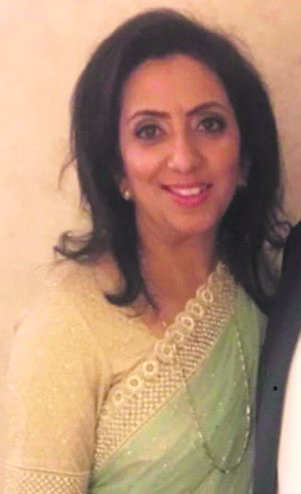
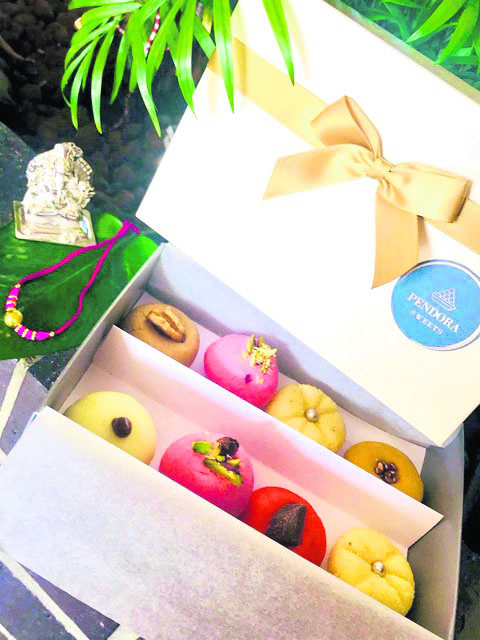
Looking forward to Rakshabandhan on 3 August, Naina Soni, from Pendora Sweets told Asian Voice, “Pendora Sweets has been a great hit. A lot of sisters and brothers cannot get together because of the current situation so I am helping them with lovely Pendora Pedas and the Rakhis with special messages and sending it directly to the brothers. Touchwood, it has been a huge hit. People are really appreciating that there is something out there that they can have a traditional mithai with fusion flavours. These are not the standard Pedas that I am making at the moment. My company is very small, and I am just running from home with the help of my daughter and daughter-in-law.
“My plan is to go a lot bigger by Diwali. We are looking at the line of very luxurious mithai. I am placing lovely personalised messages for Raksha Bandhan on all orders that we receive via Facebook and Instagram messages with the names of the brothers. In the variety of Pedas, we've got Rose and Pistachio, Mango and Coconut, Nutella, Oreo, Strawberry and cream, Pineapple (Pina Colada obviously without alcohol) and coffee flavours. This week I had to turn people down because we went up to 100 orders.”