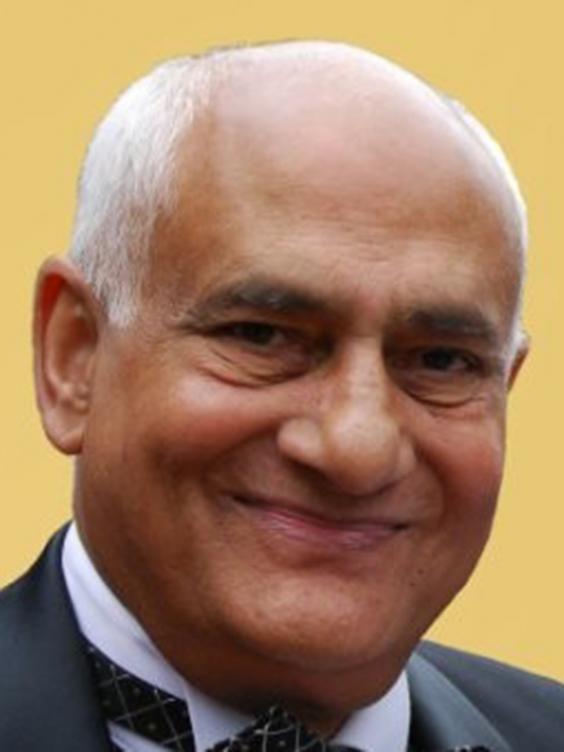
In 1971, with only a few pounds in his pocket, Khurshid Hassan Drabu arrived in Britain along with his intellect and ambition. Three decades on, he is now known to most as a pioneer of social cohesion and interfaith dialogue who became Britain's first Muslim judge. Khurshid Drabu, who died aged 72 in April worked hard to build an extraordinary career of public service in this country. His life was devoted to pursuits promoting community cohesion and dialogue between faiths. He was celebrated in British Muslim community and he often passionately campaigned for emancipation of women.
Khurshid Drabu was born in Srinagar, Kashmir. He attended Sri Pratap College there, graduating in political science. There he was the captain of the cricket team in the Ranji Trophy, playing alongside two future captains of the Indian cricket team, Bishan Bedi and Nawab of Pataudi.
In 1977, he was called to the bar of England and Wales, and in the 1980s he won a number of landmark immigration cases, which led to a Home Office minister describe him as “The authority in immigration law”. In 1987 he became the deputy director of the UK Immigrants Advisory Service.
He went on to join the Commission for Racial Equality in 1990 as its first deputy legal director, and five years after that, he was appointed to the immigration judiciary, where he became vice president of the immigration appeal tribunal in 2000. He served as a senior immigration judge until 2007 and then took an early retirement. Drabu continued, however, to sit as a judge at the Upper Tribunal in the Asylum and Immigration Chamber. In 2010, he was awarded the CBE for his work in “bringing communities together”.
Despite being in his seventies, Khurshid Drabu would work till late at night and yet be up at 6 am. Even after a quadruple bypass, he lived a committed life full of obligations, working to contribute to the causes he believed in. He once said, “My inspiration in putting in the long hours for the community work is the future of my children and grandchildren and the nation as a whole. I just hope that one day we will live in a society where there is a better understanding of each other. That is all I seek really.” He is remembered by friends, family and the lives of the people he touched through his work and compassion.