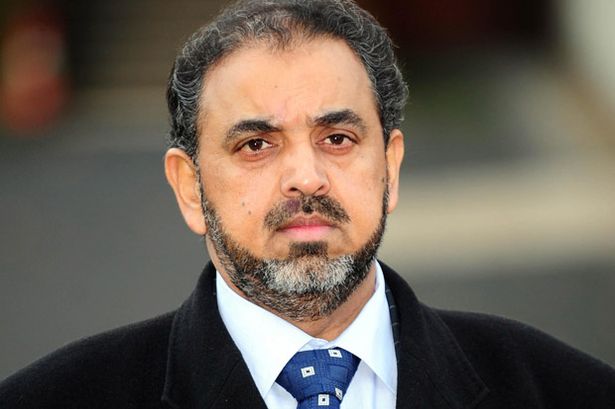
Recently, a Labour peer, Lord Nazir Ahmed, asked the Government a very pointed question in the House of Lords in relation to the rise of extremism in India following the state elections in Uttar Pradesh: “Her Majesty's Government what assessment they have made of the rise of extremism in India following the state elections in Uttar Pradesh.”
Minister of State, Baroness Anelay of St John’s responded by saying that the government was aware of concerns over religious tolerance and community relations following the recent state elections in India and that PM Modi ‘has made it clear that every citizen has the right to follow any faith without coercion and had vowed to protect all religious groups.’
Lord Ahmed responded by highlighting the plight of minorities in the name of nationalism and the concerns raised by the Pew report on religious intolerance in India as well as the United States Commission on International Religious Freedom’s on the constitutional and legal challenges facing religious minorities in India. He questioned the government on whether or not the British government would ‘remind the BJP government of their obligations under international law for the protection of minority communities?’
Baroness Anelay of St John’s responded by saying that the British government shared Lord Ahmed’s concern about the importance of ensuring that there is religious freedom as it is a foundation for economic and public security. She went on: “the British high commission in New Delhi discusses human rights issues with institutions such as the Indian National Commission for Minorities and state governments. More than that the British Government work directly with the Indian Government to build capacity and share expertise to tackle challenges, including the promotion and protection of human rights.”
Lord Jitesh Gadhia then asked Baroness Anelay if she agreed that instead of interfering in the internal democratic process of the world's largest democracy, the Government should be working closely with Modi’s government to open up and liberalise the Indian economy and thereby encourage more trade and investment between the two countries to promote development as “that is what the people of Uttar Pradesh overwhelmingly voted for, and that is the clear message we should send to India - one of our closest friends and allies.”
In response Baroness Anelay said: “The UK-India trade relationship is flourishing. The two Prime Ministers agreed that, when the UK leaves the EU, they will make it a priority for both countries to build the closest possible commercial and economic relationship - but our friendship also goes to the development of human rights.”
Labour Peer Lord Collins of Highbury raised concerns that as a “consequence of Brexit, the focus of the Foreign and Commonwealth Office will be on trade and economic development alone.” He asked the Baroness to confirm that “there can never be a trade-off between economic trade and human rights and that we will remain committed to raising our concerns with President Modi at every opportunity, because the recorded level of violence against minorities has increased and we much raise it with the Government?”
To reassure the Lords Baroness Anelay said that Theresa May spoke to her Indian counterpart about reports of violent offences when she visited India last summer to show the importance that we ascribe to our relations with India. She continued: “We will continue to raise issues of the violence as it is for the benefit of both countries that we develop our trade relationship but it is our firm belief that good relations and strong human rights are the underpinning for any successful economic development.”
Liberal Democrat Lord Wallace of Saltaire queried the link between violence within faith communities in India affecting relations within faith communities here. “What happens between faith communities in other countries can spill over into the UK, particularly when we have diaspora communities. We have a significant Indian community in Bradford. They are mainly Gujarati whilst some are Muslim, some are Hindu. Relations are good, but on other occasions and with other faiths we have seen how, when events in the countries from which their ancestors came worsen, relations in this country can worsen.”
Lord Wallace continued to praise the “excellent work that the Minister has done on interfaith issues in this country” but asked “is this not something with which the Government should engage, and should they not point out to the Indian government that this is not a matter simply for them?”
Baroness Anelay brought this dialogue to an end by assuring the learned gathering that ensuring there are good community relations is a serious issue and that it is important that, across the United Kingdom faith should join us and not break us up.