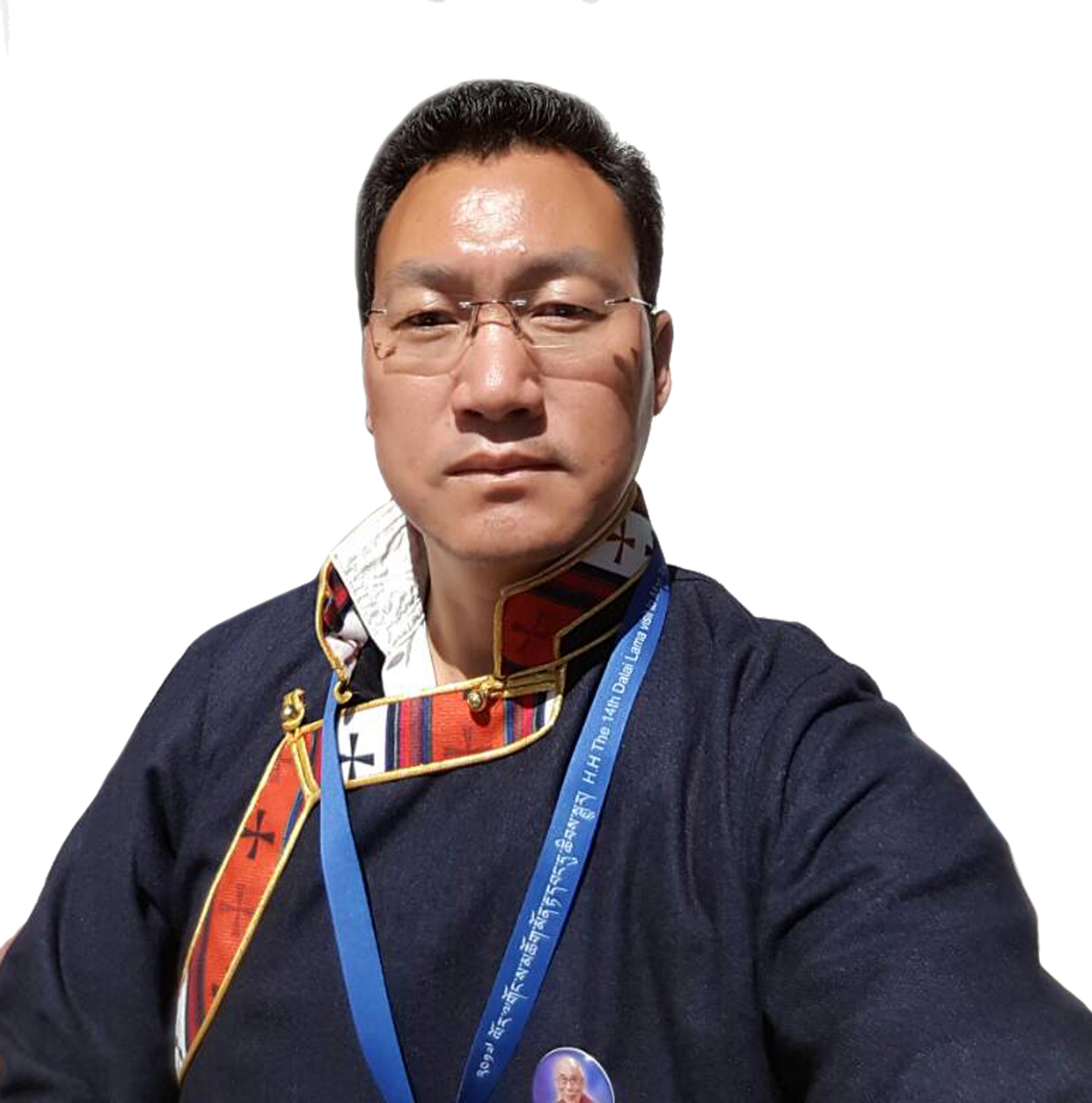
This is the story of a Horticulture Development Officer living on the slopes of the eastern Himalayas who gets farmers to make their land more productive. He cares so much about his people that he has no desire to leave.
Meet Koncho Gyatso, Horticulture Development Officer in Tawang District, Arunachal Pradesh. He does incredible work in a place many abroad can only imagine, for the north east of India is one of its most underdeveloped and least populated states.
Who is Koncho Gyatso?
This handsome, fashionable gentleman was born in Lumla, by the Indo-Chinese border. He lives and works in Tawang, headquarters of Tawang District. He is a Monpa, the people indigenous to this part of the north east India. They are gentle, honest, clever, hard working and sincere. Koncho’s grandfather was a religious teacher with monk training and his father was with the elite paramilitaries, the Sashastra Seema Bal or SSB.
Koncho Gyatso spoke to us up in Arunachal Pradesh in Tawang, around 10,000 feet above sea level. Tawang township is surrounded by stunning mountain views, alpine forests, fertile fields and cascading waterfalls.
Koncho is purposeful and focussed, thoughtful and still. He stands legs akimbo, always ready to spring into action.
His two-storey office sits next to that of the Deputy Commissioner, Tawang on a road alongside other important offices.
Every day, around 5pm, Koncho takes a one hour walk along the mountain road to the famous Tawang Monastery and back again.
Background
Educated in government schools in Tawang, Koncho Gyatso went to Nagaland to study for a degree in Agriculture at the School of Agricultural Sciences and Rural Development. In the first year of his postgraduate studies, he was selected for the Department of Horticulture.
In India, you work in outlying districts while you build experience. So for 12 years, Koncho worked around the mountainous region before he came back to Tawang around three years ago.
Koncho’s work
One of this Horticulture Development Officer’s tasks is to support farmers. “We give them incentives, free of cost; such as planting materials (fruit plants), Fencing materials, manure, Plant Protection chemicals etc and providing hybrid vegetable seeds,” he tells us.
“Outreach work with farmers is important. We tell them to ‘establish fruit orchards, even though it may take three to four years for the results to come through. With Kiwi, apple, orange, walnut, pear, peach, pomegranate and guava, you will be paid by everlasting returns in the long run,’ we say.”
Challenges
Koncho finds that whatever meetings they hold and however much his team reach outlying district farmers, the latter often get tempted by easy, quick money. Farmers are more interested in contract works- buildings and road construction works, which give them an immediate return.
“The farmers are not so patient. We tell them,” adds Koncho, “That you can accept these short term contracts if you must. But you can also plant and grow orchards.
The plan does work in certain places and they are listening to us. I look after just under 3,000 sq kms of land, and I have staff posted in the entire district.”
The other main challenge for Koncho is the altitude he lives at. “It’s rough terrain, all mountain topography. There is not much cultivable land or individual landholdings here. To get benefit from our department, a farmer needs to own one hectare of land. That’s the required area for a particular crop for availing the scheme. But since individuals don’t often have so much landholding, we motivate the farmers for cluster cultivation.
There are some progressive farmers who earn a lot of money per annum from horticultural gardens, but in general people have little knowledge of scientific cultivation practices. Even though people have been farming in this part of India since time immemorial.”
Tawang District has come a long way since the 1950s when India first began to administer the territory seriously. Back then, anything that was needed had to be dropped by parachute from airplanes. Millet, wheat, rice and potatoes were grown in certain pockets, but now the Tawang District and much of Arunachal is self sufficient in all foods. Only rice is in short supply. Koncho says, “we buy our rice from fair price shops- it comes from outside the district. Rice is given at a reduced rate by the government. All individuals are issued with ration cards so every month they are given some rice per head in a family.”
Far, far away in the most north east corner of India, Leading Light Koncho Gyatso is working hard for his farmers to provide a horticultural legacy for future generations. We are proud of him.