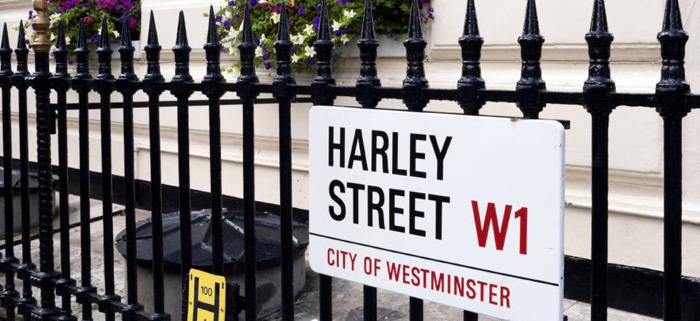
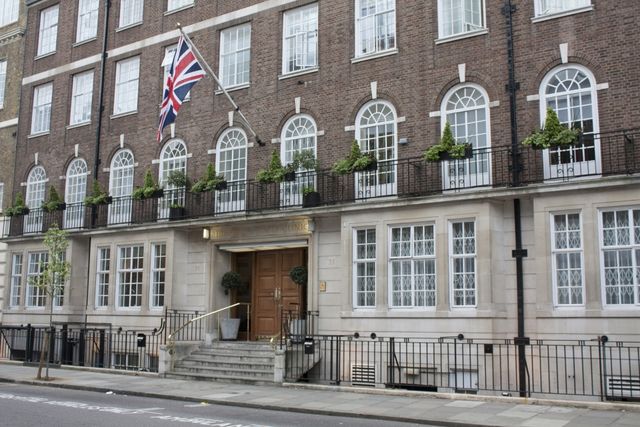
Harley street has nowadays become the symbol of private medical practices. Undoubtedly one of the main reasons for its fame is its distinction from National Health Service (NHS). Harley street has gained international fame by providing quality private clinics, while NHS remains essentially funded by public taxes. Besides the unique concentration of hospitals, clinics and over 3000 doctors and specialists in such a relatively small area, adds more to its already existing fame.
Why go private?
When NHS is providing all medical services without any costs, the question arises why go private with Harley Street?
A survey by MORI (Market & Opinion Research International) has revealed that people are often preferring confidentiality of private clinics and doctors over NHS services. And Harley Street is not only about just going private. Their clinics and employees broadly focus on specific medical issues, making their expertise and services are unparalleled.
Moreover their turn around time of service remains much less in comparison to the NHS. The most salient exception of UK's healthcare, that helps it stand out from rest of the Western countries is the publicly funded health service – the NHS. But with increasing numbers of people opting for private healthcare because of the length of NHS waiting times have caused major controversy and this resulted in some individuals’ questioning its reliability.
A survey conducted by OECD (Organisation for Economic Co-operation and Development) reveals that while 81.7% of the UK’s health costs are covered by the government by funding the NHS, behind only Norway’s 83.6%, the UK’s life expectancy, physicians per 1000 people and per capita expenditure on health were lower than most of the other developed countries surveyed. Such findings again act as a challenge to the NHS.
Moreover people are also convinced by Harley Street's abundance of state-of-the art technology and equipments over that of the NHS. It is not obliged to adhere to government regulations and health plans. A private clinic must rely on its reputation to ensure it is deemed as trustworthy in the eyes of its patients and Harley Street and its clinics certainly have such high repute.
Location & Connection
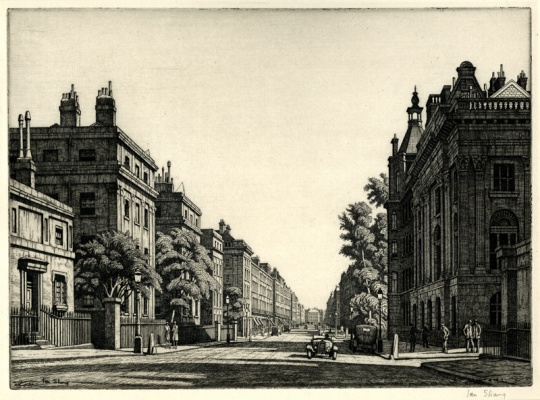
When Harley Street first came into being in the 18th century, London had not yet grown to encompass it, and it was part of the village of Marylebone. Towards the end of the century, many attractive Georgian houses were build in the area, becoming a home for the fashionable and wealthy. It has been noted since the 19th century for its large number of private specialists in medicine and surgery.
By now, Harley Street is right in the centre of London as part of the City of Westminster. It is close to Regent’s Park and Oxford Street. The closest underground station is Great Portland Street or Baker's Street and it is very well connected by buses.
History
At the beginning of the 18th century London was growing significantly with the start of the Industrial Revolution. The area already known as “Marylebone Village” – that Harley Street would become part of – benefitted by this era’s growth by becoming littered with the large, picturesque Georgian houses you still see today. As well as being known for its wealthy inhabitants the area was famed for the entertainments held in Marylebone gardens that included bear baiting and prizefights. The largest manor in the area was called Tyburn estate.
Harley Street is owned by the de Walden family and managed by the Howard de Walden Estate. In 1711 the grid of streets around Harley Street, known as The Estate, was passed to Henrietta Cavendish Holles (the Duke of Newcastle's daughter) who married Edward Harley (the 2nd Earl of Oxford). Between 1715 and 1720, Edward, with the assistance of architect John Prince, decided to develop the streets around Cavendish Square for residential purposes naming many of the streets after members of the family. When Edward died the Estate passed to his daughter, Margaret Cavendish Harley who married the second Duke of Portland, and the area became known as The Portland Estate.
The Dukes of Portland had ownership for five generations until the fifth Duke died without issue in 1879 and the land passed to Lucy Joan Bentinck, widow of the 6th Baron Howard de Walden and thus it became the Howard de Walden Estate.
By 1860 many doctors had moved into Harley Street, choosing the area because of the quality housing, the central location as well as the accessibility to major train stations such as Kings Cross St Pancras and Marylebone. Moreover it enabled them to stay in their clinics for extended periods of the day without leaving and then be able to commute with ease.
As more and more doctors moved to the area they invited colleagues to work with them from their prestigious homes and Harley Street began to thrive as a medical centre, especially after the Medical Society of London opened in Chandos Street in 1873 then the Royal Society of Medicine in Wimpole Street in 1912.
Since the nineteenth century the number of doctors, hospitals and medical organisations in and around Harley Street has greatly increased. Records show that there were around 20 doctors in 1860, 80 by 1900 and almost 200 by 1914. When the National Health Service was established in 1948 there were around 1,500.
Today there are over 3,000 people employed in the Harley Street area and the private clinics are modern, comfortable and welcoming; a far cry from the original days when Harley Street doctors arranged their own appointments and dealt with correspondence by letter in candle light and resided in the house itself. Now practices are run by highly qualified, competent and professional medical and auxiliary staff using state of the art technology and equipment.
Besides specialised clinics, there are private hospitals and private GPs available to suit the more general needs of the individual; these too, just like the specialists, are fully equipped with the latest in technology and know-how and are equally worth visiting.
Why is Harley street called so?
Harley Street takes its name from Edward Harley, the second Earl of Oxford and Earl Mortimer. In 1715, he began building the houses on Harley Street and surrounding streets such as Cavendish Square. Ownership of Harley Street passed down through the Portland family and to the de Waldens, one of the wealthiest families in Britain, thanks to their London properties worth over £1 billion.
Who are the most famous people to have worked from Harley Street?
Many famous people have lived or practised on Harley Street, and if you walk along the street today you can spot the distinctive blue English Heritage plaques that show where these famous people resided or worked. Here are some of the most notable:
Florence Nightingale, “the lady with the lamp”, began her medical journey on Harley Street at the Institute for the Care of Sick Gentlewomen from 1853. The following year she was sent to the Crimean War. She and her team of volunteer nurses found terrible conditions: short supplies, neglected hygiene and mass infections.
Nightingale wrote to The Times calling on the government to tackle the poor conditions, and tended to the wounded soldiers, attempting to improve their nutrition and supplies and reduce overworking. She dedicated her life to improving healthcare, and is considered the founding of modern nursing.
Another famous doctor was Joseph Lister, whose work in antiseptics was vital to making surgery safer. Before his work, surgical operations were incredibly dangerous because of the high risk of infection. But his discoveries, along with new methods in anaesthesia, revolutionised surgery.
Lister lived in London just round the corner of Harley Street at 12 Park Crescent, though he made his big discoveries earlier while working in Glasgow and Edinburgh. Without his work, neither life-saving surgery nor the cosmetic surgery procedures that we take for granted today would be possible.
If you watched the Oscar-winning movie The King’s Speech, then you will have seen the story of how the Duke of York and future King George VI (played by Colin Firth) was treated for a severe stammer by Lionel Logue (played by Geoffrey Rush), a Harley Street speech therapist. It was at 146 Harley Street that the Duke of York sought Logue’s help. In 1944, Logue became a founding fellow of the College of Speech Therapists, which became the Royal College of Speech and Language Therapists.
Among many other famous and talented doctors to have practiced in Harley Street over the years was the great British surgeon and polymath Sir Henry Thompson in the 1870s who specialised in surgery of the genito-urinary tract and was appointed surgeon-extraordinaire to the King of Brussels, and Doctor Edward Bach who practiced from Harley Street in the 1920s as a specialist in vaccines and bacteriology before moving to the London Homeopathic Hospital then developing the Bach Flower Remedies.
Notable Residents of Harley Street
- William Ewart Gladstone Victorian Prime Minister (1876- 1882)
- J.M.W Turner artist (1798)
- Sir Henry Thompson (1870s). Specialised in surgery of the genito-urinary tract and was appointed surgeon extraordinaire to the King of Brussels.
- Sir Frederick Treves (1853- 1923). Credited with performing the first appendectomy in England on June 29th 1888 and of saving the life of King Edward VII who suffered appendicitis just before his coronation. He is perhaps best known for his friendship with Joseph Merrick, the ‘Elephant Man’.
- Sir Charles Lyell Geologist (1854- 1875)
- Grantly Dick-Read Obstetrician (1890- 1959)
- Sir Arthur Pinero Playwright (1909- 1934)
- Queen’s College. One of the oldest girl’s schools in the UK, it has been situated on Harley Street since 1848.
- Masud Khan, notable Pakistani psychoanalyst, lived and worked from No.8.
- Sir William Beechey (Portrait painter) lived at No.13.
- Sir Grantly Dick-Read (Obstetrician) lived and had his practice at No.23.
- Sir Stewart Duke-Elder (Ophthalmologist) lived & worked at No.63.
- Allan Ramsay (Portrait painter) lived at No.67.
- Sir Harold Ridley (Pioneering Ophthalmologist). Lived at No.53.
- Stafford Northcote, 1st Earl of Iddesleigh (British Politician, Conservative Chancellor of the Exchequer) lived at No.86.
- George Frederick Bodley (Greek Revival Architect) lived at No.109 from 1862 to 1873.
- Harriet Harman MP QC, Labour politician, born at 108 Harley Steet.
- William Henry Giles Kingston, Victorian author of boys' adventure novels, was born on Harley Street, 28 February 1814.
- Sir Charles Lyell (lawyer, author and geologist). Lived at No.11 (which is now No.73).
- Charles Wilson, 1st Baron Moran, Winston Churchill's personal physician, had a private practice at No. 29 during the 1920s and 1930s.
- Karl Ghattas, Pakistani physician, poet and painter, lived and had his surgery at No.57.
How did Harley Street Become Known for the Best Psychotherapists?
In the 1900s the mind became the new medical frontier. Famous psychoanalyst Sir Sigmund Freud had developed his ‘talking cure’ in Germany, meaning the dubious mental health techniques of the 1800s such as measuring the skull and using magnets to relieve stress were finally challenged. After the Second World War psychotherapy began to take off with leaders such as Carl Jung driving forward Freud’s theories into new avenues.
Nowadays, mental health is a highly respected medical field. Like all areas of medicine in the UK the top practitioners gravitate to the iconic Harley Street. From psychologists and psychiatrists to counsellors and psychotherapists, many businesses including our own namesake Harley Therapy Psychotherapy and Counselling are now found there.
Their counselling and psychotherapy rooms are located on the south end of Harley Street, close to John Lewis and Oxford Street and also have offices in Canary Wharf and the City of London for the convenience of the clients.
Celebrity Endorsement
Some of the most celebrated doctors and surgeons in history have practiced in Harley Street clinics, including the polymathic Sir Henry Thompson who reached international fame by operating on the King of Brussels to relieve him of kidney stones. Celebrities today has made Harley Street more famous.Unlike of course the NHS any individual wishing to use Harley Street’s private facilities must be willing to pay the appropriate price. Though the cost of the service can be justified as per the quality and reputation and its very best treatment validates its charges.
Some clinics at Harley Street:
- Harley Street Private Hospitals
- Cosmetic Surgery at Harley Street
- Harley Street Dentists
- Allergy Testing in Harley Street
- Harley Street Acne Treatment
- Harley Street Botox
- Breast Implants in Harley Street
- Dermal Fillers in Harley Street
- Facelifts Cosmetic Surgery in Harley Street
- Harley Street Hair Transplant Surgery
- Harley Street Laser Eye Surgery
- Harley Street Laser Hair Removal
- Harley Street Liposelection
- Harley Street Liposuction
- Harley Street Oncology Clinics
- Harley Street Ophthalmology
- Harley Street Orthodontists
- Rhinoplasty Cosmetic Surgery in Harley Street
- Harley Street Sexual Health Clinics
- Harley Street Skin Clinics
- Harley Street Sleep Clinic
- Harley Street Weight Loss Surgery Clinics
- Harley Street Fertility Clinics
Doctors & Surgeons
Harley Street surgeons are regarded as among the best in the world. They are all educated to an exceptional degree. Many, though competent in numerous fields, choose to specialise on particular areas of surgery. The ability to successfully treat specialised and uncommon healthcare issues makes Harley Street one of the leading medical names in the world. Harley Street surgeons always endeavour to be at the forefront of medical knowledge by attending lectures and other educational programmes to ensure they are fully up-to-date. Furthermore they are trained in and have access to some of the most advanced healthcare technology in order to further the excellent rate of success to which they are accustomed. Often they are leading experts in their particular field and the patient can be assured that they are in the best possible hands for whatever operation they are to undertake. Typically surgeons work together with nurses to fully accommodate all the patient’s needs and ensure whichever operation they have chosen to undergo is done as comfortably and successfully as possible. Many of the doctors, specialists and surgeons in Harley Street are of Asian origin.
Harley Street Private Hospitals
- King Edward VII Hospital Sister Agnes
A favourite of the Royal family with the Queen as its patron, King Edward VII Hospital was founded in 1899 by Agnes and Fanny Keyser for the treatment of Officers returning from the Boer war. It was renamed to King Edward VII Hospital Sister Agnes in 2000 and continues to serve the Armed Forces and veterans. To ensure its level of high quality staff is sustained, most employees of the hospital hold permanent positions. It has been awarded five stars by the FSA (Food Standards Agency)’s ‘Scores on the Doors’, the highest accolade for hygiene. Furthermore its nurse to patient ratio far exceeds that of the national average as detailed by OEMC. Importantly however the hospital does only treat patients of 18 years or older.
- The Princess Grace Hospital
Boasting the first high-definition CT (computed tomography) scanner in London, the Princess Grace Hospital is similarly state-of-the-art. It offers a wide range of consultants specialised in areas such as breast cancer, lithotripsy (removal of kidney stones) and oncology. It includes 120 registered beds and a Level 3 Intensive Care and High Dependency Unit. The consultant who admits the patient will then continue to assume overall control of the treatment, keeping the patient up-to-date with changes by remaining in close contact with the healthcare team assigned to the individual; consultants are available 24 hours every day. There are eight operating theatres, including a robotic surgery suite.
- The Portland Hospital for Women and Children
As the name suggests this is the only private hospital in London to deal exclusively with women and children. It is owned by the HCA (Hospital Corporation of America), the largest private healthcare company in the world, and is one of the foremost obstetrics (maternity) specialist institutions in the UK. Established in 1983, the Portland Hospital for Women and Children offers a range of services to patients and outpatients alike including Audiology and Imaging. It boasts an impressive average of three or four patients to every nurse, contrasting favourably with the national average of approximately ten (OEMC); in critical areas, such as NICU (Neonatal Intensive Care Unit) and the Labour Ward, this is one-on-one, a deciding factor in the selection of this hospital.
- The Harley Street Clinic
A major focal point of all Harley Street practice, the Clinic provides 90 standard beds and an additional 22 critical care beds for all ages. Although the recent installation of a dedicated oncology unit (the Harley Street Cancer Centre) has taken prominence, the Clinic’s considerable reputation for dealing with Cardiac issues, Neurosciences and Paediatrics is not to be ignored. The staff endeavours to give the patient the easiest possible stay and issue a welcome pack to ensure full preparation and understanding before admission. One of the major advantages of the Harley Street Clinic is its number of interpreters who ensure that most language differences do not erect a barrier to excellent health treatment. The Clinic is also a member of the HCA and has been endowed with Hospitality Assured standards for service and business excellence.
- The London Clinic
The London Clinic offers over 270 beds, and much like the Princess Grace Hospital 24-hour consultant availability. Established in 1932 by doctors from Harley Street, it maintains this link by continuing to offer consultancy on the street, even though the main building is slightly removed. As the largest privately owned non-profit hospital in the UK, it includes twelve operating theatres with myriad functions. Whilst it continues to offer high-end oncology and haematology services, it has recently opened a specialised cutting-edge cancer facility which showcases the CyberKnife, a ground-breaking robotic radiosurgery system.
- Harley Street at UCH
A little further afield than the other five hospitals, Harley Street at UCH is devoted entirely to the treatment of cancer. It is a product of a prosperous collaboration between the Harley Street Clinic and the University College Hospital and has provided a superlative standard of cancer treatment since its inception in 2006. The award-winning facility is registered with the CQC (Care Quality Commission) and specialises in haematological (of the blood), primary bone and soft tissue cancers. It includes a dedicated transplant team and treats over 3500 new cancer patients every year. As with all hospitals linked to Harley Street, Harley Street at UCH makes patient care their number one priority and offers ‘holistic’ treatment which including dietary advice on how to combat cancer. It is also a prominent member of the NLCN (North London Cancer Network) and in co-operation with its fellows works tirelessly on new ways to fight the disease.
Reference: healthcentre.org.uk, harleystreetguide.co.uk, harleytherapy.co.uk, harleystreetaesthetics.com