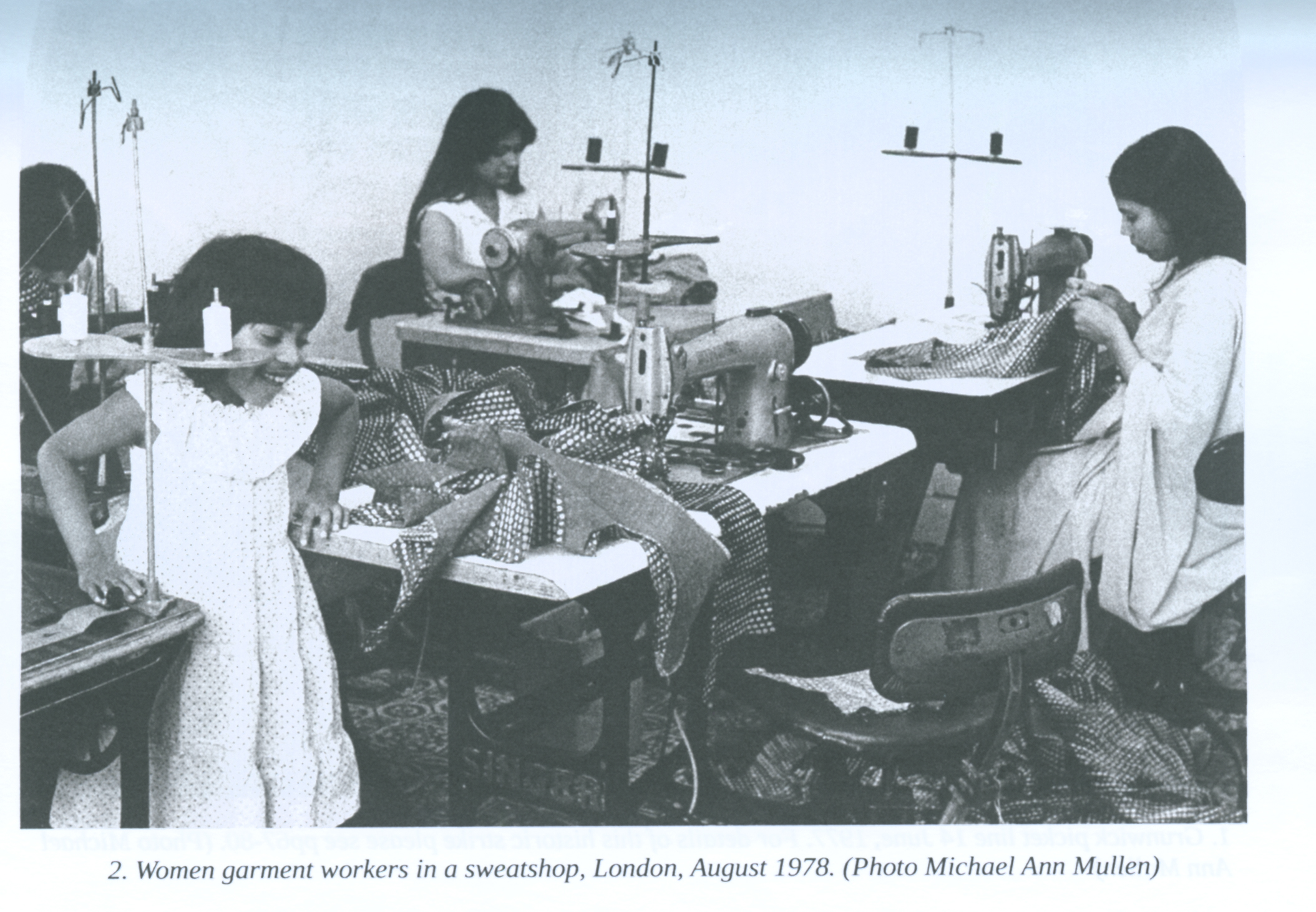
In 1978, Amrit Wilson had woven struggles of South Asian women who had migrated to the UK with a poignant sensitivity that has tears brimming down the eyes of some readers even today. Nearly half a century later much has changed for the imperial kingdom who is brought to it's knees in recent times by the political establishment of the country where it begs for a nasty divorce from it's European wife. Yet, the state of South Asian women in the imperialist country is still quite the same, if not worse. Wilson brings her seminal work back into spotlight, this time with an extended chapter- 'Reflecting on Finding A Voice in 2018'
“I think that today, as before, gender, race, and class shape women's lives. Of course, racism has been reconfigured to include Islamophobia, although old-fashioned racism is still going strong, side by side with Islamophobia,” states the author.
While the reader absorbs the degree of oppression that South Asian women were subject to, in those days, one also comes to a bone-chilling realisation that the book in parts is an unfortunate reflection of the society as it stands today. From cataloging strikes outside the Grunwick factory where Jayaben Desai- Britain’s most famous Asian trade unionist- outraged against racist supervisors for ‘even asking to go to toilet’ to finally achieving that unity among the working class members, the book charts out the history of these women.
“However that was 40 years ago. But collective memories can fade. Today many women workers have not even heard of the Grunwick strike and there are a very large number of workers, many of them women of colour, who are super-exploited,” explains Wilson.
In the book’s latest edition, a new chapter- titled 'In Conversation with Finding a Voice 40 years on’- also examines similarities and differences with the situation at Grunwick contributed by Sujata Aurora who had recently organised the Grunwick 40 commemorations.
“I would like to say that many of the low-paid workers of today, cleaners, for example, are organising and sometimes winning their struggles,” believes the author.
In a post-Brexit era that is rampant with racist attacks headlining almost every day news stories and a subject that has caused fractures in the colonial power’s major political party- this book provides a context to institutional and structural racism that has always been in the UK’s character. The government, on the other hand, appears intent to present a white-washed image of Britain which is not “white” but all inclusive, diverse and politically correct in its policies. But does celebrating an ‘International Curry Day’ imply that veiled attacks of the kind where ‘Brown people stink of curry’ has gone away?
“I think racism has not gone away, in fact it has escalated and the dormant prejudices have come back in a big way. But while sometimes the old forms of racism have come back, we also find new forms. Diversity policies can never deal with racism. However they are important to ensure that people of colour have jobs, are represented etc. But diversity alone cannot bring much change because it is often sanctioned by the state. It is policies which matter more than anything - take the hostile environment policy, for example, this is racist both in its conception and its application and the same is true of immigration laws,” Wilson believes.
But while much focus has been channelised into discussing the plight of ethnic women in the country, I ask her if she would be looking to explore the challenges of marginalisation of ethnic men in the UK? The mainstream media remains culprit to mostly discussing the surface-level problems of crime, drug-racketing among others that involve the British Pakistani male population.
“The question of toxic masculinity, what creates it and the way it affects South Asian men, how it is affected by racism, these are crucial subjects which need to be looked at, not from the outside, but by those most affected,” says the gender activist and Martin Luther King award recipient.
I ask Wilson in hindsight if there was something that she wished she had done differently, what would that have been? She intuitively responds- “I think I would have tried harder to get women to talk about how they self-identified. For example, in what ways they had, or had not, struggled against a society which was even more powerfully heteronormative than it is today.”
Wilson's new edition of "Finding a Voice" can be found here https://www.amazon.co.uk/Finding-Voice-Asian-Women-Britain/dp/0860680126