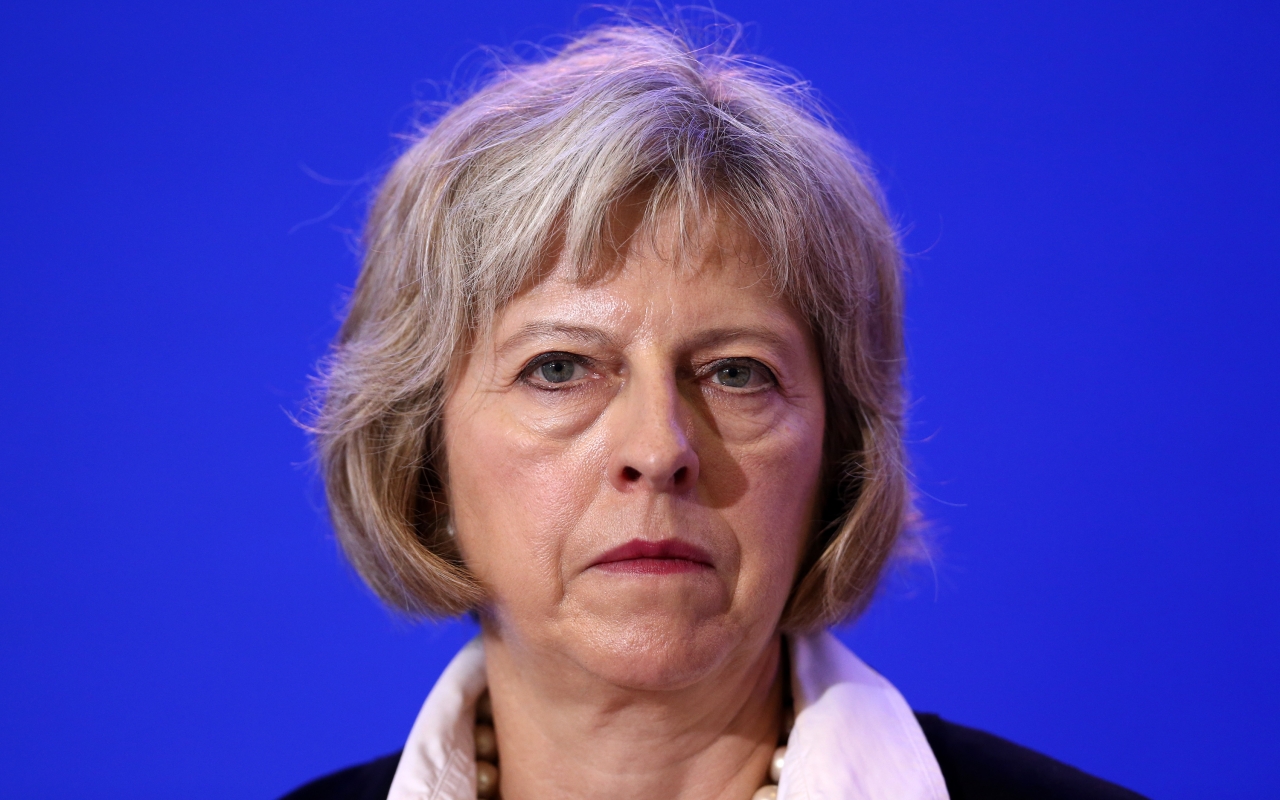
British Prime Minister Theresa May is expected to announce that EU citizens who move to Britain after Article 50 is triggered will be denied automatic right to stay in the UK permanently.
Instead they will be subjected to new migration curbs, which could possibly include a new visa scheme and restricted access to benefits.
A report in the Daily Telegraph said May is set to announce the end of the free movement of EU migrants on the same day she formally triggers Article 50, which will formally initiate the procedure for Brexit negotiations with the bloc.
The “cut-off date” for EU migrants is expected to be around March 15, once the government’s Article 50 Bill sails through the Parliament, the media report said.
Ministers believe that the cut-off date is likely to be the same for British citizens living in the EU.
Even though Britons voted for Brexit, a number of Europeans still seem keen to move to this great island nation.
But are British border forces up to the task of monitoring and recording who arrives before and after the cut-off date? It’s possible we may see an influx of migrants in the near future. It will be interesting to see what other differences, like limited access to benefits, will there be for those arriving afterwards. How will those who “overstay” be removed?
May will also hold firm to her earlier stance that EU migrants who arrived in the UK before the triggering of Article 50 will have their rights to remain protected so long as British citizens living elsewhere in Europe are given the same protection.
Given that more than one million Britons are resident in EU nations, the British Premier must now display the same deft talent for calming agitated EU leaders as she has in reassuring Brexiteers concerned that she might not prosecute their cause with the necessary diligence.
David Davis, the Secretary of State for Leaving the European Union, has previously said that Britain will not suddenly shut the door on workers coming from the EU. He suggested it would take “years and years” for Britain to fill all the jobs that would otherwise have been done by EU migrants. He said the UK will have to keep admitting EU migrants for several years because of skills shortages.
Official figures show that over 215,000 EU nationals work in health and social care, with 59,000 directly employed by the NHS, including one in 10 doctors. Construction employs 210,000 Europeans – 9% of the workforce. Manufacturing employs 311,000 EU nationals, as well as accommodation and food services where the 243,000 EU workers make up 14% of the workforce.
However people have worried less about the economic impact of the government’s post-Brexit immigration policy. This is strange. The impact of cutting the number of foreigners allowed into Britain could be as serious as anything that could happen to trade.
In the year to September net migration was under 300,000, split about evenly between EU and non-EU folk. Net migration of family members and refugees is around 70,000.
About half of the EU nationals emigrating to Britain move into less-skilled jobs. Cutting that sort might reduce net migration by EU workers to 50,000. Halving net migration of foreign students, say by restricting the growth of universities, might reduce it to 50,000. But that might still leave total net migration at around 150,000.
If the government is serious about hitting its tens-of-thousands target, it may have to restrict skilled migration. But how would the economy cope if the target were reached? Companies relying on foreigners are worried. Food manufacturers are vulnerable. 40% of such workers are non-British. Skilled industries would also suffer: a quarter of scientific researchers are foreign-born.
With low net migration, Britain’s elderly would be more burdensome. Workers would need to be taxed more heavily to pay for care for their elders.
Needless to say, taking back control will come at a price.