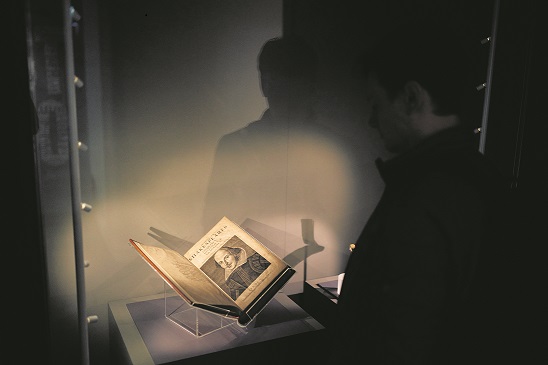
Regarded as one of the most remarkable treasures in the realm of literature, the First Folio holds a prominent position. This invaluable collection, printed in 1623, emerged seven years following the passing of its esteemed author, William Shakespeare. It stands as the initial published edition encompassing all of Shakespeare's plays.
Known as the Folio, this collection, published in 1623, consisted of Shakespeare's "Comedies, Histories & Tragedies." Its significance lies in the preservation of Macbeth and 17 other plays that would have otherwise been lost to the ages.
As this year marks 400 years of the first Folio, the occasion is being celebrated by scholars and institutions across the UK.
Shakespeare Birthplace Trust celebrates the enduring legacy of the First Folio
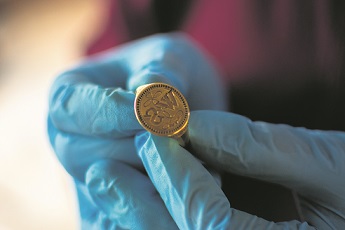
The trust has a new exhibition at Shakespeare’s New Place, “The Great Variety of Readers’ that celebrates the enduring legacy of the First Folio. The exhibit focuses on three special objects: the Ashburnham Folio, a ‘WS’ seal ring, and a 17th Century notebook, that once belonged to one of his earliest and most devoted fans. The notebook is being put on display for the first time. Through these objects, the Shakespeare Birthplace Trust aims to tell the Bard’s story.
“This summer we have a special programme of events and activities across Shakespeare’s family homes in Stratford-upon-Avon inspired by the First Folio. The programme will include live performances of famous scenes from the ‘lost plays’ that we wouldn’t have records of, without the publication of the First Folio”, said a spokesperson for the Shakespeare Birthplace Trust.
“In the long term, we are partnering with Walker Books to produce a new abridged folio for children. Using all his original language but allowing small groups of children to perform the plays, helping to ensure that Shakespeare’s legacy is preserved for future generations”, the spokesperson further added.
“The most unique feature of Shakespeare is precisely its relevance”
Sonia Massai, Professor of Shakespeare & Early Modern Studies at King’s College London, shares that, out of the 235 surviving copies of the 1623 First Folio, most copies migrated to America around the end of the 19th century and early 20th century.
“It was a time when the sales of the folios would make headlines, which expressed a deeply felt concern about these valuable objects leaving Britain. One very famous tycoon and enthusiast, Henry Folger, amassed as many as 82 copies that are still held at the Folger Shakespeare Library in Washington, DC. That's the highest number of copies owned by a single institution in the world.”
“In the UK, the British Library owns multiple copies and Senate House Library at the University of London similarly houses copies of all four editions of the Folio published in the seventeenth century", she reports.
“To me, the most unique feature of Shakespeare is precisely its relevance”, she adds. "Adapting, translating and performing Shakespeare means joining a huge community of artists and scholars. It can also lend visibility to emerging minority languages and cultures”, Sonia explains further. “In fact, it's only because it's been adapted over the centuries that Shakespeare has become "Shakespeare"; otherwise, he would come across as obsolete to the vast majority of worldwide readers and audiences who still enjoy his works now.”
A Royal celebration of the anniversary
On Tuesday, King Charles commemorated the momentous occasion by hosting an event at the Windsor Castle that united actors and directors in a joyous celebration of the monarch's deep admiration for the bard and the book that has earned widespread acclaim as one of the most significant works in English literature.
Actors who performed at the event included Simon Russell Beale and Harriet Walter, two of Britain's greatest stage actors.
Last year, in a poignant tribute to his late mother, King Charles quoted Hamlet- "May flights of angels sing thee to thy rest."
Shakespeare’s influence on authors that followed
Since his passing, Shakespeare has left an indelible mark on every succeeding generation of writers. His influence reverberates through the centuries and continues to shape contemporary plays, movies, and poems in profound ways. John Keats and Rabindranath Tagore were two of the most prolific writers to be influenced by the Bard.
Keats held such reverence for Shakespeare that he kept a bust of the Bard in close proximity while he wrote. It was his hope that the presence of Shakespeare would ignite his imagination and inspire his poetic endeavours.
Tagore's deep admiration for Shakespeare is evident in the poem he composed and translated as a tribute to the Bard. Through their works, Shakespeare and Tagore provide a bridge that enables us to grasp the sentiments prevalent in Shakespearean times, carried forward through the passage of centuries and diverse cultures.