From ashrams to algorithms, yoga has travelled far. Once an esoteric tradition passed orally between guru and disciple, it is now undergoing a radical reimagining, guided not just by teachers but by machine learning, biometric sensors, and intelligent platforms. Is this the next evolution of wellness or a dilution of its soul?
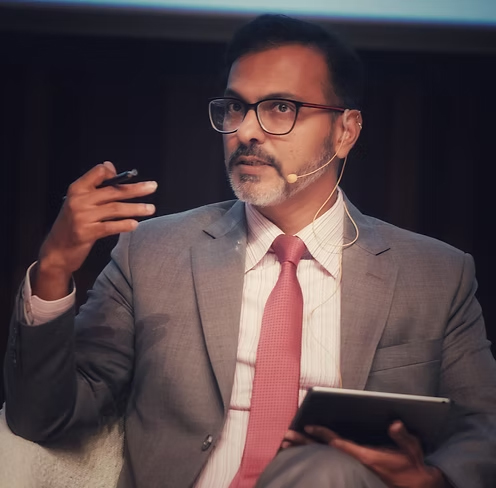
“AI is gradually transforming yoga by making it more accessible, adaptive, and personalised than ever before,” says Rohan Roberts, award-winning educator, innovation expert, Global Teacher Prize finalist, and author of ‘Cosmic Citizens and Moonshot Thinking’. “We’re seeing a shift from one-size-fits-all instruction to deeply individualised guidance powered by machine learning and biometric feedback.”
Today’s AI-powered yoga apps offer far more than just video tutorials. Rohan gives examples of tools like Yoganotch which uses 3D motion capture to offer real-time posture correction, mimicking the precision of a seasoned teacher. He also mentions platforms such as Asana Rebel and FitXR’s VR yoga experiences use intelligent algorithms to curate sessions tailored to users’ moods, energy levels, and goals.
He further added, “Even smart wearables such as the Whoop Strap and Oura Ring are now being used to optimise yoga and breathwork routines by tracking heart rate variability, sleep patterns, and recovery scores.
“Generative AI can enhance the meditative aspects of yoga,” Roberts adds. “Imagine an AI-curated guided meditation based not just on time of day, but on your current stress levels and emotional state—tools like Replika and Calm’s AI-driven sleep stories are already dabbling in this direction.
“ In essence, AI can act as a personalised wellness coach, attentive, data-informed, and always available, bringing the wisdom of yoga to more people in more ways than ever before.”
The mind-body disconnect and the question of ethics
Yet for all its promise, AI yoga has limits. “While AI can enhance the outer practice of yoga, alignment, consistency, progress tracking, it struggles with the inner journey,” says Roberts. “Mindfulness, self-inquiry, and transcendence aren’t just data points; they are deeply felt, embodied experiences. Tech can guide, but it cannot feel. It can instruct, but not intuit.”
That caution echoes a broader critique of how modern tech, while convenient, risks turning sacred practices into performance metrics. There’s also the risk of reinforcing narrow ideals of the "perfect pose", a trap that could alienate beginners or those with diverse bodies and needs.
Roberts warns, “AI should be designed to encourage inclusivity and body-positivity—not reinforce narrow, commercialised ideals of fitness or flexibility.”
Alongside philosophical concerns come real-world ethical questions. AI systems used in yoga often collect intimate biometric data; facial expressions, breath rhythms, emotional cues. Without strict privacy protocols, that data could be repurposed or monetised.
“Companies must commit to transparent data use policies, anonymisation, and user control,” Roberts says. “Otherwise, we risk turning yoga into a tool of surveillance and commodification.”
He also added, “There's a danger of promoting idealised or rigid standards of "correctness" in postures, especially for beginners. AI should be designed to encourage inclusivity and body-positivity—not reinforce narrow, commercialised ideals of fitness or flexibility.
“Can tech replicate the mindful depth of yoga? Not entirely. But can it support it? Absolutely. A well-designed AI tool can serve as a prompt to pause, breathe, and turn inward—perhaps even more regularly than we would on our own.”
In his writings on consciousness and Indic philosophy, Roberts often invokes the need for technology to serve, not supplant human dignity. “The challenge is not to replace the teacher or the tradition,” he says, “but to augment human potential. When deployed mindfully, AI can help us become more human, not less.”
In an age of digital distraction, yoga offers a rare portal to stillness. While AI can’t replicate the full depth of a mindful practice, it can support and even strengthen it—especially for those without access to teachers or studios.
As we celebrate International Yoga Day and reflect on the theme “Yoga for One Earth, One Health,” the challenge remains clear: integrate innovation without losing intuition. Because while AI might help us balance on the mat, the true balance, between tech and tradition, still rests within.