Official figures reveal a stark reality where during the height of the cost of living crisis, approximately 300,000 more children were thrust into absolute poverty within a single year. This surge in poverty levels coinciding with soaring rates of hunger and reliance on food banks, paints a grim picture and highlights the need for a comprehensive overhaul of the UK's strained welfare safety net.
The latest poverty statistics underscored a distressing trend: during 2022-23, when inflation peaked at 10%, an additional 600,000 individuals fell into absolute poverty – the government's preferred poverty measure. Overall, this meant that 12 million people, comprising 18% of the population, including 3.6 million children, were living in absolute poverty – reminiscent of levels last seen in the aftermath of the 2011-12 financial crash.
The severity of inadequate welfare benefits was starkly illustrated by significant increases in food insecurity and reliance on food banks. Shockingly, one in ten individuals in poverty turned to food banks for support, while 41% of universal credit claimants experienced food insecurity, unable to afford sufficient nourishment. Rising poverty levels are further accompanied by an increase in extreme forms of hardship, such as destitution, where individuals lack the means to afford basic necessities like food, shelter, and clothing.
Moreover, the Department for Work and Pensions' latest households below average income statistics paint a grim picture:
- Over two-thirds (69%) of children in poverty resided in families with at least one working parent, while 44% of children in single-parent households lived in poverty.
- An estimated 2.9 million children experienced deep poverty, with their income falling at least 50% below the poverty line. Nearly half (46%) of families with three or more children were living in poverty.
These statistics offer insight into the challenges faced by children across the UK. However, during school breaks, these hardships often intensify as access to free meals is suspended, and children lose the vital support they receive in schools for an extended period.
Cost-of-living doesn’t make things easier
The cost of living crisis is wreaking havoc on children nationwide, especially those in low-income households and those facing food insecurity. This dire situation impacts every facet of their lives, from education to social interactions and development, as well as their physical and mental well-being, effectively depriving them of a normal childhood.
Antonia Jennings, chief executive of the Centre for London think tank, has highlighted that housing and the cost of living take precedence over crime as primary concerns for Londoners and that goes on to show the kind of hardships that families and children are enduring.
In these difficult times, Asian are facing a much harder battle. According to statistics published by the House of Commons in December 2023, households of Pakistani or Bangladeshi ethnicity demonstrate the highest rates of relatively low income.
Pre-housing costs, individuals from Bangladeshi or Pakistani backgrounds faced the highest poverty rates, with 39% experiencing poverty – a staggering 23 percentage points higher than those from White ethnic groups, during the period spanning 2019/20 to 2021/22. Post-housing costs, the situation exacerbated, with Bangladeshi households topping the list at 53%, a significant 33 percentage points higher than White households.
In the same timeframe, 46% of children in Bangladeshi or Pakistani households experienced poverty, with a particularly alarming 62% of children from Bangladeshi backgrounds facing poverty after housing costs.
The Runnymede Trust's report, "The Colour of Money," identifies various factors contributing to these disparities, including lower wages, higher unemployment rates, increased part-time employment, elevated housing expenses in urban centres (especially London), larger household sizes, and comparatively lower benefit levels, notably following the implementation of the 'benefit cap', underscoring the urgent need for targeted interventions to address the systemic inequalities faced by ethnic minority communities in the UK.
Sharondeep Kaur, representing Midland Langar Seva Society(MLSS), feels that the rising cost of living is one of the root causes contributing to the rise in child poverty along with the stigma of social media where children look up to a specific lifestyle and makes parents want to contribute to this. Additionally, there is also a lack of education around food and money budgeting which contributes to this.
“If the society, at a young age, is introduced to healthy and nutritious meals and how they can budget this, it can go a long way. MLSS currently runs healthy lifestyle sessions for those families that struggle with food poverty”, she explained.
She points out that the main challenge faced by families and children who rely on school meals during term time is access to food during the holidays. “Children who rely on free school meals find it hard to have breakfast, lunch and dinner throughout the holidays. The schools do sometimes provide a food parcel or a £15 food voucher but this is inadequate. The families struggle as they have the rising cost of living meaning they have to pay for bills, rent etc and at the end of the month they have no money for food”, she said.
Sharondeep also shared how the MLSS helps support families and children affected by food insecurity during school holidays, stating, “Every holiday we run a Holiday, Activity and Food project. This is a project where children come in to have breakfast, access sports, arts and crafts, a hot nutritious lunch and a food parcel kit to take home to their families. We take the children on trips so they feel like they have done something in the holidays and we also provide toiletries and essentials to these children and their families.”
The organisation signposts families if they need help with things such as council tax, school admissions, early help, CAMHS and any other service they may require and mentors children, offering them a space at our community hub where they can come and utilise the boxing sessions at no cost.
Charities, organisations and individuals can work together
When it comes to government policies and funding allocations having an impact on addressing child poverty and food insecurity Sharondeep feels that the government is putting effective measures like the Holiday, Activity Food project in place but believes that a lot more can be done as these projects are not run each holiday and put a strain on charities.
On the other hand, Charan Sekhon MBE, the Founder & Chair of SEVA Trust UK feels that while poverty poses huge challenges to the impacted individuals and families, especially children, the government alone cannot fix the root causes. It needs a collective effort, with the government, local authorities, community charities and local groups working jointly to tackle it.
He said, “Whilst the government needs to do more, local charities equally need to work with families to support them. We have been supporting a lot of families and vulnerable people for the past few years and our Bedford-based charity SEVA Trust UK, is run by all unpaid volunteers.
“No child and no family should sleep hungry and it is our duty to give collective input and work in partnership. I feel local authorities should also take a proactive role in setting up local support groups and both the government and local authorities must support local charities and groups who can reach out to needy families and children effectively.”
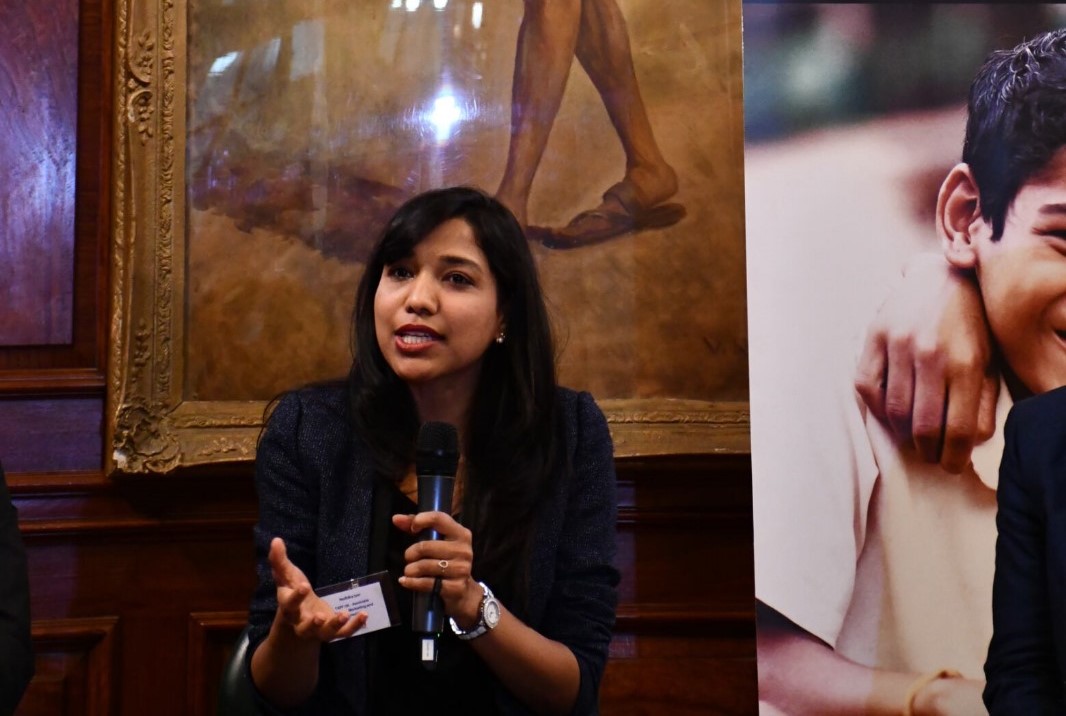
Radhika Iyer, Director of Communications and Supporter Engagement at the Akshaya Patra Foundation shared statistics stating that over 2 million pupils are eligible for free school meals in England in the academic year of 2022/23, compared with 1.89 million pupils in 2021/22, not including children of households who are not eligible for free school meals but are still at a high risk of hunger.
She said, “While a large part of the country is so prosperous, millions of children live in poverty, lacking access to adequate nutrition and fresh food. Food banks report increased demand, highlighting the severity of the issue. Government policies and community initiatives continue to address these pressing concerns, but more comprehensive solutions are needed to ensure all children have a stable and nourished upbringing for our children.”
She also shared that during the holidays, Akshaya Patra UK school holiday food service is the busiest and in great demand as there is no guaranteed free meal. “Akshaya Patra steps in to meet that necessity of a nutritious lunch. We offer hot meals which are free from preservatives, and processed foods and are freshly prepared each morning.”
A nationwide MRP poll, released by The Food Foundation in 2023 revealed strong backing for the expansion of Free School Meals. The survey indicated that eight out of ten individuals in England (80%) endorsed calls for the government to extend Free School Meals to all children living in households receiving Universal Credit. At the time, around 800,000 children in England were ineligible for Free School Meals despite residing in poverty.