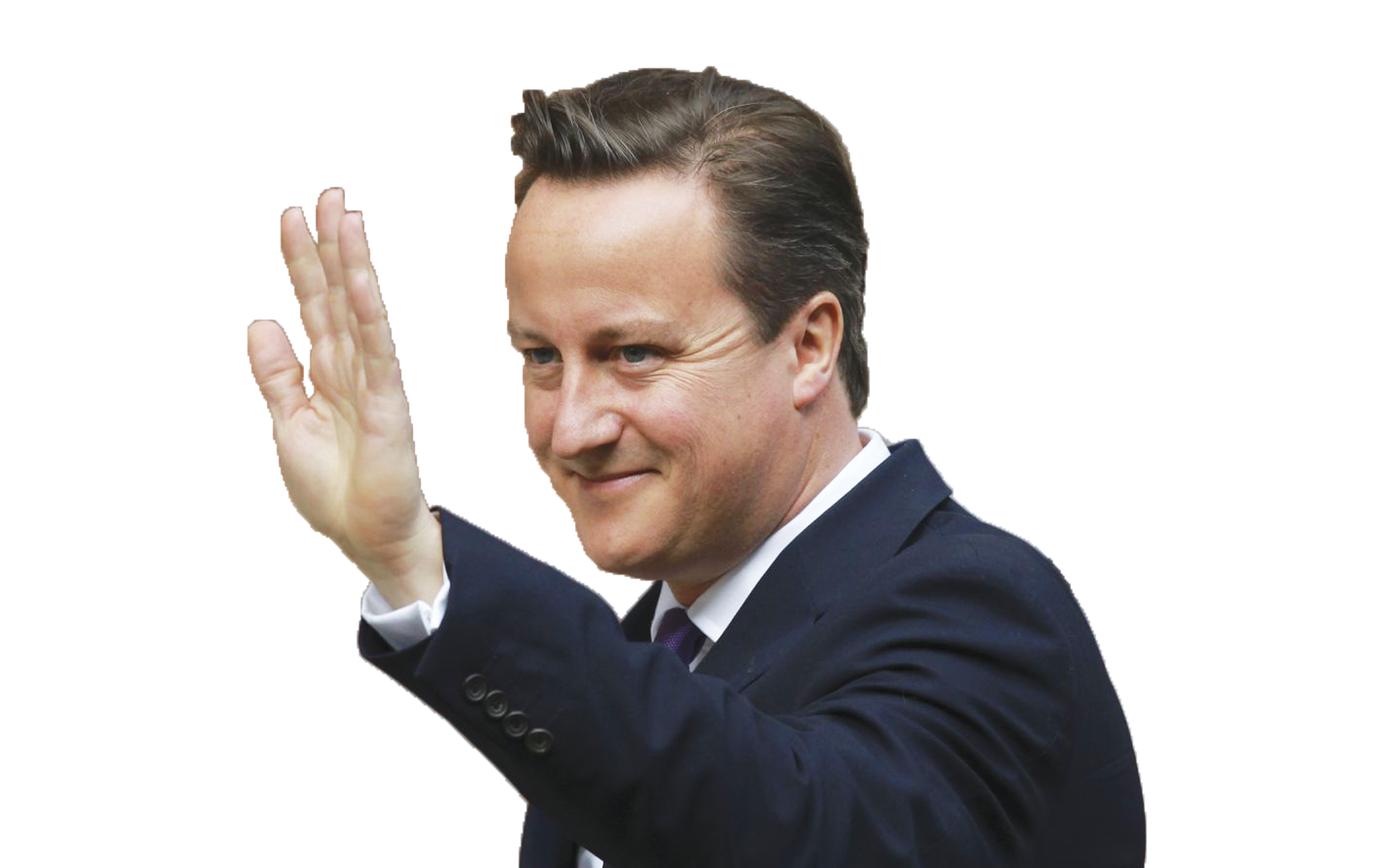
Former premier David Cameron surprised many quitting as a Conservative MP, after 15 years, saying that he does not want his presence on the Conservative backbenches to serve as a ‘distraction’ to British Prime Minister Theresa May. This came two months after he spent watching Theresa May allegedly purging his allies and tying up key policies. It is rumoured that Mrs May had not spoken to Mr Cameron since she took over as the Prime Minister until he called her to say that he could no longer serve as a backbencher. The 49-year-old former PM had initially said that he was very keen to remain an MP after the UK decided to leave EU, but on Monday he said that he had changed his mind after concluding that he would be ‘a diversion to the important decisions that lie ahead for my successor’, including on Brexit.
Mr Cameron’s decision to stand down as the Witney (Oxfordshire) MP, with immediate effect triggered a by-election in his constituency, and took Westminster by surprise on Monday, 12 September.
The Times reported it as an alleged warning to his successor, friends have said, that Mr Cameron would make a defence of his education legacy – especially free schools programme – a priority outside the Parliament. With full intention to support Mrs May (59) and her strong leadership in the future, he denied that the current PM’s re-introduction of Grammar school was the last straw for his decision, but made clear that he wanted to have the freedom to air his own view. Mrs May allegedly tried to distance herself from the ‘old Etonians’ such as Mr Cameron, pledging to end the era of ‘the priviledged few’.
It is believed that Mr Cameron had consulted former Tory PM Sir John Major and a few others before making up his mind over this summer. He will now concentrate on finishing a memoir for publication in 2017 and is likely to join the lecture circuit, perhaps make some more money (it however may not be as much as the £80-odd million of former Labour PM Tony Blair). Besides free schools, he may also be seen focussing on international aid and tackling corruption as he plans to remain in public life. He reportedly told his friends that he wanted to avoid following the example of Sir Edward Heath, a persistent backbench critic of Margaret Thatcher or the Labour MP Tony Blair after he left Downing Street.
Indians lose a friend
The British Indian community members cannot deny that it was David Cameron who won their allegiance and enticed them to vote for the Conservative party after being Labour supporters for years. Even the first generation Brit-Indians witnessed David Cameron’s determination to win them over and Mr Cameron called himself ‘Britain’s first Asian Prime Minister’ in a jest, during an exclusive one-to-one interview with Asian Voice, just before 2015 General Elections.
He regularly visited temples and community centres across the country, he introduced annual Diwali and Vaisakhi receptions at 10 Downing Street, that were attended by community leaders, and in 2010 he attended Morari Bapu’s Ram Katha at Wembley Arena. During Diwali he even visited the Swaminarayan temple, with his wife Samantha, who looked gorgeous in a beautiful red saree.
Mr Cameron had put a special emphasis on building relations with India, and asked the British Indian Diaspora to play a big role in that, leading to the formation of Conservative Friends of India. Indian Prime Minister Narendra Modi visited the UK during his tenure and also Westminster square witnessed erection of a new statue of Mahatma Gandhi. Mr Cameron even appointed Priti Patel MP as the first ever Indian diaspora Champion, to ensure the relationship with India and Indians flourished. He made 3 official visits to India (in July 2010, February 2013 and November 2013), much more than any other prime ministers of the UK.
Theresa May – to win 2020 election with majority?
According to an analysis by Martin Bexter of Electoral Calculus, the Telegraph reported that Theresa May looks set to win the 2020 election with a majority of 100 seats, leaving Jeremy Corbyn’s Labour trailing under 200 MPs, according to the new analysis of the boundary changes. However it is not clear if the Indian population would support Theresa May. Ever since her election, the community has not had any particular interaction with the new PM.
The review and current opinion polls predict that the Conservatives would hold 349 seats in the House of Commons, while Labour would have just 176, the first time the party would have fewer than 200 MPs since the 1920s and Mr Corbyn has just a six per cent chance of winning the 2020 elections, with an outright majority compared to Mrs May’s 76 per cent chance.
With boundary changes being proposed to reduce the number of MPs from 650 to 600 and to more evenly distribute the number of voters in each constituency, Labour has signalled it will fight the “unfair, undemocratic and unacceptable” changes, stressing they are based on an ‘out of date” version of the electoral register based on populations recorded in the electoral roll for 2015 and missing two million voters who signed up to vote in the EU referendum.
Labour’s Sadiq Khan warned the party leadership not to use the review to get rid of opponents. The London Mayor reportedly said: “What this shouldn’t be used as an excuse for is either from the Conservative Government to reduce the number of Labour MPs or by the Labour leadership, and I’m sure they wouldn’t, to get rid of unpopular Labour MPs.”
Mr Khan said the case load of a London MP is “humongous”.
He added: “I think the Government is making a big mistake reducing the number of Labour MPs in London.
“At the same time they are increasing the number of unelected peers in the House of Lords as a reward for sucking up to the previous Prime Minister.”