The UK's National Health Service (NHS) is a key battleground for the EU referendum. As the D-Day approaches, the battle lines have been drawn between In and Out campaigners over what Brexit would mean for the NHS.
While the debate whether Britain staying in the EU is good for the nation's health is heating up, there have been strong views from either side on the consequences for the NHS.
Britain leaving EU could harm patient care and public health, according to the Royal College of Physicians (RCP), the doctors' professional body representing 30,000 medics.
According to a report in The Independent, Professor Jane Dacre, RCP president, said: “The RCP call for views has demonstrated support for the UK to remain in the European Union for health reasons,” she said. “It has highlighted the considerable health benefits that EU membership brings to this country as well as the harm to patient care and public health that a withdrawal from the EU could entail.
“The EU is not without its faults, but there is a consensus that solutions are best found through continued EU membership, given that the health benefits of remaining in the EU outweigh the disadvantages of leaving.”
In the same media report, Professor Sir Simon Wessely, president of the Royal College of Psychiatrists, who submitted evidence to the RCP, said: “The survival of the NHS and its capacity to improve hinge on three core needs: more money, more people and more research. Each of these will be negatively impacted should we leave the EU.”
Although the British Medical Association (BMA) has officially not taken any position on EU referendum, it has published a document on the EU for doctors. The guide enumerates several benefits of Britain's EU membership for the NHS, the medical profession and public health.
Dr Mark Porter, the BMA's chair of council, said the referendum was a “momentous issue” with “huge implications for both the nation and indeed the medical profession”.
The BMA's document highlighted that 30,000 doctors, 11 per cent of the workforce in the UK, were trained in another European Economic Area state (the EU, plus Iceland, Norway and Lichtenstein) and praises the principle of free movement of professionals that the EU enshrines.
According to RCP and nearly 150,000-member BMA, benefits to staying in the EU included access to billions of pounds worth of European research funding and world-leading quality checks on medicines.
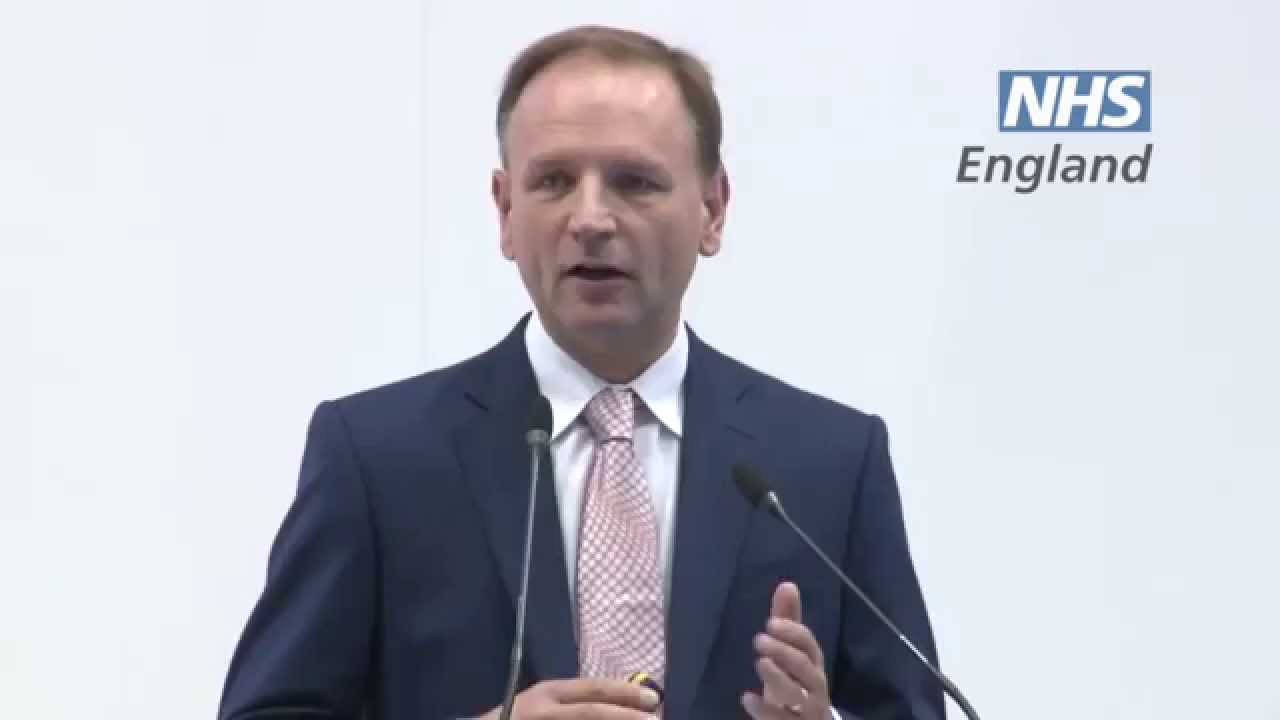
Although NHS England Media Relations Advisor Mike Forster said they aren't commenting on the referendum, its chief executive Simon Stevens has warned that leaving the EU could damage the health service.
Stevens' comments came after Bank of England Governor Mark Carney warned that Brexit could affect the economy, saying that the risks could “possibly include a technical recession”.
Stevens told BBC One's Andrew Marr Show: “If Mark Carney is right, then that is a severe concern for the NHS, because it would be very dangerous if at precisely the moment the NHS is going to need extra funding, actually the economy goes into a tailspin and that funding is not there. It's been true for 68 years of NHS history that when the British economy sneezes, the NHS catches a cold and this would be a terrible moment for that to happen at precisely the time the NHS is going to need extra investment.”
The UK attracts many skilled workers from Europe. They make up around 10% of NHS doctors and 4% of nurses. In total, around 130,000 citizens from other EU countries work in the NHS.
“Doctors and nurses want to stay in Europe because they understand that quitting the single market would damage the NHS by shrinking the economy,” chief secretary to the Treasury Greg Hands was quoted as saying in The Independent report.
Stevens rejected the idea, suggested by Leave campaigners, that exiting the EU would free up money that currently goes to Brussels. At best, this would fund the NHS for 19 days a year, he said.
Stevens said the NHS had “benefited enormously” from having doctors, nurses and care workers from the EU working within the health service.
There would be an impact if any of those 130,000 staff chose to leave the NHS because of uncertainty over work visas if the UK left the EU, he added.
And shadow health secretary Heidi Alexander said: “If we vote to leave the EU on 23rd June, we risk plunging the NHS into an even deeper crisis – a crisis that could leave us with fewer doctors, fewer nurses and frontline services at risk of closure.”
On the other hand, Leave campaign has claimed staying in the EU could increase the UK's population by up to 5.23m by 2030, which will put the NHS under “unsustainable” pressure.
The group calculates the NHS could have to contend with a new group of patients the size of “four Birminghams”, and A&E demand could increase by up to 57%.
Its calculations are based on five new states (Turkey, Albania, Montenegro, Serbia and Macedonia) joining the EU by 2020 and the pull factor of the UK's Living Wage.
Countering the claim, the Remain campaign said it was “absurd” to base figures on five new EU states by 2020 and the UK could veto any new country joining, and apply restrictions on free movement for new EU states.
Prime Minister David Cameron has said it will be “decades” before Turkey joins the EU and there is no firm date for the accession of Albania, Montenegro, Serbia and Macedonia.
The Office for National Statistics predicts that net migration to the UK – from countries across the world, not just the EU – will add up to just under 3 million by 2029.
However, according to psychiatrist Dr Max Pemberton, Britain leaving the EU is the only way to save the cash-strapped NHS.
Opposing Health Secretary Jeremy Hunt's assertion that the NHS would suffer if Britain quits the EU, Dr Max Pemberton, writing in the Daily Mail, said: “The money we spend on the EU would, in one fell swoop, sort out the financial difficulties faced by the NHS. By leaving the EU we can solve the NHS financial crisis without having to increase taxes or make cuts elsewhere. The other reason leaving the EU would help the NHS can be summed up in one word: immigration. This is putting the NHS under immense strain. It simply wasn't designed to support untold numbers of people from multiple countries having ready access to its resource. Immigrants from the EU are more likely to have children than UK nationals, for example, meaning that they place more pressure on maternity services.
“Part of the problem is that no other EU country operates a system quite like the NHS, entirely free at the point of access and entirely funded by taxpayers' money. It is easily misused by those who can come here under EU free movement legislation, receive free healthcare, then return home. Most of the doctors working here who qualified overseas are not from the EU anyway. There are as many doctors here from India alone as there are from all other EU countries put together, despite changes to immigration rules in 2010 that made it significantly more difficult for non-EU doctors.”
At present, an estimated 50,000 Indian doctors are working in the UK, according to Dr Ramesh Mehta, the president of the British Association of Physicians of Indian Origin (BAPIO). About 15,000 to 20,000 doctors from Pakistan, Bangladesh and Sri Lanka work in Britain.
According to the health secretary, the economic shock caused by Brexit could starve the health service of investment. He said some of the 100,000 foreign EU citizens who work in the NHS could also leave the country amid “uncertainties” over the status of visas and work permits.
Writing in the Observer Hunt said he believed Britain would survive outside the EU and would make trade deals but not without “years of economic uncertainty”.
According to doctors Chris Hall, 77, and wife Elizabeth, 75, leaving the EU would be an enormous threat to the institution. In a report in Essex County Gazette Standard, they highlighted the views of senior medical professionals who agree leaving the EU would have a detrimental impact on medical research into fatal conditions such as cancer. They said there would also be implications to information sharing and data used to combat rare or infectious diseases across borders. Mr Hall has spent 49 years as a GP and Mrs Hall retired as medical director of St Helena Hospice after 25 years.
PAGB (Proprietary Association of Great Britain), a UK trade association representing manufacturers of branded over-the-counter medicines, self care medical devices and food supplements, said over-the-counter medicines, self care medical devices and food supplements are highly regulated at the EU level.
The manufacture and supply of these products in the UK is largely governed by EU legislation, which has been significantly shaped and influenced by UK governments in the past. Leaving the EU would leave the UK with no further influence in future on such legal developments.
Speaking to Asian Voice, it said: “PAGB does not seek a voice in the referendum debate, nor does it intend to influence the decisions of its staff or member companies. Those who have a vote in the referendum should exercise it according to their own beliefs and convictions. However, it is important that full information is available to the people of the UK and so the PAGB wishes to express its support for the UK remaining a member of the EU. This will underpin the continued strength of the consumer healthcare industry to invest and employ in the UK.”
“In terms of high street pharmacies, we do not see any immediate major impacts were the UK to leave the EU,” Benedict Lam MRPharmS, Senior Editor – Opinion and Blogs, The Pharmaceutical Journal, told the Asian Voice.
The Pharmaceutical Journal is a Royal Pharmaceutical Society publication.
“The argument for leaving the EU has been formed from misunderstandings and wild speculation. In reality, there is too much at stake for the UK to leave the EU,” says Martin McKee, professor of European public health at London School of Hygiene and Tropical Medicine, in The Pharmaceutical Journal.
Jamie Martin, science policy adviser for Scientists for Britain, a group of scientists who want to leave the EU, wrote in The Pharmaceutical Journal: “It is time to dispel the myth that Brexit will be detrimental for scientists, healthcare professionals and the pharmaceutical industry in the UK.”
When contacted Pharmaceutical Services Negotiating Committee, its Communications Officer Melinda Mabbutt said PSNC does not have a position on the EU referendum.
Dr Mark Porter, head of the British Medical Association, has said campaigners for Brexit have made “farcical and fatuous” claims about the benefits of Britain leaving the EU.
Leave campaigners Boris Johnson and Michael Gove have said that the health service would get a “£100m a week cash transfusion” if Britain left the EU. But the BMA chief – in a keynote speech to hundreds of doctors at the union's annual conference in Belfast – has said the claim is “based on fantasy figures” which are designed to deceive the public.
He said the NHS might not exist at all without the contribution of tens of thousands of doctors who have come from overseas to work in the NHS.
Dr Porter, however, insisted that the union holds a neutral view on the EU referendum.