Thousands of flights have been cancelled and major Gulf airports suspended operations due to turmoil caused by the US-Israel war on Iran, stranding hundreds of thousands of travellers.
Special evacuation flights were arranged from the UAE, while refunds and free changes are offered to affected passengers. Airline stocks dropped sharply, oil and gas prices surged, and global markets declined. Dubai's airport closed for another day, making this the most disruptive aviation event since the Covid pandemic.
Negotiations vs retaliations
As Asian Voice went to print, the Iranian Red Crescent had reported at least 787 fatalities resulting from US-Israel confrontations.
Different countries have responded in varied ways: Canada and Australia offered their support, whereas Russia, China, and Spain voiced criticism. India advocated for dialogue. At the same time, British Prime Minister Keir Starmer, French President Emmanuel Macron, and German Chancellor Friedrich Merz are urging renewed negotiations concerning Iran’s nuclear programme. They emphasised the value of reaching a negotiated agreement and pledged assistance to prevent further missile and drone assaults.
Less than two weeks after convening his first Board of Peace meeting, President Trump initiated the strike on Iran. He stated that the operation was originally expected to last “four to five weeks,” though he affirmed the US military’s readiness to continue for much longer if necessary.
While security remains tight in the US, UK and India, reactions to the reported death of Ayatollah Ali Khamenei have been deeply divided. Supporters have been seen mourning in parts of North London and in Indian cities, including Shia communities holding gatherings and processions to express grief and solidarity.
In Iran and other countries, large crowds also took to the streets. Millions were reported to have mourned in Tehran and other cities, with processions and symbolic gestures such as raising a red flag over the Jamkaran Mosque, a sign of retaliation. Elsewhere in the Middle East, solidarity rallies were reported, including in Baghdad.
In Pakistan, protests in several cities turned violent. Demonstrators stormed diplomatic sites, set fire to offices, and clashed with security forces. Authorities imposed curfews and deployed troops as at least dozens were killed and many injured during the unrest sparked by Khamenei’s death.
Supporting customers amid Middle East disruptions
Stranded travellers, grappling with uncertainty and limited government help, have encountered difficult circumstances. Travel agents have stepped forward, aiding, helping manage disrupted itineraries, and offering guidance. UAE and Qatar have also come forward to cover hotel and meal costs for those stranded in their countries during Iran attacks.
Asian Voice spoke to several experts, who assured they are working diligently to support customers through the turmoil.
Hitesh Mehta, Director of Citibond Travel, commented, “Given the recent developments in the Middle East, we’re monitoring the situation closely and assisting travellers whose plans are affected. Their safety and peace of mind are our highest priority. With airspace closures continuing to create unpredictability, our teams are working around the clock to ensure travel arrangements run smoothly. Our five decades of industry experience and strong relationships with airlines and hotels enable us to safeguard travellers’ interests effectively.”
He added, “We advise travellers to contact us before making any changes, as airline schedules and policies are frequently updated. Ensure we have your correct contact details, and avoid independent cancellations, official airline waivers often provide better options. Our experience navigating major global disruptions, from the 2010 Ash Cloud to the Covid-19 crisis, means we are well prepared to support travellers in real time as the situation develops.”
Jaymin Borkhatria, Chief Commercial Officer at Southall Travel Ltd, said, “For passengers yet to travel, changes or refunds are allowed where policies cover affected dates, as airspace closures impact Dubai, Abu Dhabi, Bahrain, Kuwait, Jordan, Iraq, and Iran. Postponing travel may often be the most practical option. For those already overseas, some airlines like Emirates and Qatar Airways are rebooking tickets on alternative carriers where possible, though availability is limited due to the backlog. We advise travellers to monitor airline websites, follow FCDO travel advice, stay in contact with their providers, and allow extra time for rebooking.”
Managing Director of Brightsun Travel, Deepak Nangla added, “The US-Israel-Iran conflict has disrupted global air travel, with our support teams handling double the usual call volume in 72 hours. Requests for guidance, rerouting, and refunds have risen 250%. Our priority is passenger safety; we follow FCDO advisories, assist with refunds or alternative travel, and provide updates via our website, chat, and WhatsApp. We remain committed to supporting all passengers until they reach their destinations safely.”
Joely Charlotte Garland, Head of Marketing at Travelpack, said, “Our crisis team is managing disruptions by processing bookings in departure-date order to secure alternative routes and repatriation flights. For imminent departures, we are handling cancellations and re-accommodations, working closely with airlines to obtain refunds or alternatives. We advise passengers to stay calm, follow local authority guidance, and await direct contact from travel providers. Those travelling in the coming weeks should be patient while we prioritise those in immediate need.”
Ujjwal Sehgal, Managing Director of Skylord Travel Plc, said, “The current situation has caused major disruptions for passengers travelling to, from, or transiting through the Middle East. Our priority is supporting customers and sub-agents with timely guidance as airlines adjust schedules. We assist with rebooking where alternatives exist and process refunds per airline policies.
“Our team is working extended hours to manage enquiries and ensure travellers understand their options. Passengers should regularly check airline websites, as flight updates may appear there before agents are notified. Those in countries with closed airports should follow local embassy and government guidance. While travel agents are doing all they can, we urge governments to support repatriation efforts where commercial options are unavailable.”
Travellers stuck in UAE share experiences
Many travellers heading to Dubai for holidays, work, or transit were left stranded as tensions escalated in the Middle East. Several countries have since stepped in to evacuate their citizens, and many have now returned home. Among them was Indian badminton ace PV Sindhu, who safely arrived back in Bengaluru after a tense few days in Dubai. She shared on social media that she and her support staff, including Indonesian coach Irwansyah Adi Pratama, were stranded and even experienced a close call when an explosion occurred near their accommodation.
However, many others remain in Dubai, waiting for flights to resume and assistance from UK governments. Asian Voice spoke to some of those still there, who shared their experiences with us.
Vishal Ladwa, Co-founder and CEO of Unndoo, was on his first full holiday celebrating his wife’s 35th birthday when tensions escalated. “We booked a holiday to celebrate my wife's 35th birthday. I initially thought ‘wow that’s big news’, but in the selfish bubble of a holiday, you put it to the back of your mind,” he said.
He explained that on Saturday the 28th, they received an emergency alert, prompting everyone to return to their hotel rooms. “From here, we started to hear the bombs… there was just a lot of confusion,” he said, adding that although missiles were intercepted daily, the explosions were mostly distant. “Last night was the worst, with continuous sounds of bombings at 2am, with our windows shaking.”
Praising the local authorities, Vishal said, “The UAE government has been great and will cover our costs while we are stuck here, which has been a relief.” He noted that life in Abu Dhabi has largely continued as normal, with hotel staff keeping things calm. However, he added that after registering with the FCDO, “all we have received is an empty message. No real communication, no real plan.”
He stressed that the situation in Abu Dhabi appears far less severe than media images suggest and urged family and friends to “trust the efficiency, diligence and care that the UAE government has shown so far.”
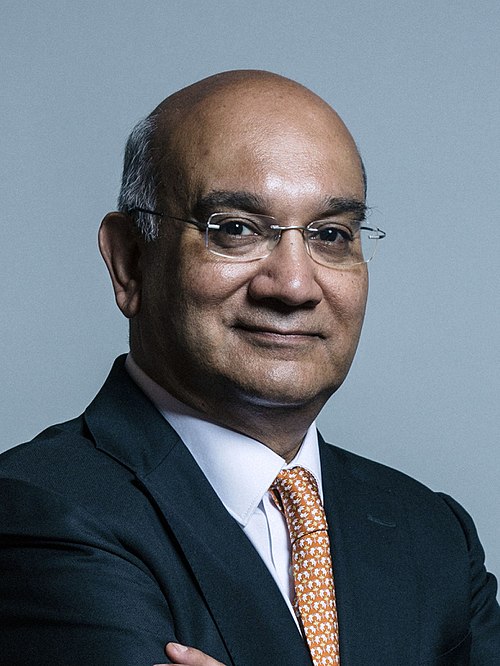
Former MP Keith Vaz, who is currently in UAE, said he was returning from India after meetings related to his diabetes charity when the crisis unfolded. “I was coming back from India with a stopover in Dubai because we had meetings on tackling the high levels of diabetes,” he explained. “Then the Israelis and Americans attacked Iran, which led to the shutdown of flights. Emirates has stopped services, the airspace was closed, and we basically don’t have a flight back to the UK.”
He noted that some travellers have managed to leave via Oman, and that limited flights have now resumed. “The airspace is open in a limited way, and I know some people have arrived on private aircraft,” he said, adding that he hopes regular flights will restart soon.
While the British government has asked citizens to register, Vaz said, “Apart from registering our names, there’s little evidence that anything is being done.” He pointed out that around 76,000 people have signed up for assistance and urged the UK to take stronger action, especially for those in urgent need.
Praising the UAE authorities, he said, “The government of the UAE has been extraordinarily generous. They are going to pay for accommodation and food for travellers waiting for flights.” He added that daily life remains calm, with people acting cautiously. “My message is: stay calm and carry on.”
Maitri Jain, who is also currently in Dubai, said she first learned of the attack on the morning of 28 February 2026. “At that moment, I didn’t fully grasp the potential consequences, but by late afternoon reports of possible threats to the UAE and neighbouring GCC countries began circulating,” she said, adding that she then started closely monitoring social media and news updates.
She praised the UAE authorities, saying, “The defence and interior authorities have taken strong precautionary measures to ensure everyone’s safety.” According to her, the government has issued timely alerts and clear guidelines on essential supplies and emergency procedures.
“Despite hearing occasional interceptions and jet activity, daily life remains stable, food, healthcare, transportation and other services continue normally,” she added.
Ayatollah Ali Khamenei killed in joint US-Israel strike
Iran’s Supreme Leader, Ayatollah Ali Khamenei, has been killed in a joint US-Israeli strike, according to US President Donald Trump. Writing on his Truth Social platform, Trump described Khamenei as “one of the most evil people in history” and confirmed his death.
Satellite images showed damage to Khamenei’s Tehran compound, and Israeli officials indicated he may have been killed, later confirmed by Iranian state media.
On Truth Social, Trump called the strike “justice for the people of Iran and all great Americans,” saying other leaders were killed and warning that precise bombing would continue.
Initially denied by Iranian media, Khamenei’s death was later confirmed in a televised address announcing 40 days of mourning, with Ayatollah Alireza Arafi appointed to the interim Leadership Council.
Though Iran’s Supreme Leader Ali Khamenei has no direct Indian ancestry, his clerical lineage traces back to Kintoor, a village in Uttar Pradesh’s Barabanki district, about 70 km from Lucknow. The village was home to Syed Ahmad Musavi Hindi, grandfather of Ruhollah Khamenei, who migrated to Najaf and later settled in Khomeyn, Iran, in the early 19th century. Originally from Nishapur in Iran, the Musavi family had settled in Kintoor in the early 18th century before returning to Persia around 1830, establishing the lineage that would later shape post-revolution Iran.
Modi reaffirms India’s peace stand
Prime Minister Narendra Modi said India’s stance on ongoing global tensions remains firm, reiterating New Delhi’s consistent call for peace and stability. He noted that when two democracies stand together, their collective voice for peace grows stronger.
Expressing concern over the situation in West Asia, he said India supports resolving all disputes through dialogue and diplomacy.
Prime Minister Modi reiterated India’s support for resolving disputes through dialogue and ensuring the safety of Indian citizens amid the Middle East crisis, following talks with Canadian PM Mark Carney.
He chaired a Cabinet Committee on Security meeting with senior ministers and officials, and held calls with the Saudi Crown Prince, Bahrain’s King, and Jordan’s King. Modi condemned the attacks on Saudi Arabia and Bahrain, stressed early restoration of peace, and thanked the leaders for protecting Indians in the region. India is also preparing for potential fuel shortages, exploring options like limiting exports, increasing Russian crude imports, and considering LPG rationing due to disruptions in the Strait of Hormuz.
------------------------
Conservative MP for Witham and Shadow Foreign Secretary Dame Priti Patel highlighted the situation in Iran in an Instagram post, calling it “This could be a hugely consequential moment for the entire Middle East. Britain cannot sit on the fence. We must also protect our military personnel and assets in the region, British nationals, and support our allies in the Gulf who are now being attacked. The murderous, terror-supporting regime in Tehran should have nobody's sympathies at this time. President Trump is right that this disgraceful regime poses an intolerable threat, from their nuclear programme to their ballistic missiles and hostile interference. We know what they plot on our own soil. And they have murdered a generation of freedom seekers in Iran in recent weeks. We must now work with our allies intensively and ensure our national interest and national security is front and centre.”