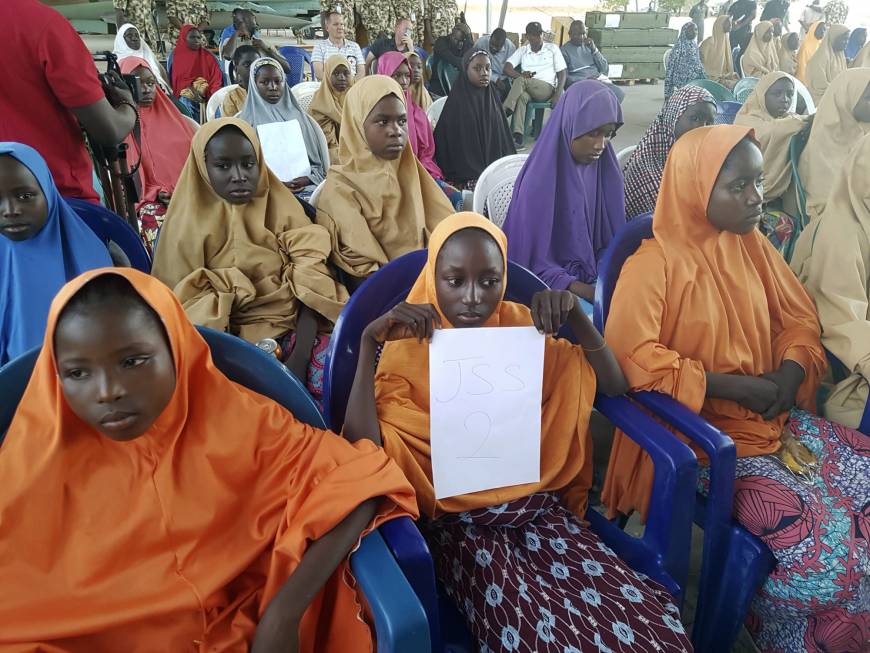
LAGOS: Boko Haram Islamists who kidnapped 110 schoolgirls in Dapchi, northeast Nigeria, over a month ago have so far returned 104 of the students to the town, the government said. Information Minister Lai Mohammed said the girls were released "unconditionally". "No money changed hands," he told reporters in the capital, Abuja.
He added: "As of now, the number (of girls confirmed to have been released) has increased to 104."
One of the missing girls' parents, Kachalla Bukar, said the militants shook hands and took pictures with them before leaving. Fatima Gremah, 13, who was among those released, told reporters: "Boko Haram said we were lucky we were young and also Muslims. "One of us who is a Christian has been left behind. They said they would keep her until she converted. If she converts, they will release her. She is the only one among us left behind."
Nigeria's President Muhammadu Buhari said last week the government had "chosen negotiation" to secure the return of the Dapchi girls rather than use military force. Mohammed had earlier said their release was the result of "back-channel efforts" with the help of "some friends of the country", without elaborating.
Military operations in and around Dapchi had been suspended "to ensure free passage" of the girls and also to ensure "that lives were not lost", he added. Nigeria's presidency said separately the girls were in the custody of the country's intelligence agency, the Department of State Services.
The Dapchi kidnapping on February 19 brought back painful memories of a similar abduction in Chibok in April 2014, when more than 200 girls were taken. Alhaji Deri's 16-year-old daughter Aisha said they were not mistreated during their time in captivity. But she added: "When we were being taken away, five of us died on the way. They brought us back this morning, dropped us outside the motor park and said we should all go home and not go to the military because they will claim to have rescued us." Parents earlier said the girls were brought back to Dapchi in nine vehicles at about 8 am. Some of the students headed to their homes in surrounding villages.
Kidnapping as strategy
Boko Haram has used kidnapping as a weapon of war during its nearly nine-year insurgency which has claimed at least 20,000 lives and made more than two million others homeless. The Islamic State (IS) group affiliate has not claimed responsibility for the abduction but given the location, Barnawi and his fighters have been blamed.
Amnesty International claimed that the military ignored repeated warnings about the movements of Boko Haram fighters before the kidnapping. The military rejected the allegation, calling it an "outright falsehood." Amnesty's Nigeria director Osai Ojigho said the abduction "must be the catalyst for the government to ensure adequate protection of all schools in the northeast so that this can never happen again".
Similar claims about security failings were made about the hours leading up to the abduction of 219 mostly Christian girls from Chibok, in neighbouring Borno state. That brought sustained worldwide attention on the conflict for the first time and triggered a global campaign for their release spearheaded by US former first lady Michelle Obama.