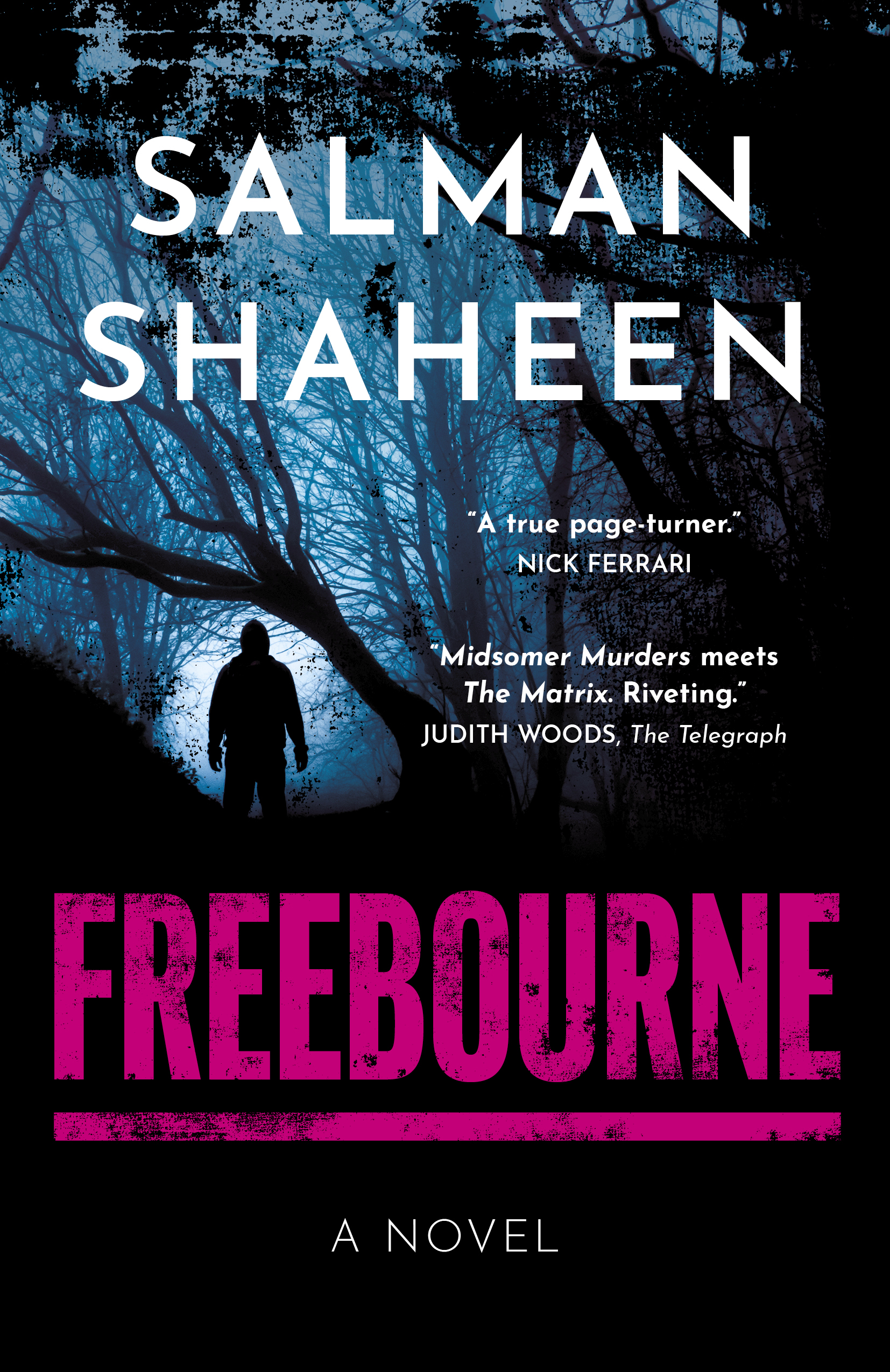
Set in a near-future English town, ‘Freebourne’ is a speculative murder mystery that fuses a tense thriller with profound questions about free will and the rapid advance of technology. It will be published by Roundfire Books, the fiction imprint of Collective Ink, on October 28.
How did the idea for‘ Freebourne’ first come to you?
I’ve always loved speculative fiction, the grounded kind found in Black Mirror or Kazuo Ishiguro’s ‘Never Let Me Go’, where a near future feels familiar but is subtly altered by technology. That small shift lets me explore big questions: What defines human nature? Are we shaped by birth or society? How does technology change who we are? As a politician, I’m drawn to stories that blend philosophy and politics, and I wanted to capture those ideas in ‘Freebourne’, set in an idyllic English town of the near future. Years ago, I was the literature editor of Varsity, the student newspaper at Cambridge University. I interviewed one of my heroes, Jill Paton Walsh. She said the best way to weave serious themes into a book was through a gripping mystery. That advice stayed with me, and one morning all those influences, technology, philosophy, politics, clicked together, along with a twist I can’t reveal but which I hope will surprise readers. That’s how ‘Freebourne’ was born.
How did you balance real-world detail with the book’s speculative AI and tech elements?
‘Freebourne’ is set in a very near future that feels real and familiar. I grew up in a quiet rural town in Suffolk, and I wanted readers to experience Freebourne much as my protagonist, Dr Harry Coulson, does, an ordinary English town where life moves at a slow, everyday pace, only with a few subtle changes. To imagine those changes, I looked at the dizzying speed of AI. Even today, graduates face jobs that no longer exist, and industry leaders like Sam Altman warn of technology’s power. I wondered what might happen if tech could alter our minds directly. In the novel, Harry invents Polaris, a device that visualises memories and eases trauma more effectively than any drug. This breakthrough sparks fierce debate. Some hail it as healing; others see it as science overstepping, threatening the essence of humanity. The story unfolds amid a clash of science and faith, asking how far progress should go and how we can guard against its dangers, a world just a few decades ahead, yet entirely believable.
Several characters raise questions about trust, morality, and power. Was there one character you particularly enjoyed writing?
I’m genuinely fond of all the characters in ‘Freebourne’, each drawn from different walks of life and packed with quirks. The protagonist, Dr Harry Coulson, is especially close to my heart. A fundamentally good man, he’s lost his wife and his business, and comes to Freebourne hoping to rebuild his life while developing his breakthrough technology, Polaris. Harry lives by seven “geek rules” inspired by the sci-fi culture he grew up with. Rule One, borrowed from ‘Star Trek’, is “the needs of the many outweigh the needs of the few,” a principle that drives him to help when he finds a woman’s body in the snow instead of walking away.
I also loved writing the supporting cast. Elliot Nwosu, a sharp, ambitious local politician, is a kind of Littlefinger from ‘Game of Thrones’: calculating, opportunistic, and eager to turn the murder in his constituency into a chance to climb the political ladder. Sachin, a young British Asian man struggling with questions of identity, reflects tensions I’ve felt myself, growing up between cultures and trying to reconcile two worlds. And then there’s River, the free-spirited hippie who runs the wonderfully eccentric Rainbow Café, a place inspired by every music festival and bohemian venue I’ve ever visited. Together these characters, along with several others who reveal their own secrets as the story unfolds, create a lively, unpredictable community.