A group of thoughtful members of the Indian diaspora, including Lord Bhikhu Parekh, Lord Navnit Dholakia, Shantu Ruparel, I K Patel, Pranlal Sheth, Kanti Nagda, Zerbanoo Gifford, Gulam Noon, K B Patel, B K Joshi, Jashwant Joshi, Shreela Flather, Usha Prashar and several others, began meeting regularly. These meetings, held almost every fortnight, either at my residence in Ealing or at the Karma Yoga House in Hoxton or at I K Patel’s hotel in Queen’s Gate, became a vibrant forum for discussion on current affairs and issues concerning the Indian community in the UK.
Many significant initiatives took shape from this informal yet dynamic circle. Among the early efforts were campaigns opposing Prime Minister Margaret Thatcher’s Immigration and Nationality Bill and Act, as well as discussions on teaching mother-tongue, multiculturalism and other pressing matters of the time. It was through these deliberations and the collective spirit of service that organisations such as the National Congress of Gujarati Organisations (UK), the Sardar Patel Memorial Society, India Centre, University of Hull and several others were formally conceived.
During one of our regular gatherings in 1982 at the residence of Ratibhai Chandaria, the Hinduja Brothers, Srichand and GP Hinduja, joined us for the first time. If I may say so, their presence was truly remarkable, both were highly engaging, radiating enthusiasm and confidence. They shared fascinating insights into their family’s journey, from their roots in India, to their time in Iran, and eventually their establishment in the United Kingdom. They spoke fondly about their father, Parmanand Deepchand Hinduja and the values that shaped their family’s vision and enterprise. Amidst the conversation and in a very understated yet clear manner, they conveyed that the Hinduja Group had already built a substantial portfolio, with assets amounting to around £250 million, which at that time was an extraordinary figure.
I clearly remember Srichandbhai and Gopichandbhai saying, “We are essentially traders. We began with trading between India and Iran (Persia) and we never wait for opportunities, we seek them.” That spirit of enterprise has defined their journey ever since.
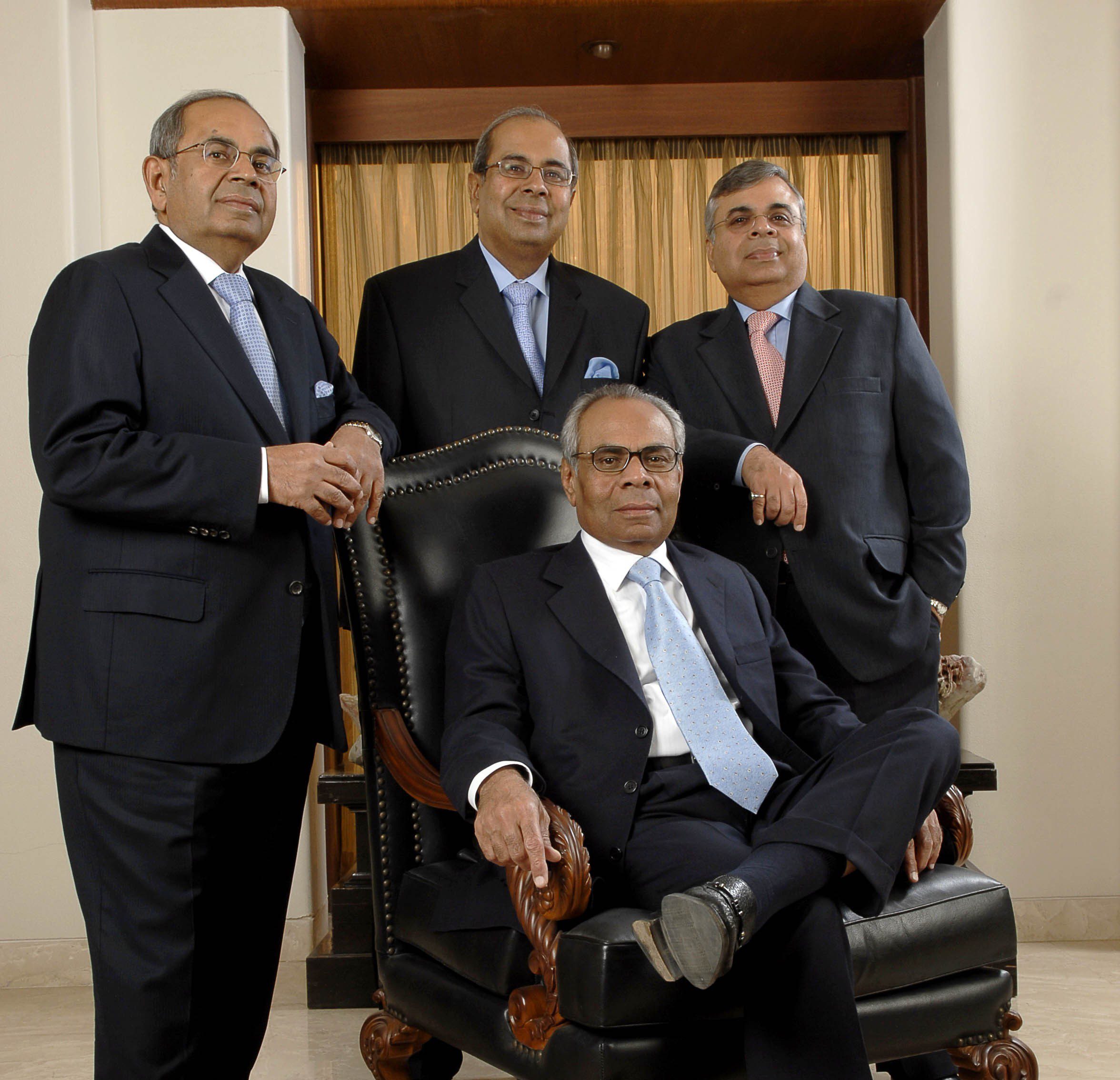
At that time, Prime Minister Margaret Thatcher was strongly advocating privatisation and British Leyland, which was losing nearly £1,000 million a year, had a manufacturing plant in Tamil Nadu. The Hinduja Group bought the plant at a discounted price and renamed it Ashok Leyland, after Ashok, one of the four Hinduja brothers who lives in India. Another brother, Prakash Hinduja, resides in Switzerland, while their eldest brother Girdhar Hinduja sadly passed away in 1962.
I have had the privilege of knowing all four brothers personally and have witnessed, over the years, how the Hindujas steadily went on to acquire and expand a remarkable range of companies across various sectors.
I remember a journalist named Rahul Jacob, who was then working for Fortune magazine in the United States. He wished to travel to London to interview the Hinduja brothers and Lord Swaraj Paul. Rahul called me requesting their contact information, which I was happy to share with him. He arrived in London in the morning, met and interviewed both the Hindujas and Lord Paul, and later, while returning to America, he called me from Heathrow Airport to thank me for my help. Rahul mentioned, half amused, that during his meetings, the Hinduja brothers spoke extensively about themselves and when he met Lord Swaraj Paul, he mostly spoke about the Hindujas!
At that time, there was a sense of healthy rivalry between them, as Swaraj Paul had also built his business from very modest beginnings in London, starting in 1965. I was fortunate to know him closely. Sadly, Lord Swaraj Paul passed away just a few months ago.
A Gujarati saying that comes to mind: “Paiso paisa ne khechi lave,” or “Money attracts more money.” I must say, the Hinduja brothers personify some of these qualities. Their drive, vision and enterprise are remarkable, yet beyond their wealth, what stands out most is their dedication to seva and their enduring commitment to our Sanatan faith.
When we were running the Hare Krishna Temple Defence Movement for the Watford Mandir, the Hinduja family extended immense support. There was a dedicated team involved in the campaign, including Ramesh Kallidai and although Peter Mandelson was then a Minister in the Labour Government, he was known to be a regular guest at the Hindujas’. During that crucial period, in which I also played an active role, the Hindujas often helped us reach the right people, not only within the Conservative Government but across political parties. Their influence and willingness to assist proved invaluable.
By 16 March 1994, the government’s two-year stay of execution for Bhaktivedanta Manor had expired, meaning the temple was to be closed for worshippers. The decision deeply hurt the Hindu community, something they simply could not accept. A massive protest march through London was organised, drawing thousands of devotees and supporters. Earlier, the European Court of Human Rights had also rejected the appeal, closing legal options.
Yet, through relentless campaigning and unity, we sought a practical and lasting solution. Land was acquired in areas surrounding Letchmore Heath, some through the help of a hospital trust and with the Hinduja family’s generous financial contribution, significant progress was made. In recognition of their generous support, the road leading to the temple was fittingly named “Dharam Marg,” which happens to share the same name as SP Hinduja’s late son, Dharam. The Hindujas believed and often said, that wherever there is Lord Krishna, there is success. Their faith and philanthropy remain a shining example of devotion in action.
Over the years, there were at least three occasions when I was truly impressed by the Hinduja family’s positive and dignified approach. One that stands out vividly was in 2000, when the Hindujas organised a grand Diwali celebration at Alexandra Palace. Unfortunately, due to unforeseen issues, the event faced some difficulties. We wrote a critical article about it in Asian Voice, titled “Happy Diwali for Hindujas”. Shortly after, Srichandbhai Hinduja personally called me and said, “CB, you have written a critical piece about us, but as a journalist, you have done your job, we can’t complain. The challenges were beyond our control due to weather and other factors.” That gesture left a deep impression on me. Despite my criticism, they never let it affect our relationship, there was no resentment or hostility. Their maturity and understanding spoke volumes about their character.
A similar instance arose later during the family’s court proceedings regarding internal disputes. We reported the matter objectively, as our duty required, even though it was understandably uncomfortable for them. Yet again, they took it with grace, acknowledging that I was simply fulfilling my professional responsibility. Such tolerance and accommodation are rare qualities, especially among people of such stature.
Over the years, I had the privilege of meeting SP Hinduja, his late wife Madhuben, their daughters Shanu and Vinoo, as well as GP Hinduja, his wife Sunitaben, their sons Sanjay and Dheeraj and their daughter Rita. Despite their immense wealth, amounting to billions, they have always been remarkably humble, gracious and deeply committed to the community’s well-being. Their generosity is widely recognised, notably, their £1million contribution to the Millennium Dome’s spiritual project, an exceptional act of philanthropy for its time, made nearly twenty-five years ago. We sadly lost Srichand Hinduja in 2023, and now, just recently, G P Hinduja has also passed away.
There are many wealthy individuals, but the Hindujas stand apart. They do not simply accumulate wealth, they channel it towards the upliftment of the community and the preservation of Sanatan Dharma. With recent demise of GP Hinduja, personally, I feel I have lost not just a respected figure, but a dear friend, someone with whom I could sit, reflect and share thoughts openly.
People often criticise the rich, but we must judge them fairly and in the right perspective. In that sense, I feel deeply saddened and distressed by the loss of G P Hinduja. When Srichandbhai was unwell, and later during my meetings with G P, we often recited together the Mahamrityunjaya Mantra, a spiritual bond that I will always cherish. With the passing of G P Hinduja, it feels as though a vital link between the Hinduja family and our community has been disturbed, if not broken. Yet, I must say, Prakash, Ashok and the younger generation have always remained humble and respectful whenever we have met.
I was very keen to attend the funeral rites and the prayer meeting, but I must admit that age-related limitations in energy and endurance, along with serious hearing difficulties, prevented me from doing so. During that time, I remained in my study, with the door closed, quietly chanting the Mahamrityunjaya Mantra. For me, along with countless others, there will no one like the Hinduja Brothers, especially Srichand and GP Hinduja. Their passing feels like losing my own brothers. They were not only exceptional in creating wealth but also in using it for noble causes and upholding the values of our Sanatan Dharma.
It is easy for people to criticise, but one must remember that over nearly six decades, what they have accomplished, and the legacy they leave behind, is something anyone would be proud of.
I would also like to fondly remember the close friendship that the late Joginder Sanger shared with the Hinduja Brothers, along with many other distinguished philanthropists and business tycoons from the UK, India and around the world.
The truth is, with GP Hinduja’s departure, our community and indeed India itself has lost a precious and irreplaceable member of the global Indian diaspora.