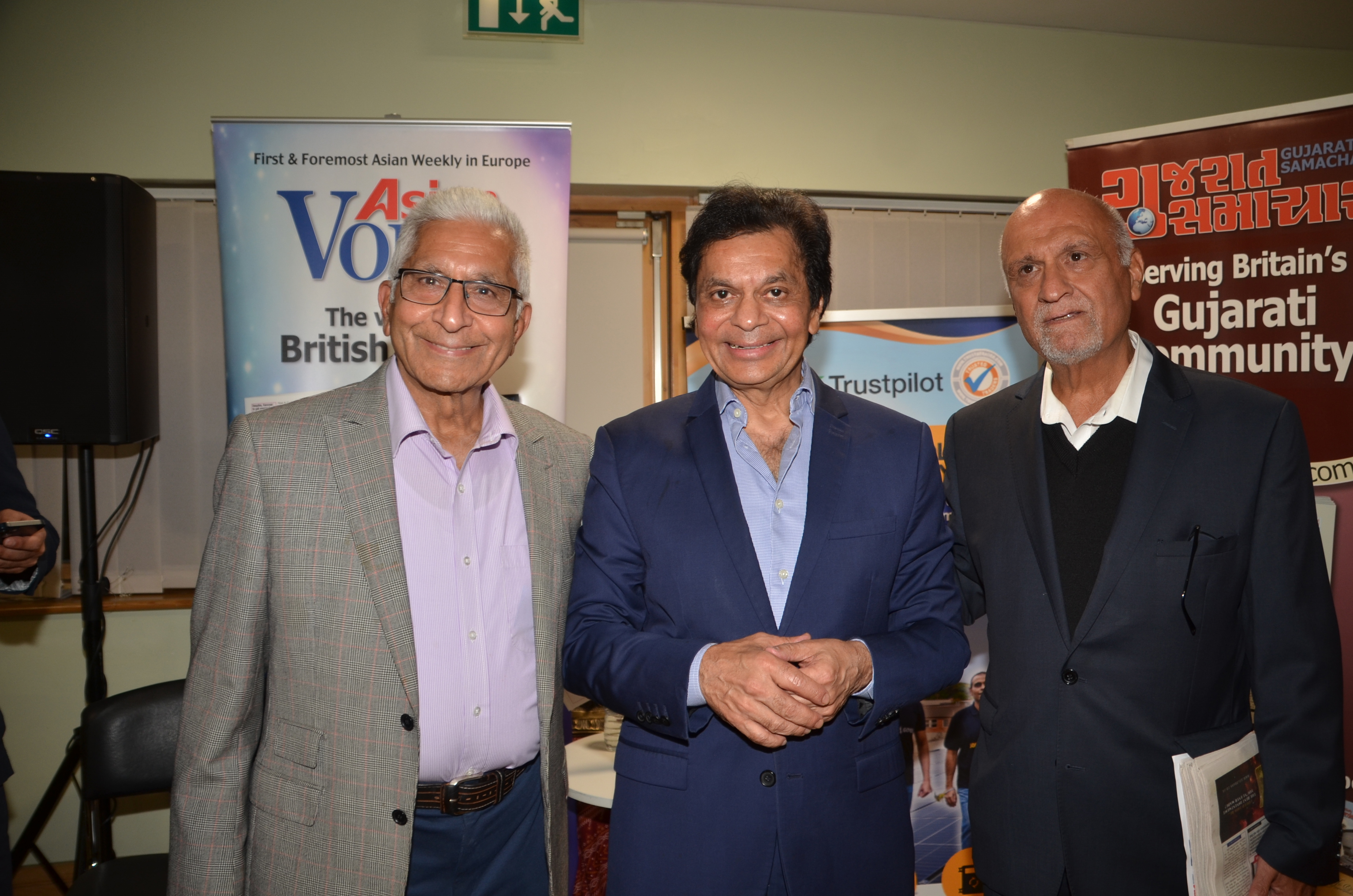
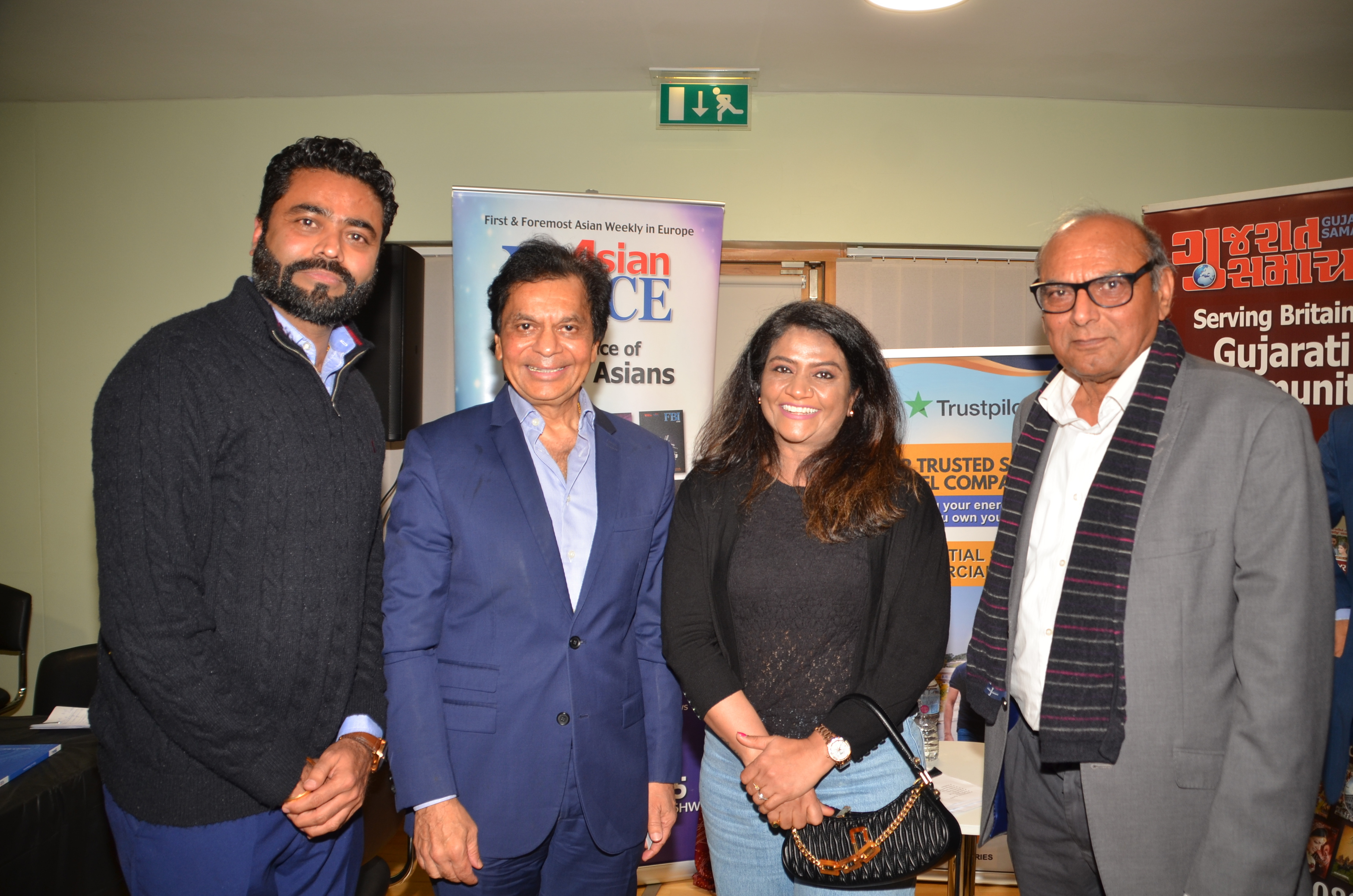
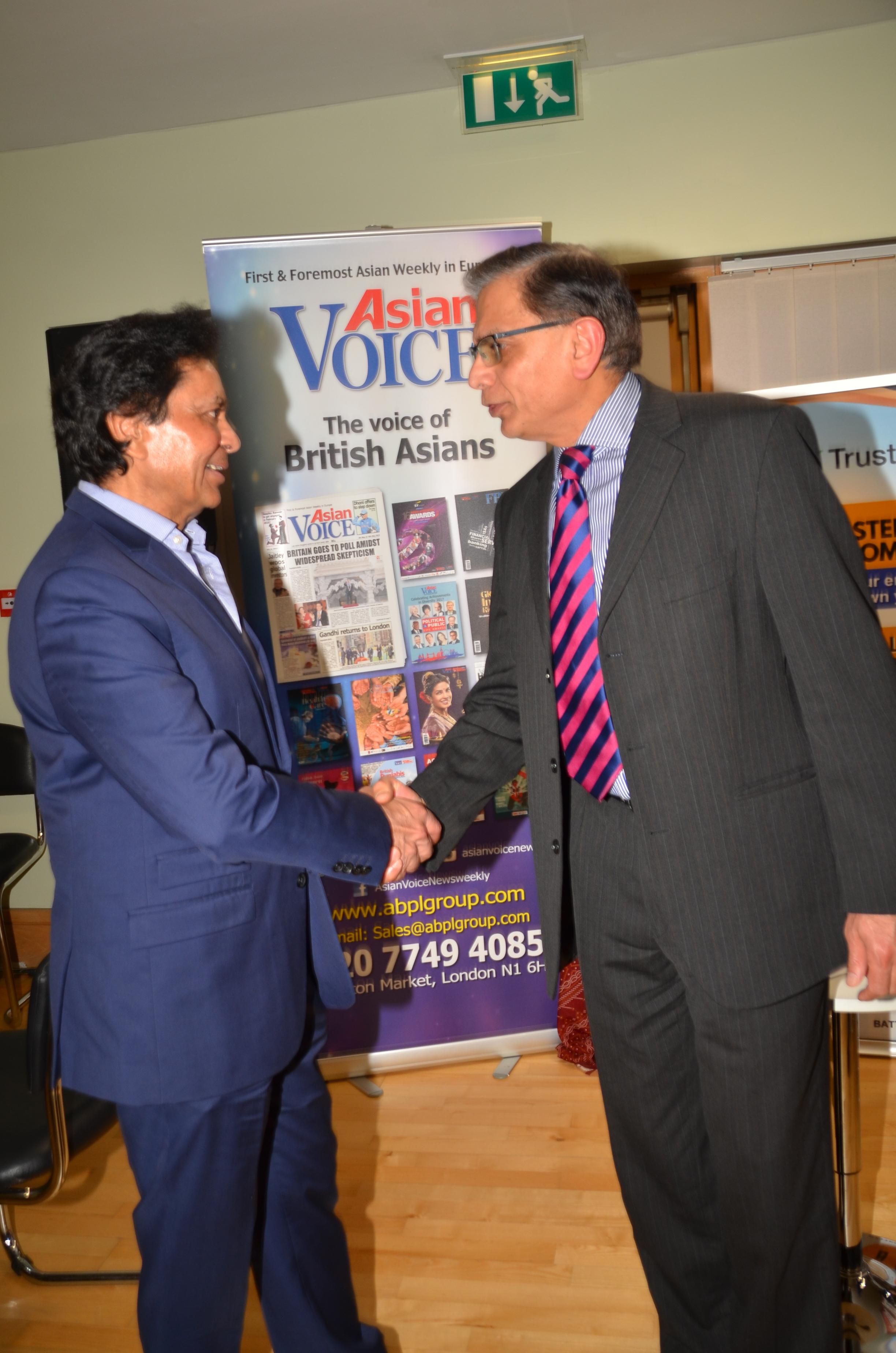
Asian Voice and Gujarat Samachar launched a new networking and fireside chat platform viz. Asian Enterprise Live with its first guest speaker Yogesh Mehta, Chairman of Pickfords Move Management Limited on Monday 19 February 2024 at Sangat Centre Harrow with Kanti Nagda MBE as the moderator.
In this series, Asian entrepreneurs will be sharing their success stories and insights, which aims to create a supportive and inspiring network for business owners and start-ups.
The evening was also well attended including by the Mayor of Harrow, Cllr Ramji Chauhan, and the Mayor of Ealing Cllr Hitesh Tailor among other dignitaries.
Yogeshbhai is a philanthropist, managing work in the UK and 13 other countries. Besides building wealth, he is well known as a generous donor to various charities. He came to the UK with his family from Uganda in 1972. Mr Mehta answered a few light-hearted fun questions in a rapid-fire round before delving into some serious ones.
An excerpt of the conversation is printed below, on demand, for those who could not attend the event.
Kantibhai Nagda (KN): Yogeshbhai, you were born in an evergreen town situated on Seven Hills, the capital of Uganda, Kampala. Tell us, do you remember 1972?
Yogeshbhai Mehta (YM): Yes, very much so. At that time, I was probably 15 years old. Born and brought up in Kampala, I have beautiful memories of the country, city, and people. I remember we were 6-7 friends; we grew up together and are still very much in touch.
KN: Do you know the building- Round House? Do you recall who lived there?
YM: I know Round House, but I do not remember who lived there.
KN: The Indian High Commissioner. That was not far away from where you lived. Yogesh attended college in Chippenham, a small village near Bath. He also served as the President of his college later. During the 1960s the shops in Chippenham would close after lunch time on Saturdays and re-open on Monday mornings. Did you ever go hungry during the weekends?
YM: Not really. During the 70s, a lot changed. Bath was not far away from there and I used to travel a lot. Also, we friends had found all the places that served till a little late. I had been in London for two years then, I became the President of the Students Union, of around 9000 students. I remember that morning vividly. Someone had given my name for it. They had faith and confidence in me, though I had come from outside and could speak just enough English for bare minimum communication. It was a big platform and I think we were only 3 or 4 Indians. That is when it all began. I did make a change. I turned a lot of reds into blues, and when I left, I was the only president with a good bank balance.
KN: You turned a lot of reds into blues, are you going to help Rishi Sunak? What are the chances of turning reds into blues?
YM: Chances are tough, there is a long way to and a lot can happen, but I hope he can continue and stabilise the country because the whole of Europe is changing. And I think Rishi is perfect for the job and he is great.
KN: Yogesh started his career as a junior in 1974. This was supposed to be a temporary job before going to the University, but he continued to work in an international industry and progressed as a manager. In 1977, he left his job to join his father’s clothing business for a few months before starting his own removal and relocation business. He started the business in 1980 with an American business partner and acquired the company that he used to work for. I recall on 3 December 2012; you saved 900 jobs, and this made headlines in business magazines. You then bought Pickfords, tell us more about that.
YM: As I mentioned earlier, I wanted a temporary job, but the employer wanted someone who could work full-time. Nonetheless, I aimed to work there for 2 to 3 months only but I enjoyed the job and ended up being there for a longer time, and within 3 years, I was General Manager. It was quite challenging, but I was young and very hungry. So that was my initial journey. I achieved what I wanted. This is one of the main reasons why I am here. Because I have seen the dynamics change in the last 20 years, a lot. I see children do not want to continue with the family business, what we have done is a good thing to do. Our generation has given a good education to the children; therefore, they become professionals and get good jobs. And there’s a vacuum now because there is no succession and what happens is I have noticed; that the next generation continues to work in their corporate jobs for 15-20 years and then it becomes very difficult to make a shift. I know this because I took that leap of faith after 3 years of work at a company while I was general manager. I was working for a big company, I could be happy and secure, if I continued but taking that risk is all that matters. That is the reason I would like to encourage young people to join businesses, to take that risk after doing their foundation, and complete education, but at some stage, try doing some business, especially family businesses. England has been full of various small businesses.
My father had a small retail shop in Whetstone near Finchley. I started the wholesale division, and what was more important was that I enjoyed working hard, I used to go to commercial streets and buy samples, go all over the country, Bath, Bristol, Cardiff, with samples, door-to-door. First few weeks, I went knocking on the doors, initially no one was interested but I was persistent, until they were fed up and gave me a chance. I showed them my samples, took their orders, went to East London, bought merchandise, and then delivered. I did not have enough capital to buy stock then. For one year I had no money. I took that risk by leaving a comfortable job and that has made all the differences. Everything changed, something in me wanted to do bigger things. And I was fortunate.
Luckily, I got a call one day from the American Managing director who used to work at my previous company. He was starting on his own and offered me a place as an equity partner in a moving company. Without any hesitation, I said yes. I gave up my wholesale business to my father. But I wanted equity to start the new business. I could not go back to my father and ask for any money simply because I had seen him lose all his capital in Uganda. So, I went to friends and family friends. In 1978, I had to borrow £120,000 but I had the courage to go to people and borrow that kind of money from various people. That was necessary for business and within a couple of years, it flourished. We were successful. We slowly built up a team. We expanded, moved to Watford, continued acquiring other companies, generated revenue, and spread across 13 other countries. It was a relocation and moving company, right across Europe - Scandinavia, Norway, Sweden, Denmark, Germany, France and for a long time my job was as a trouble-shooter, but if I had a chance to do it again, perhaps I would have chosen a different industry, to work with labourers and drivers in Europe. Whenever I woke up in the morning with a hurdle or a problem, I would take it as a process. Those are the everyday challenges, and fortunately, the companies have done exceptionally well. We have reached a larger group that continues to prosper.
I started Pickfords and it goes way back but until I leave it to the next person, I want to retain it and make it stronger. It is a brand.
In business, I was very lucky that my younger brothers Hitesh and Dilesh, stood with me as a family. My youngest brother Dilesh started selling perfumes and Hitesh is a pharmacist. They are doing some substantial work with Ariana Grande, Jennifer Lopez, etc. It is not just about selling perfumes, it is about creating those fragrances, making the scent, featuring, and advertising. One must spend a lot of money to survive in this and both my brothers have done exceptionally well. This remains the family business between the three of us. Ideally, one should just focus on one business, but the entrepreneur in me allowed me to do other things. With work going on in so many different directions, it makes difficult to travel, so I have given 25% of the equity to my management so that I do not have to travel that often. I started at 20, got married at 27, and I wanted to make my father happy.
KN: We see examples today where the children choose a different profession, and do not want to inherit and run the family business. They do not have any interest in the family business. What do you think is the future of Asian Entrepreneurs?
YM: It is important to have an open discussion with them. After a certain age, children do not want to take risks, so I would suggest for them to go and work elsewhere for a few years and then think and take that opportunity to jump out of their comfort zone. Because no one wants to leave a secure job, once you get comfortable with your work life, it gets difficult to switch to business. I hope I can plant these seeds of inspiration in their minds.
KN: As a philanthropist, Yogesh played an active role in several charities such as the Jain temple in Leicester, the Navnath center in Hayes. Take us through the charities you have been involved in.
YM: In the early days, I saw people like CB Patel doing extensive charity work. I learned from people like him. My wife also was a part of a trust initially, in the early 80s. I was a committee member of the NSPCC. I was there for 2-3 years. When Jain Derasar was being built in Leicester, we as a family contributed good amount of money at that time and I continued to do so. It took me many years to buy a property, I not only contributed through money, but also raised good money within the community. We recently made a large contribution to one of the Swaminarayan temples making one of the first Hindu crematorium. And my brothers have been a great support throughout.
KN: Around 20 years ago, we were at a Kathiawadi restaurant in Rayner’s Lane where you had bid the highest for 3 paintings. Tell us, collecting artwork- is that your hobby?
YM: I am fond of art. In my younger days, I used to like collecting cars. Gradually I got into art, specifically Indian masters like MF Hussain, Gaitonde, and Mehta. This has nothing to do with investments, but it just so happened that the value of art has gone up substantially.
The fireside chat was followed by a speech by Publisher/Editor-in-Chief CB Patel sharing his thoughts about the fireside chat. He talked about life, luck, inner desire, a healthy lifestyle, networking, and building connections in business. He spoke about how he had an idea about inspiring young entrepreneurs and years ago he had started the Asian Achievers Awards as well. He threw light upon Yogeshbhai’s charity work with different associations and communities. He thanked Kantibhai and expressed gratitude to Yogeshbhai for his invaluable contributions to the business world, and to all the attendees for their enthusiastic participation. The event concluded with a vote of thanks by Mahesh Liloriya (Group Editor, ABPL).
Photo courtesy:
Raj D Bakrania,
PrMediapix