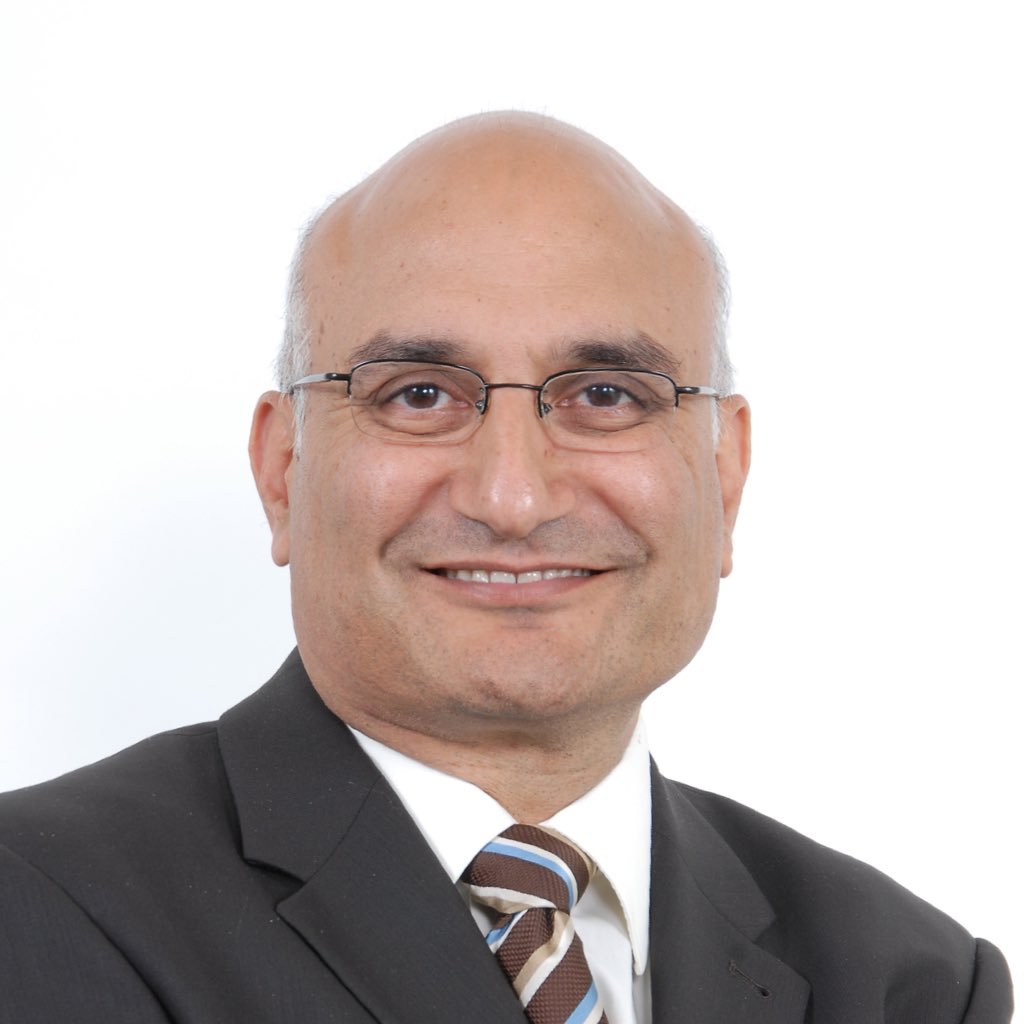
Nitin Sodha, the new Chairman of the National Pharmacy Association spoke exclusively to Asian Voice about the challenges facing pharmacy and his vision for the sector.
Overall view of pharmacy today
Pharmacy is a massively important stakeholder in the NHS agenda. It is the third largest employer in the NHS and is in the heart of the community with free and ready access. It makes a hundred million health and medicines interventions a year, while dispensing over a billion prescriptions. Pharmacy is changing to become more clinical, more digital and more integrated. At NPA our policy is to ensure that our members, and independent pharmacists in particular, are supported because they are a vital part of the community. As the demographic shift happens with more elderly people with long term conditions requiring care, pharmacy can play a vital role and ease the burden on NHS. In fact, fifty per cent of NHS prescriptions are to do with long term conditions. So, the NPA is moving with the times whilst also maintaining pharmacists’ long-standing position at the heart of local communities.
Going forward what role do you see for the NPA in pharmacy?
The NPA represents six and a half thousand community pharmacies so it is a major stakeholder in the profession. It has to be a strategic shaper to make sure that pharmacies not only contribute to health and provide solutions to the NHS but also remain completely sustainable. Our objective is to ensure that independent pharmacists are successful commercially and have a fulfilling professional career. We want to create a win-win situation along with the Department of Health and local commissioners.
On the funding cuts
These are drastic cuts. It is a triple whammy. First, we had the funding cuts. Then we had the Category M clawback, followed by price increases in generic medicines. This triple whammy is causing severe stress on independent community pharmacists. I cannot emphasise more that it is a great tragedy that there is a huge number of pharmacists working on negative cash flow. Pharmacists are compassionate and caring individuals in the community and no one must compromise that. In 2016 the NPA's Support Your Local Pharmacy campaign, which ran under the leadership of my predecessor Ian Strachan, brought pharmacists together with the patients they serve to oppose the planned funding cuts. The campaign resulted in 2.2 million signatures from the public and patients, and the resulting healthcare petition was probably the largest ever delivered to 10 Downing Street. That campaign highlighted that the DH is making fundamental errors in its judgement while dealing with community pharmacy.
Does the solution to this problem lie entirely with the DoH?
Ninety percent of independent pharmacy business is related to NHS work. The commissioner is the DoH and the provider is the community pharmacist. So it has to be a shared solution. I believe that the only way we can resolve ongoing issues is through collaborative means. We do not want to be confrontational, conversely, we want to be an integral part of the healthcare system.
As the new chairman of the NPA what do you want to bring to pharmacy?
There is a lot that my predecessors have done and I would like to take forward some of the great work that has been done so far. I have issued a hundred-day challenge for the board to come up with compelling solutions to help pharmacists professionally and commercially. We have a digital strategy that is being developed and that will be released at the forthcoming Pharmacy Show. We have a clinical strategy for hypertension – twelve percent of GP appointments are to do with blood pressure. Public health is increasingly becoming a serious issue and community pharmacists should be doing more health checks, more diagnostic testing and more point of care testing and so on.
What sort of relationship do you see between the NPA and PSNC?
I want the NPA to have a great working relationship with all the UK’s contract negotiating bodies. We have two of our board members on the PSNC and I have said that we want greater transparency and we want to be a stakeholder in designing the new contract with the NHS. We will work collaboratively with the PSNC but if we do not agree then we will strongly voice our disagreement.
Payment structure
The current payment structure is having a huge impact on our cash flow. In this electronic age when payments are transmitted electronically we should be paid as soon as we submit the prescription. There may be certain adjustments to be made. Most industry sectors pay in thirty days so why should pharmacy be an exception? Funding cuts and other issues exacerbate the problem. I think the present system is completely unfair. We will constantly lobby through the PSNC and we will not rest until the matter I resolved. This is high on my agenda.
Do you see pharmacy playing a bigger role in communities?
My vision is for independents to do lots of clinics in the pharmacy, medicines adjustments, work in GP surgeries and adopt digital solutions. I would like pharmacy to offer more point of care services. It may not happen in the immediate future but the NPA is constantly looking for fresh ideas to bring quality care to communities.
Do you think pharmacists should better embrace technology?
Technology is a major enabler and is here to stay and I believe that pharmacists should use it as much as possible. Using technology, patients can order prescriptions from home, get it delivered and can get advice for their condition. In particular, it can make life so much easier for the elderly. At the same time, face-to-face care is tremendously important and we should never lose the human touch in healthcare. I am in the process of forming an innovations group within the NPA to have an open thinking forum and plug in ideas and drive change.
In the current scenario what advice would you give the younger generation which might want to take up pharmacy as a career?
Pharmacy offers various options. You can work in hospitals, community pharmacy, have your own business, work in a GP surgery, or care homes. With our ageing population, health needs are growing, and pharmacists will have an important role long into the future. For people who want to own and run a pharmacy my advice would be to think about how they can meet patient needs, use technology as an enabler, make sure staff are up-skilled, think of creative ideas all the time, and finally learn to develop a team around you. Make sure your team is motivated and focussed and well trained. I work in a pharmacy every Saturday and I thoroughly enjoy it.
Personal values
Some years ago, I did a course at Oxford centre for Hindu studies to better understand my own faith and the outcome was a better understanding of the common values that apply to all. I now run social cohesion programmes in Redditch where I have managed to get together people of all faiths and develop a common pledge for the betterment of the town.
The values of compassion, hard work, team work and service are fundamental for me. The UK is an incredible country that has given us so many opportunities and I want to be a positive contributor in every way. I am also proud of my Indian and Kenyan heritage.
Final comments
I am really delighted, honoured and humbled to be the NPA chairman. Looking back, I came from East Africa as one of eleven children and started with nothing. To Chair this very prestigious organisation with a fantastic Board and teams is a hugely humbling experience. I want to be an exemplary leader, working though outcomes, inspiring colleagues, increasing aspirations for all, and make sure that independent pharmacy is a highly regarded profession.