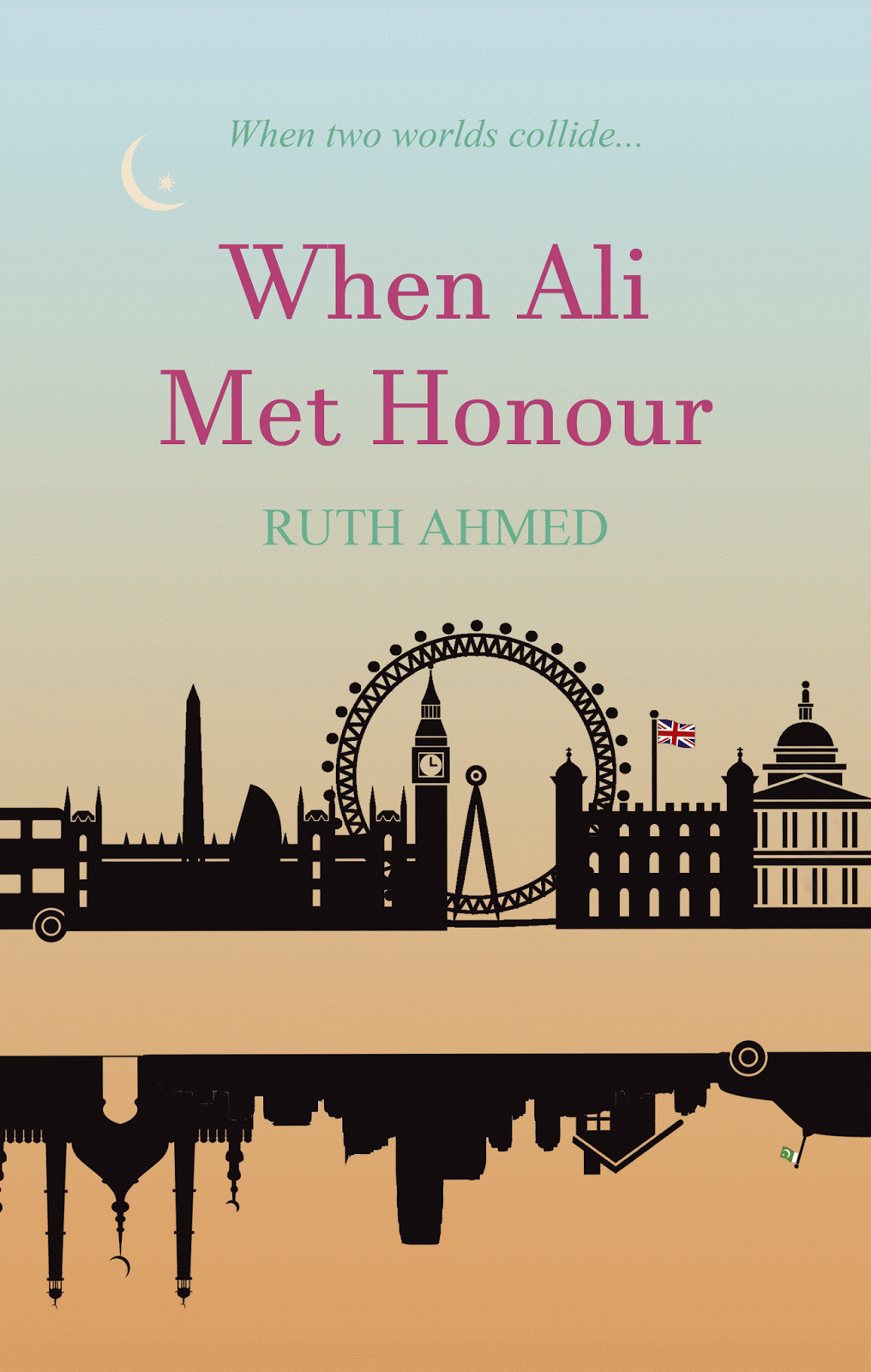
Talking to Dimmi, we discover the everyday mystique that is fiction writing. As in the plot of his new debut novel, ‘When Ali Met Honour’, where a British-Pakistani man falls in love with an English woman, stories highlight, remind us even, of the infinite possibilities around us. As we discussed Dimmi’s process – working in IT by day, and creating by night, his book’s unique approach – a dual perspective from both romantic partners, and his unruffled patience in the face of frustrating odds - it was clear that authors, too, are part and parcel of their twilight worlds of wonder:
Tell us about your new novel ‘When Ali Met Honour’?
Well, it was a joint venture and turned out to be a modern-day, cultural epic of a love story. I co-wrote it with Anstey Spraggan, a fellow student on my Creative Writing Masters Programme, under the pseudonym Ruth Ahmed. It’s told from two different points of view, informed by separate backgrounds. The two characters meet one day in a pub in London and we begin to see what happens when they deal with life events: marriage, death. The story isn’t based on personal experience, but rather our cultural heritage.
Would you say creating characters is similar to acting in that they both require empathy?
Yes, Ali is very different to me. It always sounds a little strange to say the character takes over, but it’s true. There are times I would never do what he does in the book. My inspiration is also like a physical stage: it sets the scene.
You also write Short Stories. Is there a difference between these and longer works?
I actually prefer bigger, saga-like novels because they allow the freedom to write. With short stories you have to capture huge ideas using fewer words. But that also has value in that you’re forced to do away with superfluous description. That’s good for discipline, especially if you’re a beginner. Many turn their short stories into novels too. Ann Rice with her Vampire chronicles for example, and Tony Morrison too.
What was it like to collaborate on a novel?
It worked really well! We would complete our individual sections and then send them on to each other. Anstey would edit mine a little, and I hers. It really helped because you do get those voices on your own- ‘am I writing rubbish?’- and it was good to have immediate feedback.
How do you Balance your day job with Writing?
It’s my passion so it doesn’t feel like a chore. I would love to be a full time writer but you do have to have a practical head on your shoulders. Right now, I just enjoy it, even if I’m tired.
Do you always make a comment on Multiculturalism with your work?
I think so but that’s just my opinion. I don’t wake up and think, ‘Oh I’m a member of diverse Britain- let me write!’ it just comes out of experiences. Other British-Asians may have a different view. ‘When Ali Met Honour’ and a lot of my short stories do mine a lot of my past and that inevitably involves identity.
‘Her eyes were dark berries’ (from Dimmi’s ‘The Final Mutation’) is an original metaphor. How do you avoid clichés?
Don’t overthink it! If you do that, it becomes forced. If all you want to say is ‘the sky is blue’ than say that. Go with what you’re feeling, it should just flow. Also write ideas down as they’re coming to you.
What’s your proudest accomplishment?
Definitely the novel; it took a long time to get published. We’d actually completed it back in 2011 and were receiving a lot of positive feedback, mainstream publishers included, but they had a lot of trouble marketing it. One even said it was the best novel they’d seen all year. It was so different that they didn’t know how to place it. But I’m a big believer in fate. When Dahlia publishing picked it up, it seemed really right. They reacted to it the way our friends and family did- it was given a lot of love and attention.
Name a good book you’ve read recently: Ben Aaronovitch’s ‘Rivers of London’
Finally, what’s your advice to other aspiring writers?
A quote from Ann rice: there are no rules on how you should write. Another thing is to develop a thick skin. There’s rejection before success. If things aren’t working out, and you know you’ve got something to say, don’t give up.