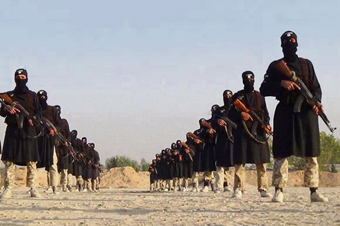
London: The British parliament has overwhelmingly supported air strikes targeting Isil terrorists in Iraq. Prime Minister David Cameron said there was a “strong case” for extending the air strikes into Syria. He warned that the war against the “psychopathic” Islamic State in Iraq and the Levant (Isil) was likely to last for “years”.
During the parliament session, Conservative, Liberal Democrat and Labour MPs largely united as they voted 524 to 43 in favour of joining military action in Iraq. However, the Labour MP Rushanara Ali, a Muslim and shadow education minister, resigned from the party’s front bench in protest at Ed Miliband’s support for intervention.
Several leading Tories also refused to support the action and abstained from the vote, including John Redwood, who said he found “it difficult to believe UK military intervention can make much difference” and Jesse Norman, who was sacked from the No 10 policy board over the Syria vote last year. He warned that the vote would weaken the ability of MPs to scrutinise the intervention.
David Davis, another Tory backbencher, also abstained after questioning the “strategic objective”.
The air strikes were supported by the Archbishop of Canterbury, who said the West must offer a “vision of hope” to counter Isil’s “endless darkness”.
The military action is expected to target British jihadis who have gone to fight in northern Iraq. The FBI said earlier this week it had identified Jihadi John, the British terrorist who has been filmed apparently beheading Western hostages. Meanwhile, six RAF Tornados based in Cyprus were poised to strike targets in Iraq within hours. The military intervention marks the third war in Iraq involving British personnel in the past 25 years.
Hundreds of British troops are also likely to go to Iraq in non-combat roles to coordinate the air strikes and train local forces. Britain is now on high alert for revenge attacks after a series of arrests over the past two days. Counter-terrorist police arrested two men.
Opening the debate in Parliament, Cameron called on MPs to support the destruction of the “network of death”. He insisted that Isil had “already declared war on us and there is no walk-on-by option”. Michael Fallon, the Defence Secretary, said the mission was unlikely to be a repetition of the “shock and awe” campaign in the 2003 Iraq war.
The Prime Minister said: “‘Is there a threat to the British people? The answer is yes. Isil has already murdered one British hostage and has threatened to murder two more. Isil is a terrorist organisation unlike those we have dealt with before. The brutality is staggering - beheadings, crucifixions, gouging out of eyes, use of rape as a weapon. All those things belong to the Dark Ages. This is about psychopathic terrorists who are trying to kill us. Like it or not they have already declared war on us.” Cameron said Isil posed a direct threat to Britain, citing six plots linked to the terrorist group which had been foiled across Europe.
Isil is holding at least two British hostages who have been paraded in videos released on social media. Philip Hammond, the Foreign Secretary, said the lives of British hostages were already at “extreme risk” from Isil. He insisted that the decision to back air strikes would not increase the jeopardy they were in. “The honest answer is that they were already at extreme risk,” he said. “We know this is an organisation we cannot reason with, that shows no compassion, no mercy.
“I don’t believe the hostages will be at any more risk as a result of this decision than they were yesterday. “I’m afraid, because of the nature of the organisation we are dealing with, the hostages are in extreme danger.”
Cameron indicated that he was in favour of broadening the scope of the air strikes to target jihadis in Syria. He told MPs that while he hoped to build a “consensus” on the issue he was prepared to intervene without going to Parliament for a vote if it would avert a “human catastrophe”.