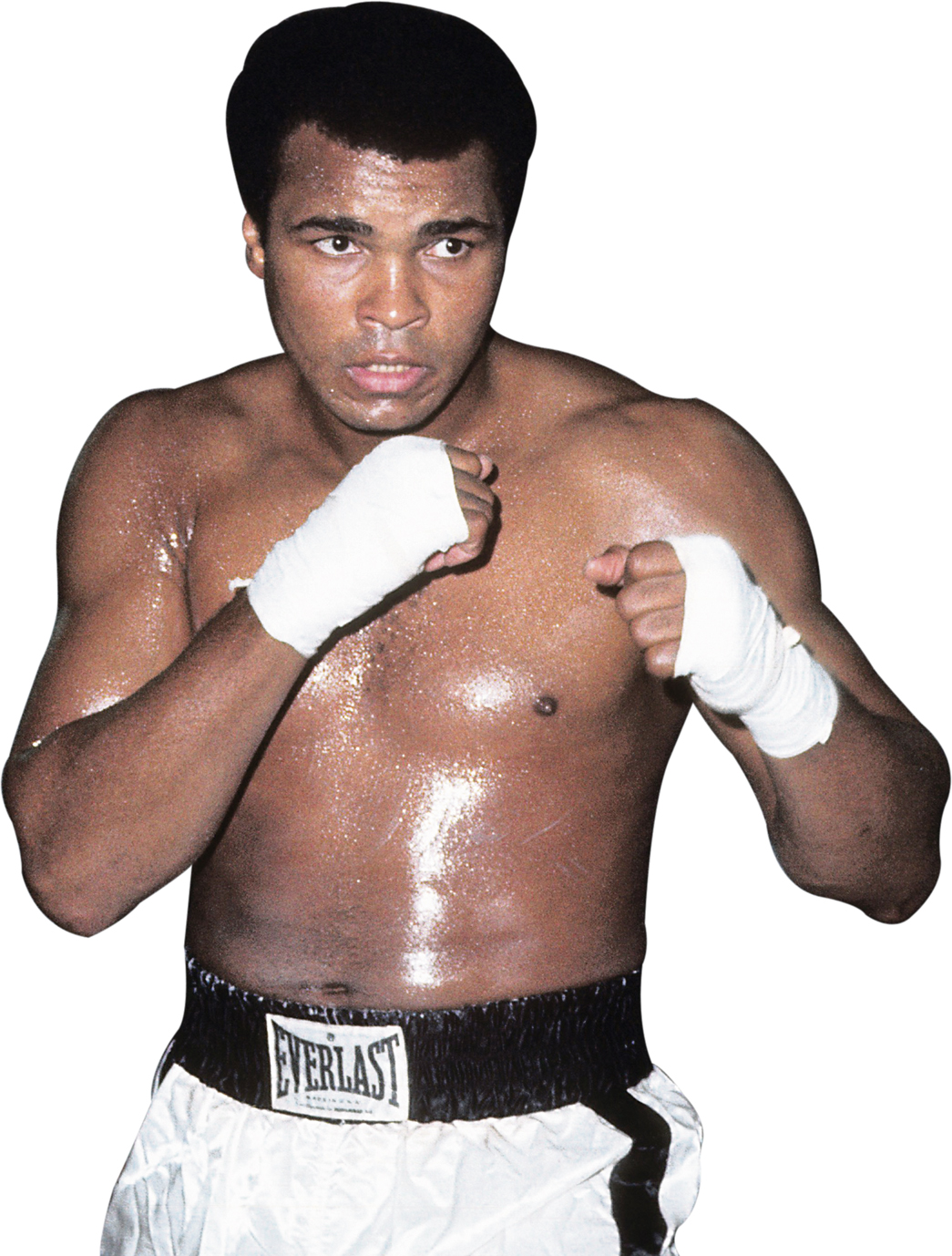
On Friday 3rd June, the world lost one the greatest sports personalities, Muhammed Ali aged 74. Born in 1942 as Cassius Clay, he became interested in boxing at the age of 12 as the story goes after a bigger boy stole his bicycle and Ali wanted to “whup” the thief. He made his professional debut in 1960 against Tunney Hunsaker, a West Virginia police chief.
In a professional career lasting 21 years Ali's record includes a total of 61 fights, 56 wins including 37 knockouts. 5 losses. Crowned three times World Heavyweight Champion. One Light-heavyweight Olympic gold medal at the Rome Olympics and thirty one straight wins before being beaten by Joe Frazier. He retired from boxing in 1981.
When he was not boxing he was an activist in the Civil Rights Movement of 1960s America. Muhammad Ali's influence on the organisers who formed the backbone of the Civil Rights Movement was distinctly positive and remarkably broad-based. He bridged the entire span of the movement’s ideological spectrum through his sheer status. Ali appealed to people and organisations alike who otherwise had little in common, politically. In the words of one organiser, Bob Moses: "Muhammad Ali galvanised the Civil Rights Movement."
In 1967, Ali decided to oppose the US war in Vietnam when he refused to be drafted into the military, a move that was widely criticised by his fellow Americans. This action subsequently led to him being stripped of his world title and boxing licence. This meant he would not step into a boxing ring for nearly four years. After his conviction for refusing the draft was overturned in 1971, Ali returned to the ring and fought three of the most iconic contests in boxing history, helping restore his reputation with the public.
His decision to join the Nation of Islam also known as the Black Muslims early in his career, a controversial brought him into conflict with the boxing association. State boards refused to allow him to use his muslim name and continued to bill him as Clay. He famously told reporters interviewing him “Cassius Clay is my Slave Name”. He left the Nation of Islam in 1975 to become an orthodox Sunni Muslim, adopting Sufism later on. His devotion to the faith was fierce even in the face of global events like the terrorist attacks of September 2001 and the statements by the Presidential hopeful Donald Trump.
Soon after retiring in 1981, rumours circulated about the state of Ali's health as his speech had become slurred, he shuffled and he was often drowsy. It was later announced he was suffering from Parkinson's Syndrome but Ali continued to make public appearances, receiving warm welcomes wherever he travelled. Ali saw Olympic glory twice before his passing. First when he lit the Olympic cauldron at the 1996 Games in Atlanta and carried the Olympic flag at the opening ceremony for the 2012 Games in London.
The former world heavyweight champion died late on Friday in hospital in Phoenix, Arizona, having been admitted the previous day. The former boxer had been suffering from a respiratory illness, a condition that was complicated by Parkinson's disease. Ali's funeral will take place in his hometown of Louisville, Kentucky.
The loss of the legend was experienced by people across the world. No sooner did the word of his demise spread, did tributes and prayers gush in strong tides. Tennis star Andy Murray, after his defeat to Novak Djokovic in the French Open final held in Paris, made a special mention of Ali. He said, "It was a sad day yesterday. I watched and read a lot about him. Even over the last day or so, I went on the BBC Sport web page and the first 11 stories were all on him. He was clearly just an amazing man. I don't meet loads of famous people, but he's one famous person I would have loved to meet. I'm sad about that, as well."
Boxing world champion Tony Bellew said in an interview, "He stood up for his beliefs, he went against the regime at the time, he did all this and didn't care about the fame, didn't care about the money, and that's why he will go down in history." Amongst others who shared their grief was ace runner Mo Farah. He said, "He was a big hero of mine and I send all my condolences to his family and friends."