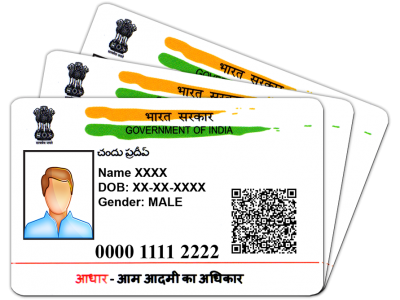
India's highest court, the Supreme Court of India has had an eventful week, as it spoke up on the Aadhaar Act, adultery offence, and on women's right to enter Kerala's famous Sabarimala temple. Last week, the SC upheld the validity of the controversial Aadhaar Act, terming it a beneficial legislation. However, it did weed out provisions that have potential for misuse. Aadhaar will no longer be mandatory for opening bank accounts, buying mobile phone SIM cards, getting school admissions, or for appearing in board or common entrance examinations. The SC also ruled that Aadhaar would be voluntary for those who do not intend to receive any subsidy, benefit or services under welfare schemes, and should only be given to Indian nationals.
A five-judge Constitution Bench of CJI Dipak Misra and Justices AK Sikri, AM Khanwilkar, DY Chandrachud, and Ashok Bhushan upheld the NDA government's Aadhaar legislation by a 4-1 majority. It, however, said its insistence on linkage to bank accounts and mobile phones was disproportionate and every citizen could not be suspected of acquiring black money. The majority verdict said, “The portion of Section 57 of Aadhaar Act which enables corporate bodies and individuals to seek authentication is held to be unconstitutional.” It agreed with the petitioners that such a provision could lead to sharing of protected data and privacy of citizens with private bodies.
While taking note of apprehensions expressed about Aadhaar's potential misuse, the court rebuffed their opposition to passage of the Aadhaar Bill as a money bill and said it was perfectly justified. The Opposition could have stalled the bill in the Rajya Sabha, however, the Lok Sabha Speaker upheld categorisation of the Aadhaar legislation as a money bill, reducing the Upper House's role to rendering a mere advisory on corrections required in the bill.
Justice Sikri wrote majority of the judgment for himself, CJI Misra and Justice Khanwilkar, into 567 pages, while Justice Bhushan penned a separate but almost concurrent 400-page opinion in the 1,448-page judgment. In a move that pleased the Congress, the SC struck down mandatory linkage of Aadhaar with bank accounts and mobile SIM cards calling it “disproportionate and arbitrary.”
“Under the garb of prevention of money laundering or black money, there cannot be such sweeping provision which targets every resident of the country as a suspicious person. Presumption of criminality is treated as disproportionate and arbitrary,” CJI Dipak Misra and Justices AK Sikri and AM Khanwilkar said. While Justice DY Chandrachud quashed Aadhaar, Justice Ashok Bhushan said mandatory linkage of bank accounts with the identity was not unconstitutional.
Justice Sikri said, “Nobody will keep black money in bank account. We accept the possibility of opening an account in an assumed name and keeping black money therein which can be laundered as well. However, persons doing such an act, if at all, would be very few. More importantly, those having bank accounts with modest balance and routine transactions can be safely ruled out. Therefore, the provision in the present form does not meet the test of proportionality. Therefore, for checking this possible malice, there cannot be a mandatory provision for linking of every bank account.”
The court said compulsory linking and warnings that accounts would be frozen “amounts to depriving a person of his property.” The bench said the Reserve Bank of India's master direction on KYC in 2016 allowed using alternatives to Aadhaar to open accounts. Referring to the Prime Minister's Jan Dhan Yojana and encouragement to open 'Zero Balance' accounts, the SC said it encouraged millions of poor to adapt to the good habit of entering into transactions through banks and using digital mode for operating accounts.
SC strikes down 158 year old adultery offence law
The Supreme Court last week, struck down the 158 year old Section 497 of the IPC that punished a married man for the offence of adultery if he had sexual relations with a married woman “without the consent or connivance of her husband”. It, however, maintained that adultery could continue to be a ground for divorce. A bench of CJI Dipak Misra, and Justices RF Nariman, AM Khanwilkar, DY Chandrachud and Indu Malhotra said, “When parties to a marriage lose their moral commitment to the relationship, it creates a dent in the marriage and it will depend upon the parties how to deal with the situation. Some may exonerate and live together and some may seek divorce... A punishment is unlikely to establish commitment.”
Saying that it could continue to be a ground for aggrieved spouses to seek divorce from their adulterous partners, the court said if one of the spouses committed suicide because of the adulterous nature of her/his partner, then the culprit could be proceeded against for the criminal offence of abetting suicide. It tested the Section on the touchstone of constitutional provisions dealing with right to equality and guarantees against arbitrariness and discrimination, with Justices Chandrachud and Malhotra using privacy, individual's autonomy and personal choice as yardsticks of legality.
It rejected a conception of women as actors with no agency of their own, mere “chattel”. CJI Misra, who wrote the judgment for himself and Justice Khanwilkar, said the section violated right to equality as it punished only the married men while exonerating the 'partner in crime', the married woman, who could not even be punished for being the abettor. The CJI said, the section treated the woman, with whom the married man had sexual intercourse, as a chattel of her husband as it was not an offence of adultery if the latter consented or connived for his wife's adulterous relationship with another man.
Sabarimala open to women of all ages
In the third path-breaking verdict delivered by the Supreme Court, which was on a professional peak last week, a five-judge Constitution bench opened doors of the Sabarimala Temple in Kerala to all women devotees, ending the age-old custom that barred women in the menstruating age group of 10-50 from entering the temple to worship Lord Ayyappa. It was decided by a 4:1 majority that devotees of Lord Ayyappa were “exclusively Hindus” and did not constitute a separate religious denomination, and that the practice of exclusion of some women could not be regarded as an essential part of religion.
While CJI Misra, and Justices RF Nariman, AM Khanwilkar, and DY Chandrachud were unanimous in their view that the practice of barring women devotees in the 10-50 years' age group was illegal, unconstitutional and arbitrary, Justice Indu Malhotra penned a dissenting verdict holding that worshippers of Lord Ayyappa did belong to a separate religious denomination and the ban on entry of some women in the temple was an essential part of their religion.