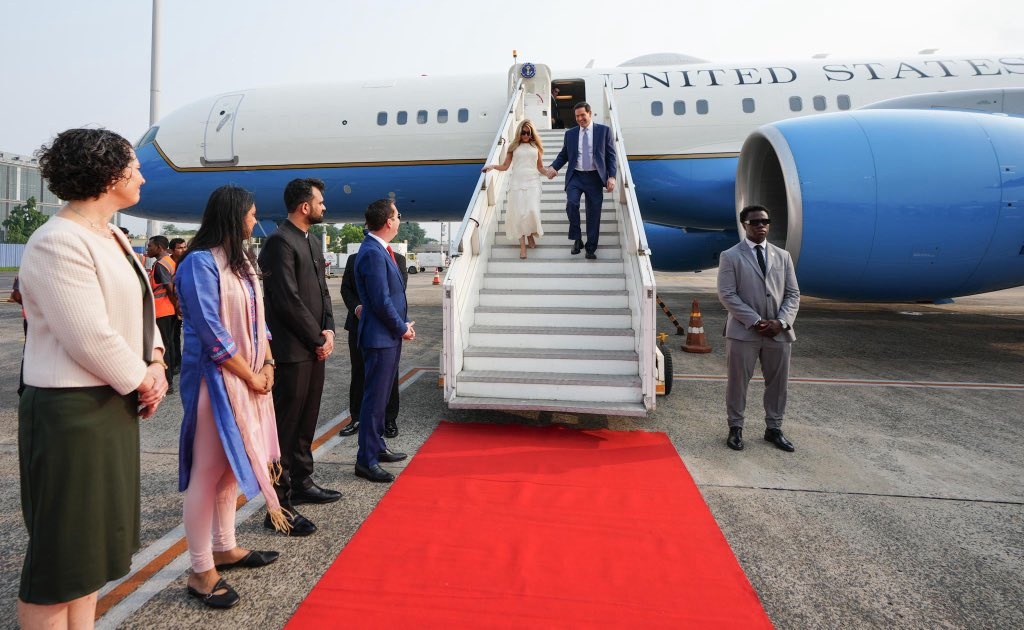
US Secretary of State Marco Rubio visited India from 23-26 May on his first official trip, aimed at recalibrating bilateral ties that have faced strain since mid-last year.
The visit came amid tensions over trade tariffs, US visa restrictions, Washington’s renewed engagement with Pakistan, and global instability linked to the Iran conflict. Earlier, Foreign Secretary Vikram Misri’s visit to Washington focused on stabilising relations after a period of uncertainty.
Relations between the two countries had worsened after US tariffs on India and President Donald Trump’s repeated claims about mediating the India-Pakistan conflict, which New Delhi rejected, saying the ceasefire was achieved bilaterally.
Visa policy changes, including higher H1B fees, also added strain. However, both sides have since worked to improve ties, including efforts toward a trade agreement and high-level engagement. PM Modi and President Trump also held a 40-minute call on April 14, during which they reviewed progress and reaffirmed commitment to strengthening the strategic partnership.
A key part of US Secretary of State Marco Rubio’s India visit was the Quad Foreign Ministers’ meeting, where the US, India, Japan, and Australia agreed to deepen military coordination.
The grouping announced enhanced maritime surveillance cooperation and expanded maritime domain awareness in the Indo-Pacific, widely seen as a signal to China, which strongly criticised the move. The Quad, formed in 2007 and revived in 2017, is viewed as a response to China’s growing influence and assertive actions in the East and South China Seas.
The four countries also indirectly highlighted concerns over Beijing’s regional expansion. However, Rubio’s visit took place amid shifting US foreign policy signals, as President Donald Trump, after a recent trip to China, praised President Xi Jinping and revived the idea of a US-China “G2”, raising concerns among US allies about being sidelined.
Against this backdrop, the situation reflects how fast-changing global alignments are reshaping traditional partnerships, where countries are increasingly balancing between competing powers and reassessing long-term strategic trust. In such a fluid geopolitical environment, how should nations navigate their partnerships to best protect their strategic and economic interests?
Quad boosts maritime, energy cooperation in Indo-Pacific
The Quad countries agreed to deepen cooperation in critical minerals and energy, and announced new steps to strengthen maritime surveillance and port infrastructure across the Indo-Pacific amid China’s growing military assertiveness in the region.
The initiatives were unveiled after a foreign ministers’ meeting in New Delhi, chaired by External Affairs Minister S Jaishankar and attended by US Secretary of State Marco Rubio, Australian Foreign Minister Penny Wong, and Japanese Foreign Minister Toshimitsu Motegi.
In his media statement, External Affairs Minister S Jaishankar announced a critical minerals framework and an Indo-Pacific energy security initiative under the Quad agenda to address key regional challenges.
He said discussions focused largely on global developments and Indo-Pacific issues, noting that the four maritime democracies exchanged valuable perspectives on a free and open Indo-Pacific. The ministers stressed the importance of safe and uninterrupted maritime trade and reaffirmed respect for international law.
Jaishankar added that the Quad reviewed progress on strengthening economic resilience, supply chains, and access to energy, fertilisers, and critical minerals. He said the Indo-Pacific will play an even greater role in global economic activity and trade, increasing the Quad’s responsibilities in the future. He also highlighted counter-terrorism cooperation, stressing zero tolerance for terrorism and the right of nations to defend themselves against such threats.
US Secretary of State Marco Rubio said the Quad has agreed to launch an Indo-Pacific Maritime Surveillance Cooperation Initiative, which will combine the maritime monitoring capabilities of all four member countries in the region. He also announced an expansion of the Indo-Pacific Maritime Domain Awareness Initiative among Quad nations.
Rubio further said the grouping will roll out a new programme to improve port infrastructure in the Pacific Islands, citing limited existing capacity. He stressed that maritime security is crucial as nearly 60% of global trade passes through the Indo-Pacific, making it a shared interest not only for Quad members but for many countries worldwide.
He added the Quad will work with Fiji to develop its port infrastructure, marking the first joint Quad project of its kind.
Australian Foreign Minister Penny Wong said the Quad supports diplomatic efforts to ensure freedom of navigation in the Strait of Hormuz and opposes any proposal to impose transit tolls. She also said the grouping is working together to tackle scam centres in Southeast Asia and will initially coordinate maritime surveillance efforts in the Indian Ocean.
Visit blends diplomacy with cultural tour
US Secretary of State Marco Rubio began his India visit in Kolkata, accompanied by his wife Jeanette Dousdebes Rubio. This marks the first visit by a US Secretary of State to the city in 14 years, the last being Hillary Clinton in 2012.
During his short stay, Rubio visited Mother House, the headquarters of the Missionaries of Charity founded by Mother Teresa. He also toured a children’s home and met officials of the organisation.
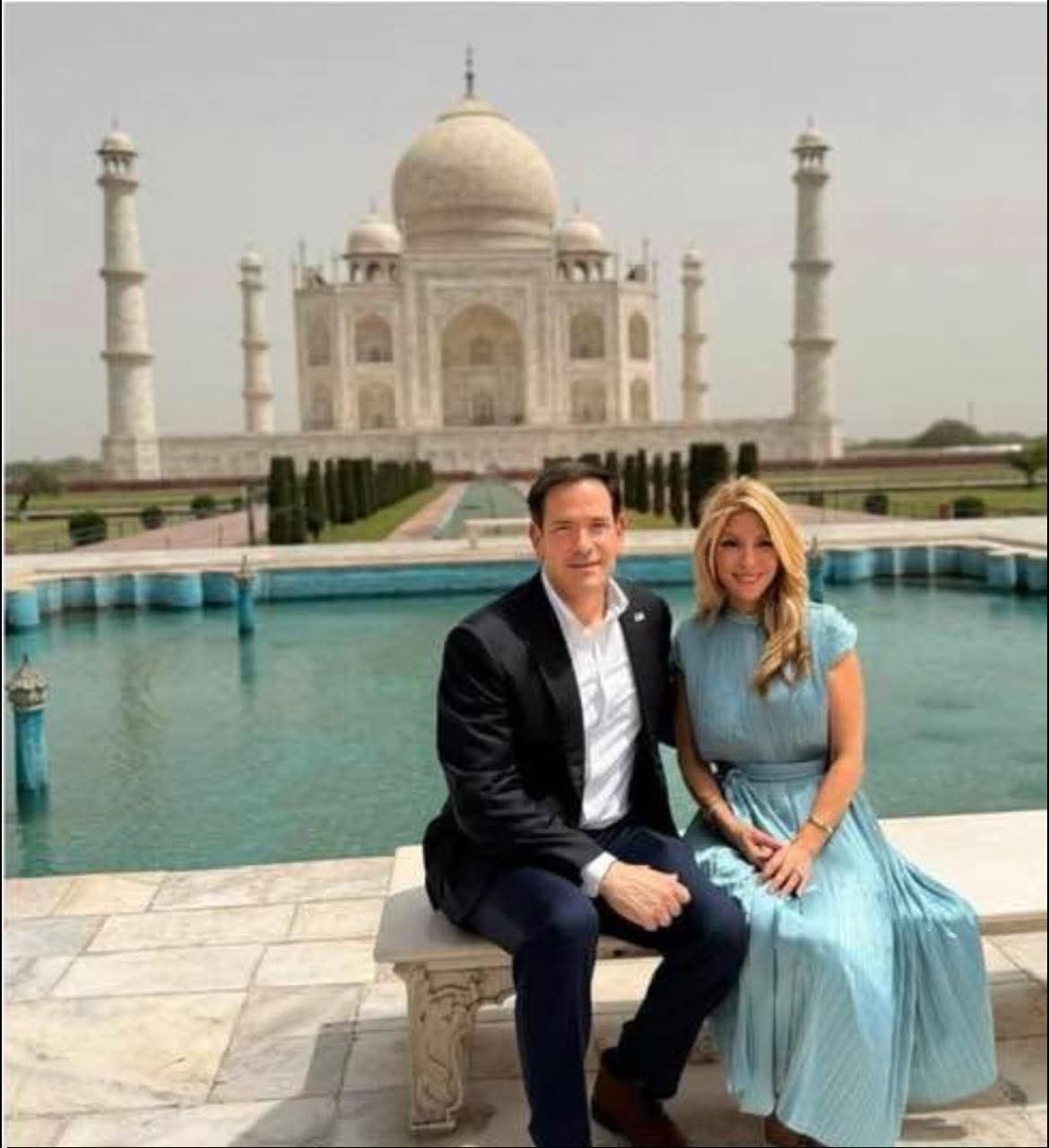
On the fourth day, Rubio landed at Kheria airport in Agra on a special flight and drove to a hotel near the Taj Mahal’s eastern gate before reaching the monument by golf cart, officials said. In the visitors’ book, he wrote, “Thank you for allowing us to visit one of the love treasures of the World.”
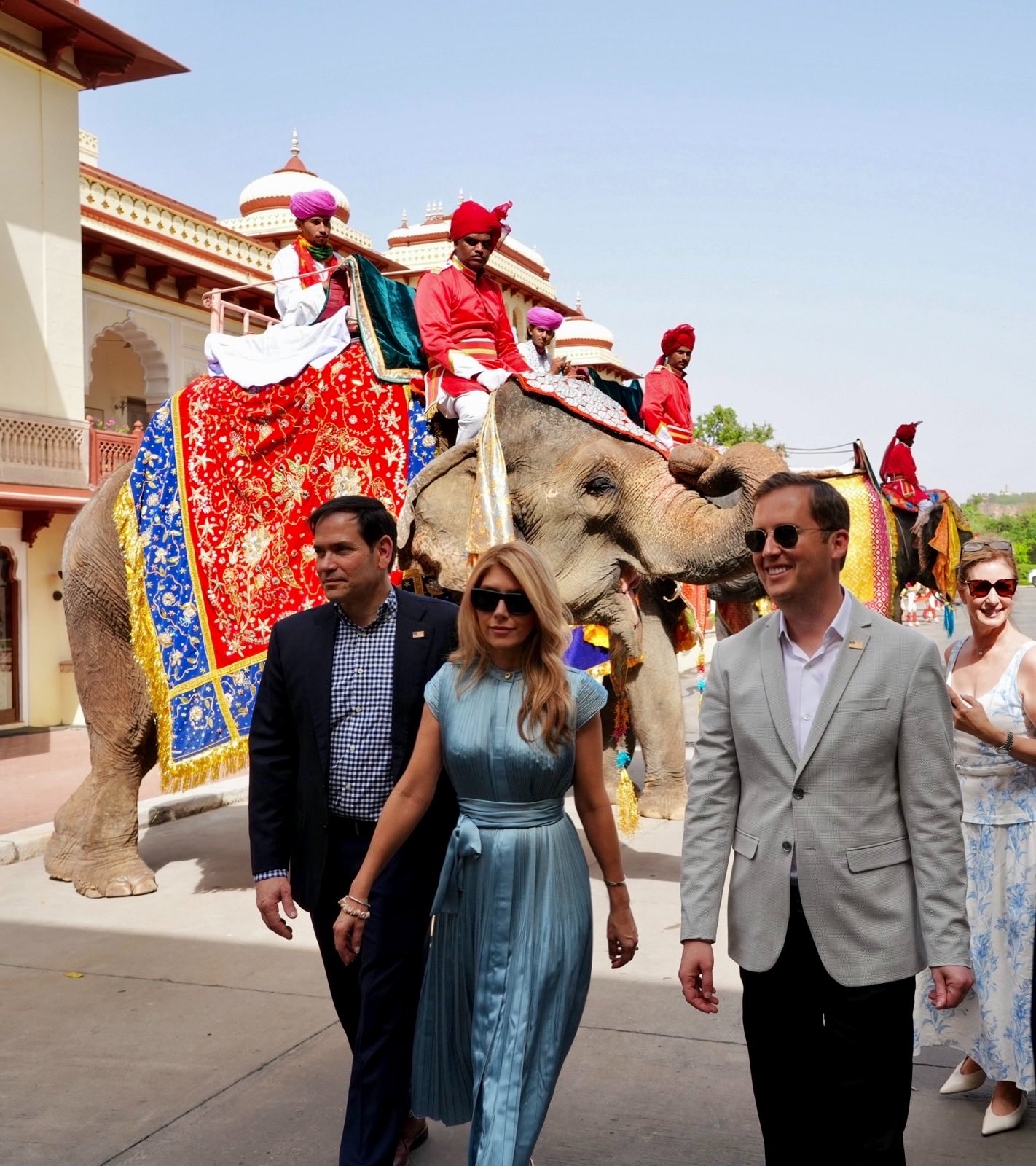
Despite the intense heat in Agra and Jaipur, the US Secretary of State Marco Rubio remained comfortable in a navy-blue suit, later removing his tie for photographs. In Jaipur, he and his wife visited Amber Fort, where they were given a traditional Rajasthani welcome and witnessed folk performances like Kacchi Ghodi and Ghoomar.
According to tour guide Mahesh Kumar Sharma, the visit lasted about half an hour, during which they explored key sections of the fort, including Singh Pol, Diwan-e-Aam, Ganesh Pol, and the Sheesh Mahal. Rubio was briefed on the fort’s history and architecture and showed keen interest in its centuries-old water management and rainwater harvesting system, appearing particularly impressed by the engineering techniques.
Energy security and trade at core of talks
US Secretary of State Marco Rubio met Prime Minister Narendra Modi in Delhi during his visit to India. US officials said Rubio invited Modi to visit the White House, while Modi noted that the discussions covered regional and global peace and security.
The meeting comes as both countries look to reset economic ties amid a global energy crisis triggered by the Iran conflict, which has disrupted oil shipments through the Strait of Hormuz, a key shipping route now affected by tensions following attacks on Iran.
Iran has reportedly used the disruption of the Strait of Hormuz, through which about 20% of global oil and gas flows, as leverage in its fragile negotiations with the US. India has been significantly affected, as it imports over 80% of its energy needs and nearly half of its crude oil typically passes through the strait.
After meeting Prime Minister Narendra Modi, US Secretary of State Marco Rubio discussed the Middle East situation and said the US would not allow Iran to “hold the global energy market hostage.” He also noted that increased US energy exports could help diversify India’s supply.
Ahead of the visit, Rubio signalled Washington’s willingness to sell India as much energy as it can purchase, which may also help reduce India’s trade surplus with the US, a long-standing concern for President Donald Trump. The US goods trade deficit with India rose to $58.2 billion in 2025, up 27.1% from the previous year.
At the US Embassy Support Annex Building dedication ceremony, US Secretary of State Marco Rubio introduced an “America First” visa scheduling tool as part of efforts to modernise US consular services. During his four-day visit to India, he said the system would prioritise business travellers and others whose visits strengthen economic and strategic ties with the US.
Rubio highlighted the growing US-India relationship, noting over $20 billion in investments from Indian companies in the United States and increased defence cooperation, including Indo-Pacific military exercises.
He said slow or unpredictable visa processes can hinder business, investment, and diplomatic exchanges, stressing that an efficient and secure consular system is essential to strengthening bilateral ties.
Both countries reaffirm strong strategic partnership
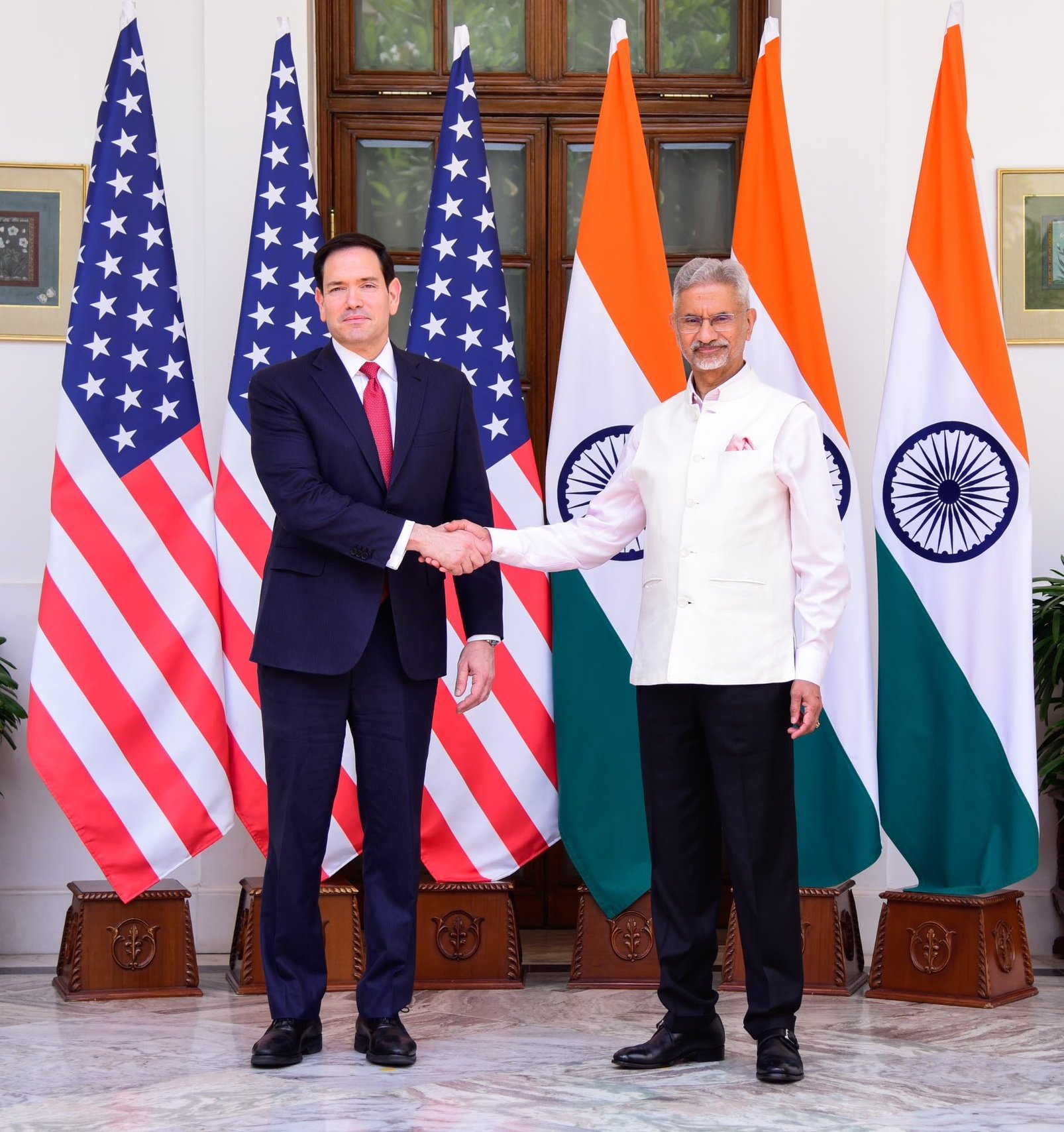
External Affairs Minister S Jaishankar and US Secretary of State Marco Rubio held wide-ranging talks in New Delhi, reaffirming the strength of the India-US strategic partnership and discussing cooperation in trade, energy, mobility, and regional security.
At a joint press briefing, Jaishankar urged an early conclusion of a trade agreement, welcomed expanding energy cooperation, and emphasised the need for diversified energy sources to strengthen India’s energy security. He also raised concerns over visa-related issues faced by Indian travellers during discussions with the US side.
On the Iran conflict, he said both countries have a shared interest in stabilising global energy prices and ensuring smooth maritime trade. He reiterated India’s support for dialogue and diplomacy, noting that India maintains strong relations with the US, Israel, Iran, and several Gulf countries.
Jaishankar also stressed the importance of people-to-people ties and said legal mobility should not be restricted. US Secretary of State Marco Rubio, meanwhile, highlighted the strategic importance of the partnership, calling India one of the United States’ key global partners.
Later a routine diplomatic evening at Bharat Mandapam for the United States’ 250th Independence Day celebrations turned into an unusual and high-profile event.
US Ambassador to India Sergio Gor surprised guests by placing a live phone call to President Donald Trump and putting it on speaker for the audience. Trump greeted attendees, praised Prime Minister Narendra Modi as a friend, and said India could “count on him 100%,” adding that he is a strong supporter of the India-US relationship. He also described US Secretary of State Marco Rubio as the “greatest Secretary of State” and sent greetings to Modi.
Earlier in the evening, guests enjoyed a performance by A R Rahman, while External Affairs Minister S Jaishankar highlighted shared democratic values between India and the US, noting their historical and constitutional parallels. The event also included a cake-cutting to mark Rubio’s upcoming birthday and ended with a performance by the American band Village People, making it a memorable blend of diplomacy, culture, and entertainment.