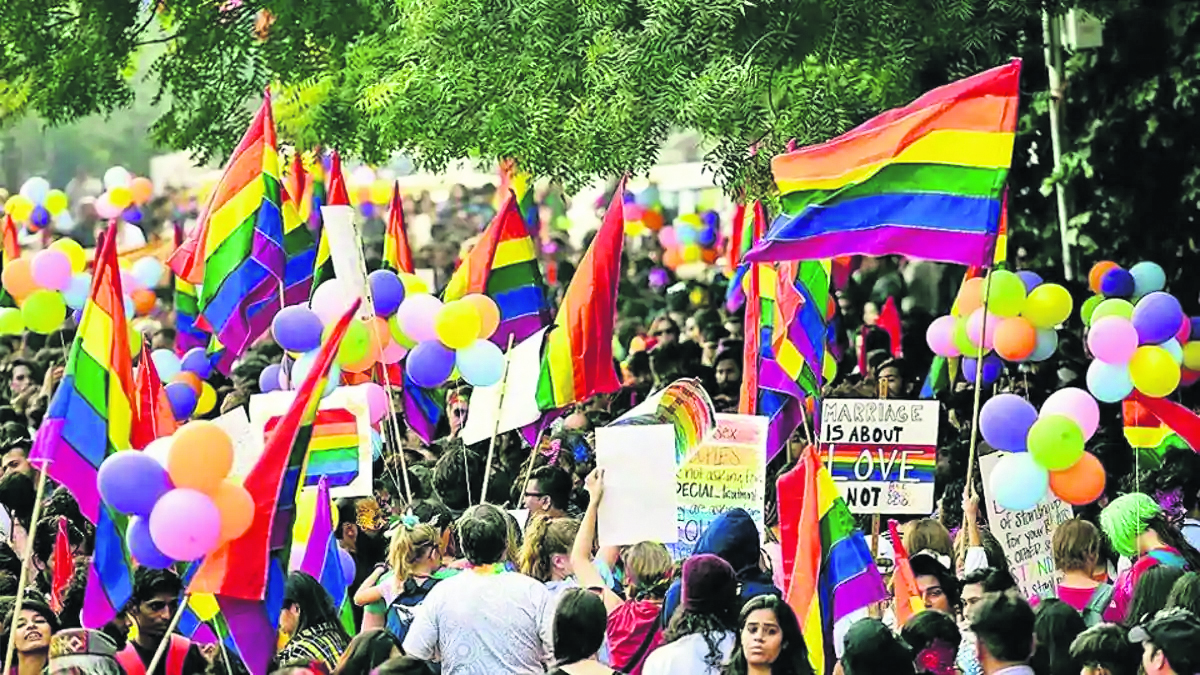
Two years after the Supreme Court had struck down the draconian Article 377 that criminalised gay sex, the LGBTQ community in India still faces the prejudice. “It was the first step but I do think the time for the next step has come now. The inequality still blatantly exists in society’s mindset towards us whether it is in terms of inheritance laws or surrogacy laws - there is still a long, long road ahead of us,” Rishabh Singh, the techie from Mumbai, said.
But Sunaina (name changed), an interior designer, says her life has not changed much since the verdict. “The reason I can’t publicly identify myself is itself a proof that acceptance from society is difficult. I belong to a middle class family where even discussion over the subject of homosexuality is forbidden. Let alone coming out to my parents about being one. The verdict did good to us though. We are at least not considered criminals anymore but the mindset of the society is still the same,” she said.
The Supreme Court had on September 6, 2018, unanimously struck down part of the Section 377 of the Indian Penal Code (IPC) which criminalised gay sex, saying that it violated the constitutional right to equality and dignity. Section 377 declared “carnal intercourse against the order of nature” punishable by imprisonment for life. The judgment was widely welcomed by most sections of society, especially the youth who called it a victory of love.
Both Singh and Sunaina say they remember celebrating that whole night two years ago even though they constantly were thinking about “what’s next?” Shubhankar Chakravorty, a Bengaluru-based writer, says the next move should be to extend the same civil rights to the LGBT population that the general population enjoys.
“LGBT people are too taxpaying, law-abiding citizens, they have every right to the same privileges,” he said. “Things have surely changed. LGBT people are now more confident to express themselves, grow personally, and own their relationships without the fear of discrimination and harassment. However, this change has primarily been for the urban, privileged few. Also, the lives of transgender people have not really improved much,” Chakravorty said.
Bittu Kondaiah, a trans-man, agrees with Chakravorty that the SC verdict did not do much for the transgender community. “But it did ensure that there was one lesser section (of gay community) to get targeted by society. The midset that the LGBT (lesbian, gay, bisexual and transgender) community can be easily exploited as they have no one who cares about them, that mindset has changed,” he said.
Anjali Gopalan, a member of Naz Foundation, an NGO that has been at the forefront of the battle against Section 377, said the community has become a lot stronger since the verdict but there are more rights that it needs to be given.
“The LGBT community does not have any rights per say which society takes for granted like the right to marriage, inheritance so these are rights that should be there for everyone in society. Unfortunately, the LGBT community has been left out of it and that is something that needs to happen,” she said.
Tripti Tandon, lawyer and deputy director of Lawyers Collective, said that the judgment gave LGBT community the confidence to live their lives on their own terms. “But unfortunately society still has not changed its mindset and that is the reason why the community members who take such steps of staying with their partners or moving away face a lot of violence and hostility and harassment from their parents,” Tandon, who was among the members of the team to fight the case in the apex court, said.