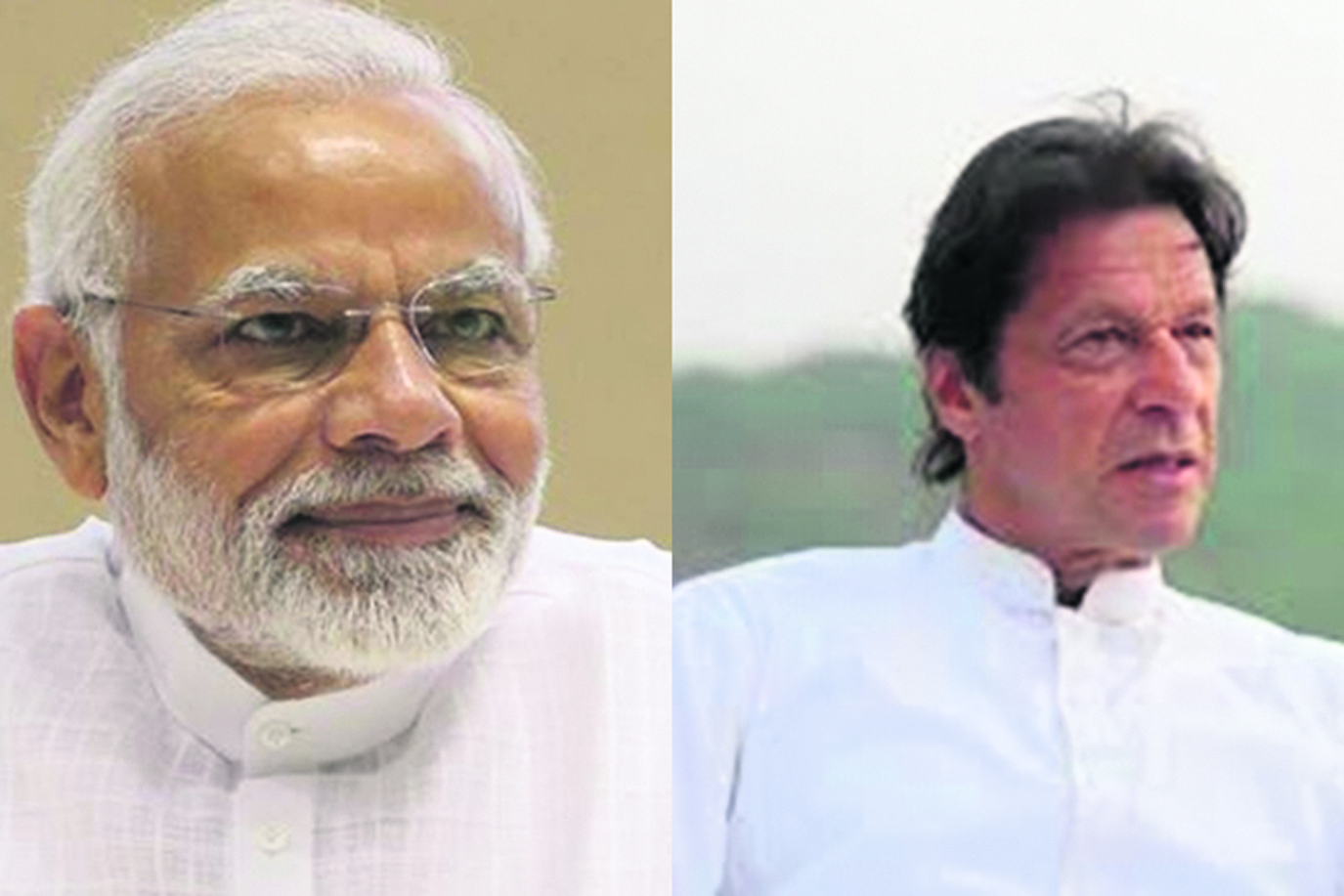
Countering Pakistan's latest attempt to raise the infamous Kashmir issue at the UN Security Council, India has said that it hopes the new government of Prime Minister Imran Khan would work constructively to build the region and free it from terrorism. India's Permanent Representative Syed Akbaruddin said, “Pacific settlement (of disputes) requires pacific intent in thinking and pacific content in action.” He also emphasised, “Regurgitating failed approach which has long been rejected is neither reflective of pacific intent nor a display of pacific content,” after Pakistan's Permanent Representative Maleeha Lodhi suggested the Council should resuscitate initiatives on Kashmir from 70 years ago.
Akbaruddin said, “We hope that the new government of Pakistan will, rather than indulge in polemics, work constructively to build a safe, secure, and developed South Asian region free of terror and violence.” Lodhi referred to decades-old failed Council efforts and invoked the 1948 Council resolution setting up the UN Commission for India and Pakistan (UNCIP) for investigating and mediating the Kashmir dispute. She suggested that the Council could refer disputes to the International Court of Justice (ICJ) for an advisory opinion under the UN Charter. She also offered her own interpretation of the Charter's provisions for the Council's intervention in threats to peace and claimed that it could even unilaterally enforce an advisory opinion from the ICJ over-riding the principle that parties to the dispute have to agree to the court's jurisdiction.
The session on mediation and settlement of disputes was presided over by Tariq Mahmood Ahmad, British Minister of State for the Commonwealth and the UN. Akbaruddin questioned if the UN and the Council were even capable of mediating disputes, asserting that they were hobbled structurally and would not come to the mediation process “unencumbered”. The Council's permanent members had veto powers and without their full cooperation mediators cannot act effectively, he said. Akbaruddin added that the “tortuous decision-making process, imbued with political trade-offs saps the UN of necessary dynamism and flexibility in pursuing mediation” and makes responses to changing circumstances in the mediating process difficult.
He therefore said, “upgrading, expansion, or revamping of (the UN) Secretariat rules and regulations” would not work and it would “be more realistic to look at functional solutions rather than structural ones.” He added, “Rather than try and throw in the UN lap intractable issues, perhaps, a more pragmatic approach is required.”