India on Monday successfully launched its second moon mission Chandrayaan-2 with a plan to land the rover on September 7 in the unexplored lunar south pole, exactly a week after the liftoff was aborted due to a technical snag. Carrying a "billion dreams" in a giant leap for the country's ambitious low-cost space programme, the most complex and prestigious mission ever undertaken by the Indian Space Research Organisation(ISRO), if successful, will also make India the fourth country after Russia, the US and China to pull off a soft landing on the moon.
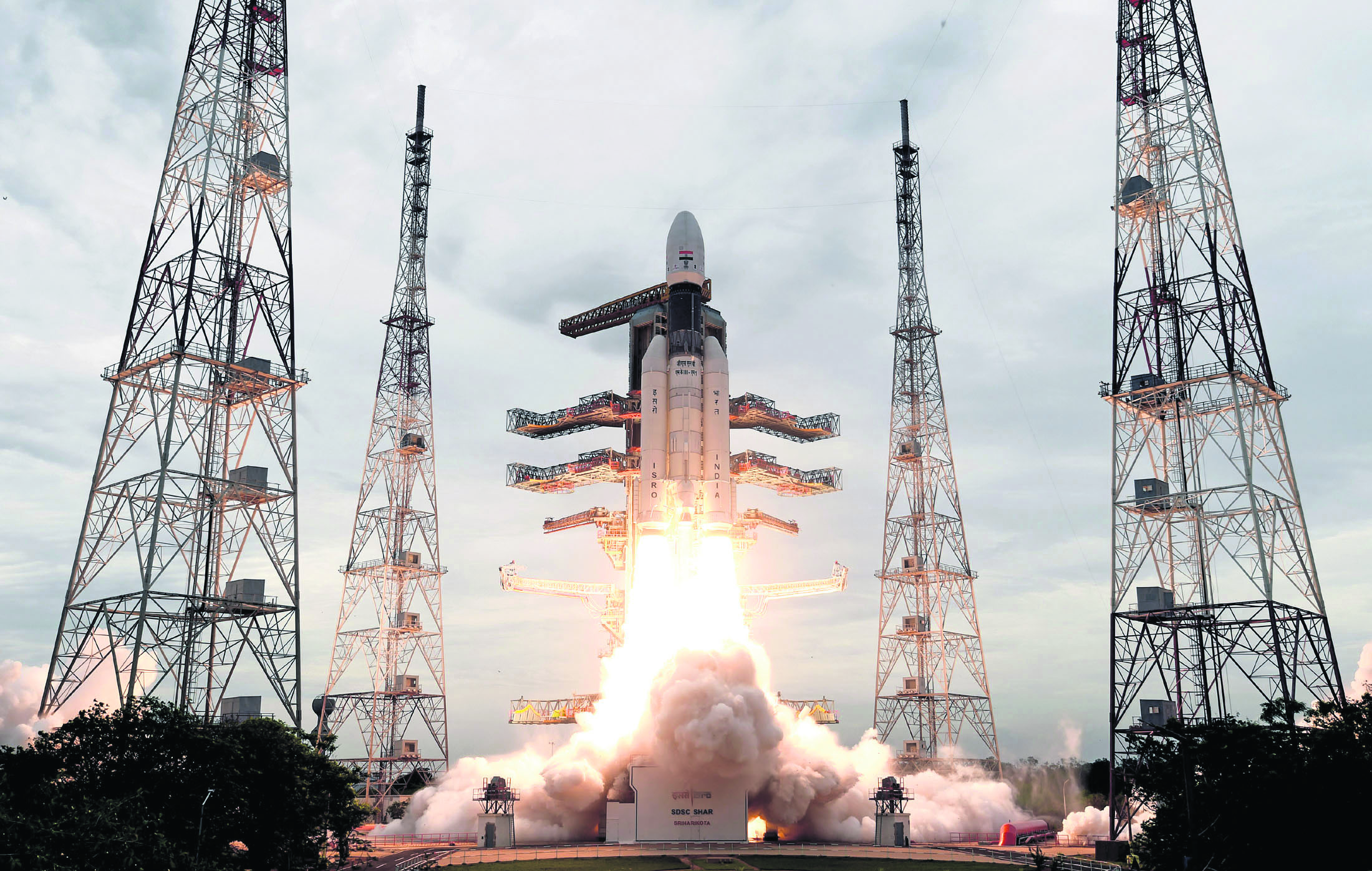
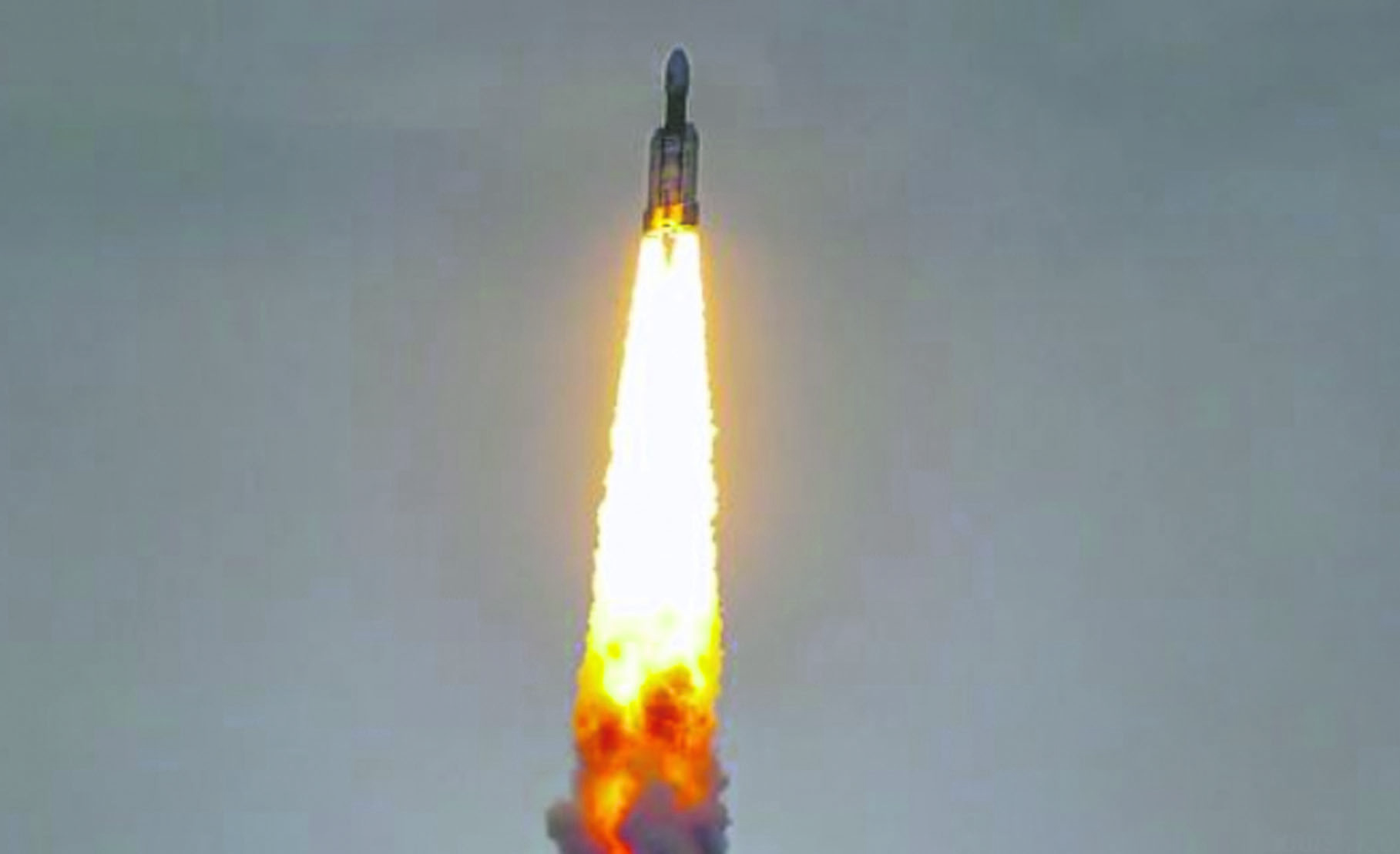
"We bounced back with flying colours after the earlier technical snag. Success is coming after a call-off," said a beaming and visibly relieved ISRO Chairman K Sivan at the mission control room of the Satish Dhawan Space Centre in Sriharikota as scientists broke into cheers, shook hands and exchanged greetings. Sivan was addressing the scientists shortly after the towering geosynchronous satellite launch vehicle GSLV-MkIII-M1, dubbed as 'Baahubali', lifted-off from the second launchpad at the spaceport into cloudy skies at 2.43 pm and successfully placed the 3,850-kg Chandrayaan-2 into the earth orbit about 16 minutes later.
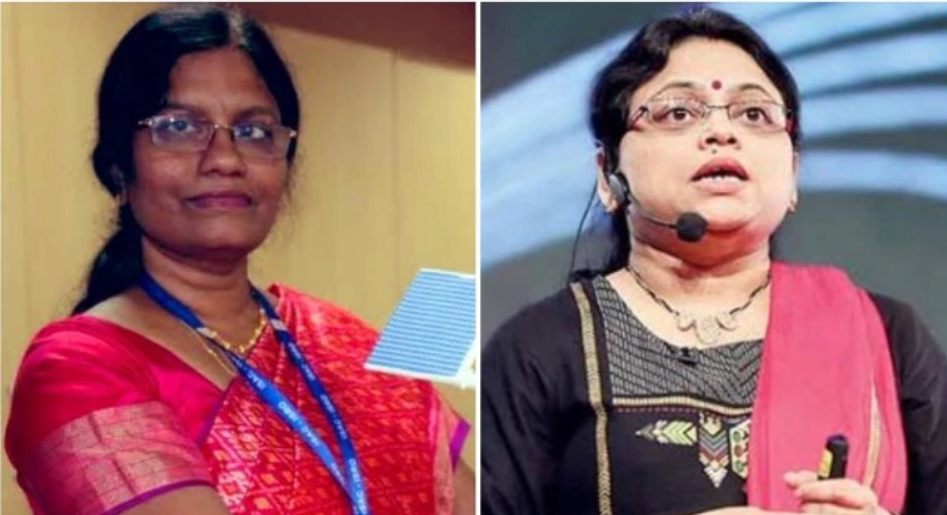
The £97.8 million unmanned mission also brought woman power to the fore as it was helmed by two woman scientists of the ISRO -Ritu Karidhal and M Vanitha, the Mission and Project directors respectively. Joined by President Ram Nath Kovind and leaders across the political spectrum, Prime Minister Narendra Modi congratulated the scientists and said every Indian is immensely proud today. In a series of tweets, Modi referred to the indigenous systems used in Chandrayaan-2 and said the mission is "Indian at heart, Indian in spirit!...
The ISRO is aiming for a soft landing of the lander in the South Pole region of the moon where no country has gone so far. Immediately after Chandrayaan-2's separation from the rocket, the solar array of the spacecraft automatically got deployed and the ISRO Telemetry, Tracking and Command Network at Bengaluru successfully took control of the spacecraft, the ISRO said in a statement.
According to the statement, Chandrayaan-2, a three-module spacecraft comprising orbiter, lander and rover, will be subjected to a series of orbit manoeuvres using its onboard propulsion system to take it to the vicinity of Moon over the next few weeks with the rover soft landing planned on September 7.
The mission was called off on July 15 barely an hour before the planned lift-off after scientists noticed a glitch in the three-stage rocket during the propellant filling phase. According to the ISRO, the lunar South Pole is an interesting surface area which remains in shadow than North Pole. There is a possibility of the presence of water in permanently shadowed areas around it, the agency said, adding craters in the South Pole region have cold traps and contain fossil record of the early solar system. Chandrayaan-2 comes 11 years after ISRO's successful first lunar mission Chandrayaan-1 which scripted history by making more than 3,400 orbits around the Moon and was operational for 312 days till August 29, 2009.
The 43.43-metre tall three-stage rocket GSLV-MkIII-M1 dubbed as Baahubali for its ability to carry heavy payloads, successfully placed the Chandrayaan-2 in the Earth orbit, ISRO said. Now, the mission will undergo a series of manoeuvres by scientists to carry out different phases of the mission over the next 48 days. At the end of the Earth-bound phase, the orbit of the spacecraft will be finally raised to over 105,000 km before nudging it into the Lunar Transfer Trajectory taking it to the proximity of Moon in the next two days.
Then gradually over the next few days it will be brought to 100 X 100 km circular orbit when the lander 'Vikram' carrying rover 'Pragyan' will separate and after another few days of orbiting it will make a soft landing at a chosen place on the Lunar surface. The mission, which carries a total of 13 payloads, including three from the Europe, two from the US and one Bulgaria. A Laser Retroreflector Array (LRA) of US space agency NASA is among the payloads and is aimed at understanding dynamics of Earths moon system and deriving clues on Lunar interior.
The lander Vikram carrying the rover Pragyan, will be landed in a high plain between two craters at a latitude of about 70 degrees South of the moon. Then the 27-kg Pragyan will set out on its job of collecting information on lunar surface. A safe site free of hazards for landing would be decided based on pictures sent back by the camera onboard the lander and after touchdown the rover will carry out experiments for 14 Earth days, equalling one Lunar Day.
Women behind Chandrayaan-2
For the first time in India's space mission history, the ISRO expedition was spearheaded by two women. While Muthayya Vanitha is the project director, Ritu Karidhal is the mission director of Chandrayaan-2. And the incredible feat of this mission does not end at that, because 30% of the team working on it comprised of women and it is India’s first space mission to be led by women scientists.
Muthayya Vanitha (Project Director)
In her 40s, Muthayya Vanitha has had a distinguished career within ISRO, and this latest Chandrayaan 2 mission is just another feather in her cap. Vanitha has become the first ever woman project director at ISRO, breaking barriers like never before. Reluctant to take the responsibility of project director of Chandrayaan 2 at first, Vanitha finally came around after persuasion by M Annadurai - the project director of Chandrayaan 1 - who knew Vanitha was more than capable of doing a splendid job. An electronics system engineer, Vanitha has also been responsible for handling data operations for the country's remote sensing satellites, and she's highly regarded for her problem solving skills, since she's tasked with the unenviable task of handling Chandrayaan 2 from launch till successful landing on moon's surface in September. In the past, Vanitha has won Best Woman Scientist Award of the Astronautical Society of India in 2006, and also played a key role in the launch and success of Mangalyaan in November 2013.
Ritu Karidhal (Mission Director)
Ritu Karidhal is fondly regarded as the "Rocket Woman" of India, as she was the deputy operations director for Mangalyaan in 2013-2014. She's been there and done that, and now holds the mantle of Chandrayaan 2's mission director. She is working closely with Vanitha throughout the Chandrayaan 2 mission, taking a prominent role once the spacecraft takes off from earth.
It was her responsibility to design Chandrayaan 2's onward autonomy system - which gives the spacecraft the ability to navigate its trajectory and respond to satellite with a relative degree of independence. Ritu has a Master's degree in Aerospace Engineering from IISC, Bengaluru, and has previously received the ISRO Team Award for Mars Orbiter Mission and also the ISRO Young Scientist Award from former President APJ Abdul Kalam in 2007.