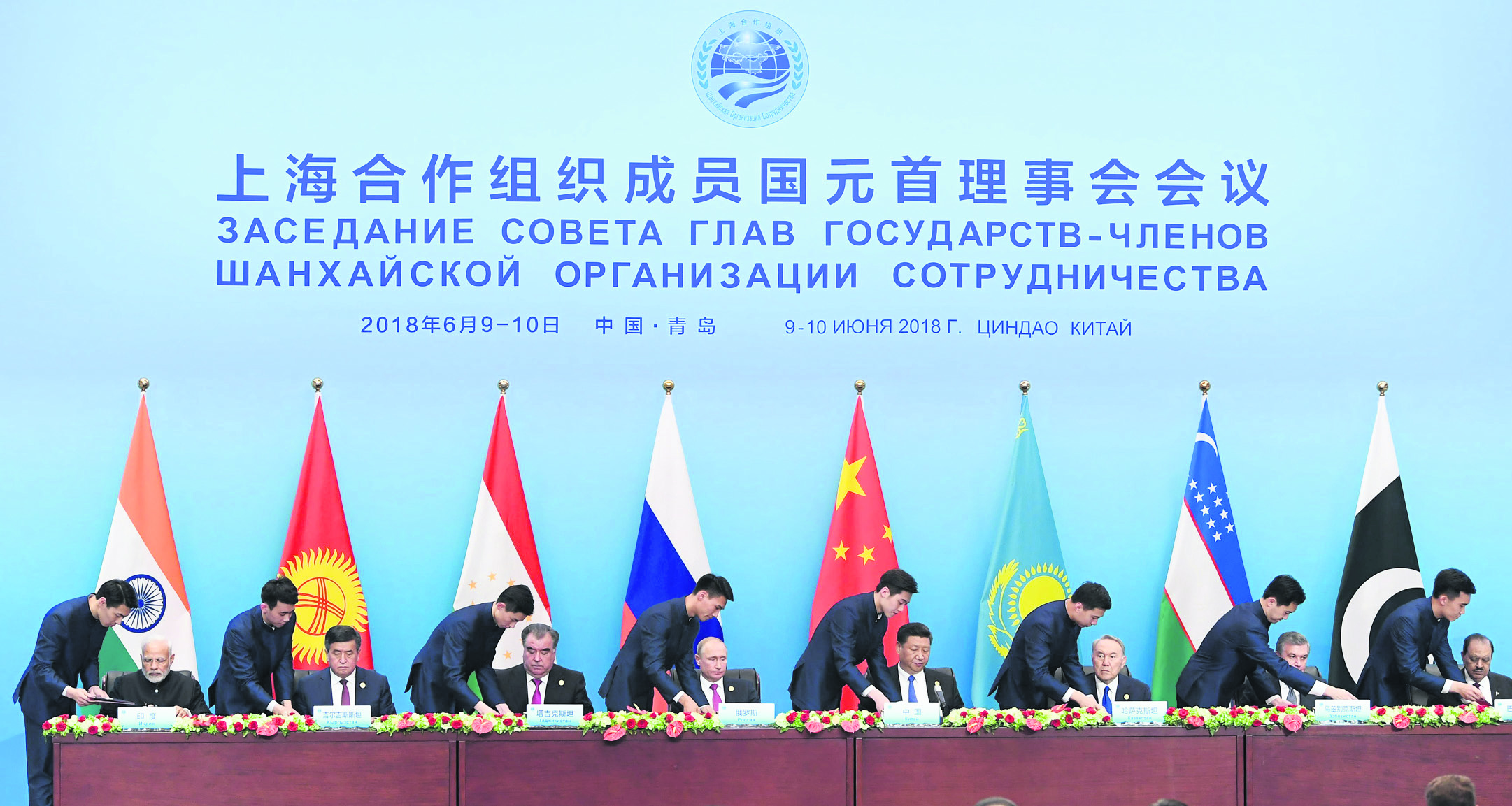
In a bold and much praised move, India was the only country in the 18th eight-nation Shanghai Cooperation Organisation (SCO) Summit to oppose China's ambitious Belt and Road Initiative. Modi, in his plenary speech, asserted that any mega connectivity project must respect sovereignty and territorial integrity of the countries. 'Connectivity with the neighbouring countries is India's priority. We welcome the connectivity projects which are sustainable and efficient and which respect territorial sovereignty of the countries,” Modi said.
A declaration signed by leaders of the Shanghai Cooperation Organisation (SCO) countries, including Modi, at the end of a two-day summit of the bloc said Russia, Pakistan, Kazhakhstan, Uzbekistan, Kyrgyzstan, and Tajikistan have been “reaffirming” their support for China's Belt and Road Initiative (BRI). India has been severely critical of the BRI, Chinese President Xi Jinping's pet project, as the $50 billion China Pakistan Economic Corridor (CPEC), passes through Pakistan-occupied Kashmir (PoK). Modi said India cannot accept a project that ignores its core concerns on sovereignty and territorial integrity.
A fan of acronyms, he coined the acronym 'SECURE', which is short for Security, Economic development, Connectivity, Unity, Respect of sovereignty and integrity, and Environment protection. Talking about the importance of linking the region with transport corridors, he said connectivity does not only mean geographical link but it should ensure people-to-people contact.
“India welcomes any such project which is inclusive, sustainable and transparent. And which respects member states' sovereignty and territorial integrity. We have again reached a stage where physical and digital connectivity is changing the definition of geography. Therefore, connectivity with our neighbourhood and in the SCO region is our priority,” he said. The PM added that India would like to extend all cooperation to the SCO and that the bloc gives India immense opportunities to enhance friendship with resource-rich Central Asian nations.
In his address, Xi also talked about BRI, noting that member countries should respect choice of development paths and accommodate each other's core interests and major concerns. “All parties will continue to work in line with the principle of mutual benefit to improve regional economic cooperation arrangements, enhance the Belt and Road cooperation and complementarity of our respective development strategies,” he said.
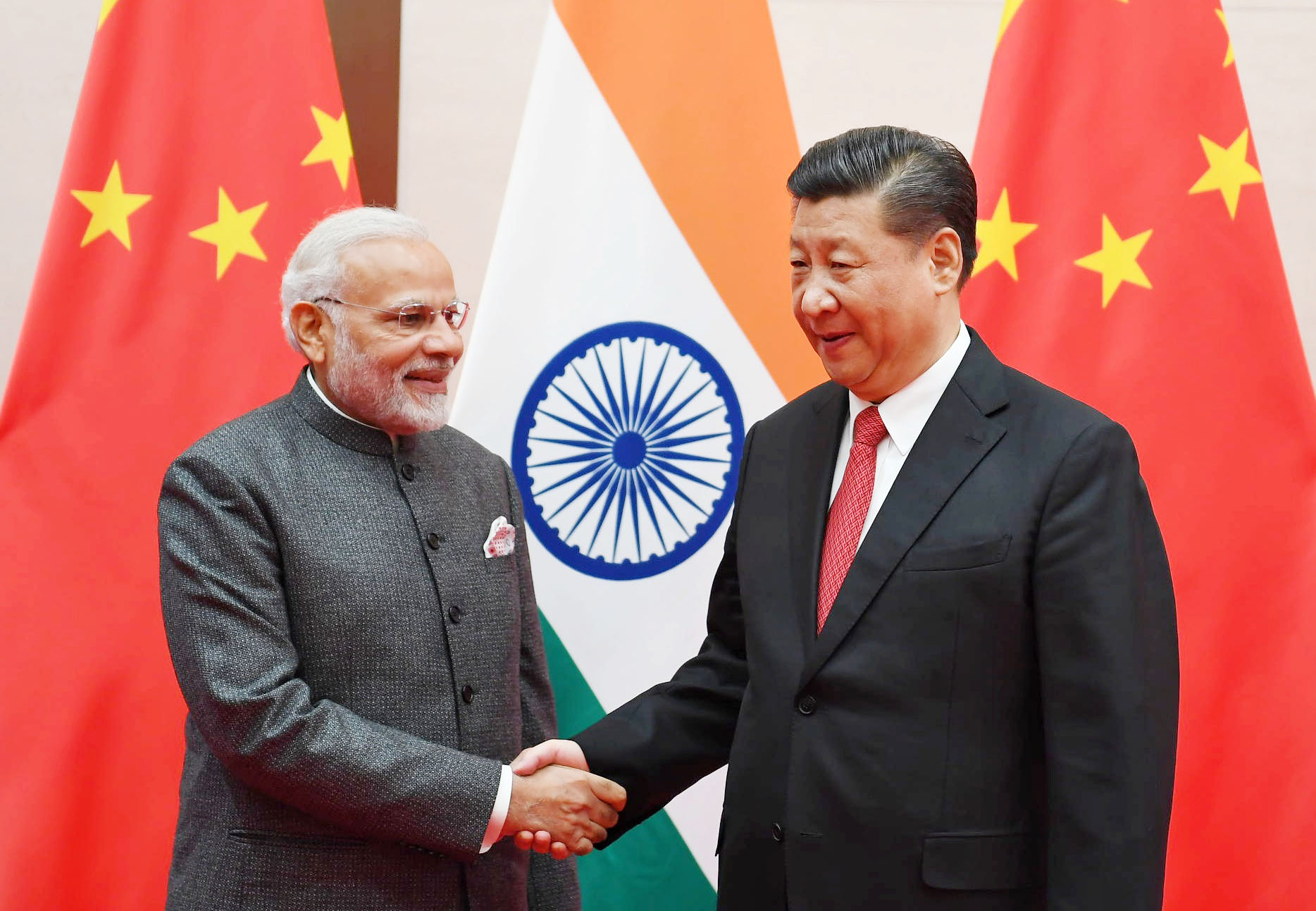
Prime Minister Modi attended the SCO Summit last week, in a two-day visit to Qingdao, China where he held nearly half a dozen bilateral meetings including with President Xi Jinping. This is the first time he attended the summit after India and Pakistan became full-fledged members of the group which is jointly dominated by China and Russia. While he held bilateral talks with leaders from Mongolia, Kazakhstan, Kyrgyzstan, Uzbekistan, and Tajikistan, the most hyped was his meeting with Jinping and the bon homie displayed by both the leaders.
Hindi-Chini bhai bhai?
On the sidelines of the SCO summit, Modi met with President of the host nation, Xi Jinping, during which they agreed to hold the next informal summit in India next year, along with resolving to continue efforts to ensure peace and tranquillity along the border. In the country to attend the visit, Modi seemed more determined to reset ties between India and China after the damage done by last year's military stand-off at Doklam. On June 9, Modi and Xi covered key aspects of the bilateral engagement, reflecting the resolve by the two countries to reset relations and bring back trust in their ties. Chinese Foreign Ministry spokesman Geng Shuang said, “The two leaders exchanged views on bilateral relations and issues of mutual interests. They also reached important consensus.”
He said, “Both leaders believe that their informal summit in Wuhan played a positive role in moving forward the bilateral cooperation. They agreed that the positive momentum should be cherished and they should implement the consensus reached in Wuhan.” Gene said they agreed to implement the consensus in areas of strategic communication and expanding people to people cooperation and move forward bilateral ties. The meeting was held in cordial atmosphere just like the Wuhan informal summit and it will surely contribute to the sound development of bilateral ties. Both sides also agreed to have high-level exchanges, formulate new trade goals and establish high-level people to people exchanges led by the two foreign ministries.
Regarding the outcome of the SCO summit, Geng said it “breathed new life to the Shanghai spirit, which is mutual respect, mutual benefit, equality consultation, respect for diverse civilisations and pursuit of common development.” He added, “In the past 17 years the SCO has been growing. This is attributed in the final analysis to the fact that the Shanghai spirit transcended the outdated concepts of clash of civilisations, cold war and mind-set. SCO pursues no isolated and exclusive clubs.”
Key features of the Modi-Xi bilateral meet:
- President Xi suggested Modi that China and India should set up a new bilateral trade target of $100 billion by 2020.
- An agreement was signed between China's General Administration of Customs and India's Department of Agriculture, Cooperation and Farmers Welfare on Phytosanitary requirements for exporting rice from India to China. The 2006 Protocol on Phytosanitary Requirements for Exporting Rice from India to China has been amended to include the export of non-Basmati varieties of rice from India.
- Both countries signed a bilateral agreement on continuing the sharing of hydrological data on the Brahmaputra river, which was stopped by China last year.
Addressing a press briefing here, Foreign Secretary Vijay Gokhale said, “The Chinese side also said that it will encourage our pharmaceutical companies to register for high quality Indian pharma products in the Chinese market. This was an important aspect from our perspective because we have been pressing for greater pharma exports into the country.” In response to the Chinese President's suggestion for enhancing financial cooperation between the two countries and also helping trade, PM Modi conveyed to President Xi India's readiness to permit the Bank of China to establish its branch in Mumbai, Gokhale said.