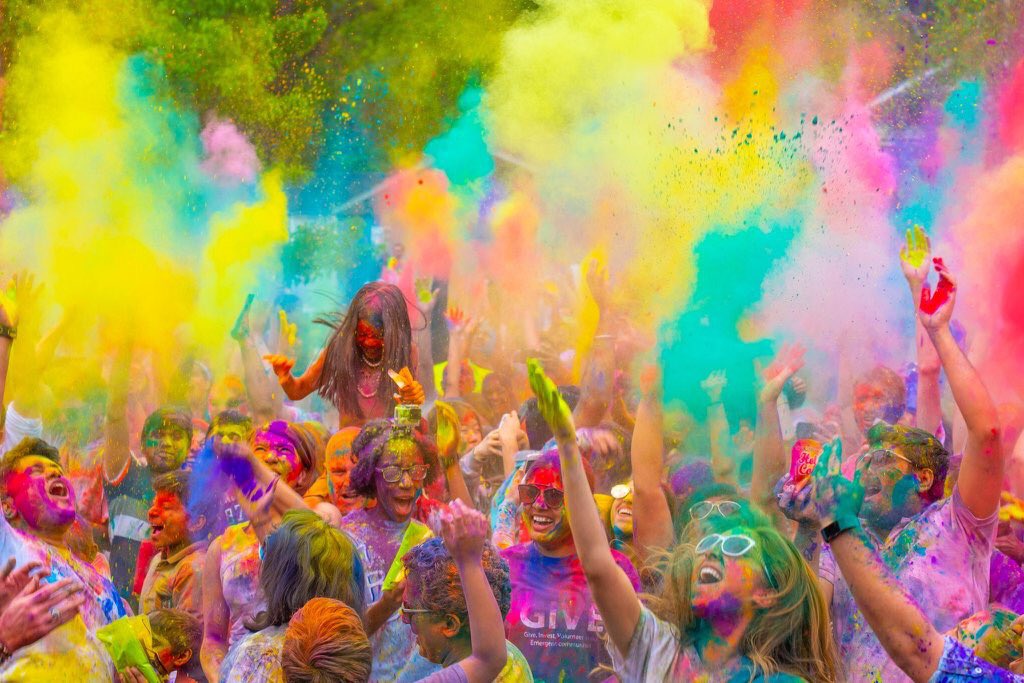
The second biggest festival in the Hindu calendar after Diwali, Holi is around the corner. It announces the arrival of spring and welcomes new beginnings. Holi falls on Purnima or the day of the full moon in the Hindu month of Phalguna. Holi is celebrated for two days.
The first evening of the festival is called Holika Dahan – burning of the demon Holika. It is also referred as Chhoti Holi. In the evening, a bonfire is lit for a puja. It is meant to cleanse and burn away all the bad and evil. The second day of the festival is more of a fun day. People play with coloured powder and water. It is called Dhuleti, Dhulendi or Phagwah.
Significance
Holi signifies the victory of good over evil. Tradition suggests even enemies turn friends on Holi and forget any feeling of hardship that may be present. There are no differences on this day. The rich and the poor, and people from separate social strata celebrate the festival together with a spirit of bonhomie and brotherhood. Holi also serves as the giving of thanks for a good harvest.
Mythology
There are many interesting stories associated with the origin of the festival. However, the most popular relates to the burning of demon Holika. According to legends, there was a demon king Hiranyakashyap who wanted everyone to worship him. However, his son Prahlad, who was a staunch devotee of Lord Vishnu, refused to do so. Hiranyakashyap wished to end Prahlad's life and asked his sister Holika to take Prahlad in her arms and jump into blazing flames. Holika had been granted a boon that made her immune to fire. What she did not know was that the boon only applied when she entered the fire alone.
The incident proved fatal for her, while Prahlad was left unscathed. Ever since, the day is celebrated as the victory of good over bad.
Celebration
The days nearing Holi are much more vibrant and cheerful. On the first night of the festival, people burn a community bonfire, gather, sing and dance around it. They burn coconuts, throw in popped barley, and pray for the safety of their loved ones. The next day, people play with colours, visit family and friends and make a day out of it. Coloured water is splashed at each other, and powdered colours are applied. The celebration usually ends by lunch, when a community feast is enjoyed.
Holi is mainly celebrated in India and Nepal. In India, Holi holds much significance in Mathura, Vrindavan, Gowardhan, Gokul, Nandagaon, and Barsana. Barsana's Lathmar Holi is known around the world.
How to protect your body and hair on Holi
As vibrant as Holi colours are, many of them are chemically made. These are much cheaper than the alternative natural options and more accessible. These chemical-ridden colours possess harming qualities and can really mess up your skin and hair for days. In this article we give you a few tricks to protect your body this Holi.
1) Oil
Before you venture out of your house, oil your hair and massage your scalps thoroughly. This will help avoid direct contact with synthetic colours.
2) Tie your hair up
Never play Holi with open hair. If glamour is your concern, opt for a braided ponytail or other hairstyles that requires tying up your hair. Open hair can lead to tangles and knots and removing them can cause severe hair breakage and loss.
3) Opt for headgear
One other option is to wear bandanas or a cap/hat to protect hair from roughness and dryness.
4) Apply petroleum jelly to exposed skin
The same way as you apply oil to protect your hair, applying a light coat of Vaseline petroleum jelly to exposed skin which could be a fantastic way to easily wash off the colours after a day of playing with them.