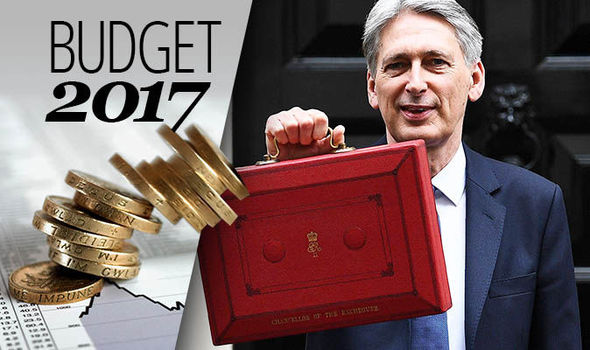
Following a general election, the first budget of the new parliament is traditionally a dramatic event, one in which the Chancellor dispenses with a whole host of tax increases, usually because they are at the furthest point from the next general election. However, for a number of reasons, Mr Hammond did not follow the norm. It was far from it. Rather than increasing the Exchequer’s income, the budget revealed a net giveaway of just under £1.6 billion in the coming tax year.
The main highlight was the move to give first-time buyers an exemption from stamp duty land tax for the first £300,000 of the amount paid for properties bought for up to £500,000. It was commonly predicted that some form of move would take place, when it comes to incentivising first-time buyers to jump onto the property market.
On the income tax front, the Chancellor was substantially less generous, increasing both the personal allowance and the higher rate threshold by 3%, in line with inflation. He gave nothing away to individual savings account (ISA), with a freeze in the main ISA and lifetime ISA investment limits. Pension savers were luckier, with an increase in the lifetime allowance, the first since 2010 and no changes to the annual allowance.
Venture Capital Schemes and Enterprise Investment Schemes were again targeted for a tightening of the screws. The Chancellor introduced a raft of measures designed to introduce a greater emphasis on risk investment for Venture Capital Trusts, Enterprise Investment Schemes and Seed Enterprise Investment Schemes. However, he did not take any action on the inheritance tax business relief, which was widely expected.
A number of commentators have suggested that this was both a dull and steady-as- she-goes budget. Mr Hammond will probably be very pleased with the suggestions, as broadly speaking a neutral budget was likely to be his goal, given the issues that arose after his national insurance U-turn following the March budget.
Main budget highlights
- First-time buyers of residential property outside of Scotland will pay no stamp duty land tax on the first £300,000 of the purchase price for a home, provided the total value does not exceed £500,000.
- The personal allowance rises to £11,850 and the higher rate tax threshold for the UK (excluding non-savings, non-dividend income in Scotland) will rise to £46,350 for 2018/2019.
- The pension lifetime allowance will increase from £1 million to £1.03 million from April 2018. There will be no change to the annual allowance.
- Venture Capital Trusts, Enterprise Investment Schemes and Seed Enterprise Investment Schemes will be required to focus more on companies where there is a real risk of investment.
- The supplement applied to company cars that run on diesel will increase from 3% to 4% from April 2018.
- Marketplaces will become jointly and severally liable for unpaid VAT of UK and overseas traders.
- There are a number of changes to business rates.
PERSONAL TAXATION
Income Tax
There were no major changes in this area, other than the personal allowance increasing to £11,850 and the high rate threshold rising to £46,350 for 2018/2019.
In reality, this means that a higher rate taxpayer earning £60,000 per annum is likely to have an increase of £340 in the year (excluding any national insurance contribution changes). This amounts to an additional amount of £28.33 each month. The table below shows how this will be affected:
Details Pre Budget Post Budget
£ £
Total Income
60,000
60,000
Less Personal Allowance
11,500
11,850
Taxable Income
48,500
48,150
Tax Payable
Basic Rate
6,700
6,900
Higher Rate
6,000
5,460
12,700
12,360
Net Pay
47,300
47,640
Private Sector Off Payroll Working
In April 2017, the government made a number of changes to the payroll working rules for public sector engagements. The Chancellor has announced that he will be extending this to the private sector. This means, in reality, that a number of individuals, especially in the IT industry, who operate through individual corporate entities, but in reality only have a single source of income, will have to account for the tax and national insurance contributions on their earnings at source. (IR35).
National Insurance Contributions
There were no significant changes to these. The government has indicated that it will delay the implementation of any reforms by one year.
Taxation of Benefits in Kind and Employee Business Expenses
The Chancellor has announced that from April 2018, there will be no benefit in kind tax charge on electricity that employers provide employees recharging their personally owned electrical hybrid vehicles at their workplace. In reality, it is very difficult to assess how this particular benefit in kind charge was or is being implemented. The government have merely taken away a burden of administration.
The Chancellor did announce a number of changes to the taxation of employee expenses: –
- The government to consult on extending the scope of tax relief available to employees and the self-employed for work-related training costs.
- From April 2019, employers will not have to check receipts when reimbursing employees for subsistence using scale rates.
BUSINESS TAXES
Mr Hammond did announce a number of technical changes to business taxes. The more relevant ones of which are as follows: –
Company Taxation
The rate of tax credit available for research and development expenditure will rise from 11% to 12% with effect from 1 January 2018. The government also announced that a new advanced clearance service will be piloted for claims for research and development expenditure credit, to provide a pre- filing agreement for three years. This means that businesses will be able to agree the technical details of the research and development expenditure in advance so that they have a greater chance of success in ensuring that the claims are acceptable.
Share reconstruction rules have been amended to in order to avoid any unintentional chargeable gains being triggered where a UK company incorporates foreign branch assets in exchange for shares in an overseas company.
Partnership Taxation
Partnerships do tend to cause a significant amount of uncertainty and are never clear in their structure, especially where no agreement exists. In order to counteract this, the government has announced that it will introduce legislation with effect from 2018/2019 to clarify the circumstances where, under the current rules, the partnerships are seen to be creating uncertainty. This will reduce the scope for non-compliant taxpayers to avoid or delay paying tax. The government did draft legislation in September 2017, and this has now been revised to be more compatible with
commercial arrangements for allocating profit, and to avoid any additional administrative burdens.
Disincorporation Relief
Disincorporation relief is given to owners of companies who would benefit from no longer holding the shares and trading as sole practitioners or in a partnership. Over the recent years, as the rate of corporation tax has reduced and with the introduction of the taxation of dividends, the beneficial aspects of trading through a corporate entity are significantly reducing. This can be illustrated by way of an example: –
Details Company Personal
£ £
Profit Before Taxation
60,000
60,000
Company Tax At 19%
11,400
Profit After Taxation
48,600
60,000
Dividends
48,600
-
Reserves
-
60,000
Personal Taxation
Gross Income
48,600
60,000
Less Personal Allowance
11,850
11,850
Taxable Income
36,750
48,150
Tax Payable
Dividned Tax At 7.5% on £34,500
2,587.50
Dividned Tax AT 32.5% ob £2,250
731.25
Personal Tax at 20% on £34,500
6,900.00
Personal Tax at 40% on £13,650
5,460.00
3,318.75
12,360.00
Add Corporation Tax
11,400.00
14,718.75
12,360.00
Saving by disincorporation of business
2,358.75
Mileage Rates for Landlords
Retrospective legislation has been introduced with effect from 6 April 2017 and individuals operating unincorporated property businesses can opt to use a fixed rate deduction for every mile they travel for business journeys by car, motorcycle or goods vehicles.
PROPERTY TAXES
Stamp Duty Land Tax (SDLT)
A new relief from SDLT will raise the price at which a property becomes liable for SDLT to £300,000 for first-time buyers. Those claiming the relief will pay no SDLT on the first £300,000 of the consideration. No relief will be available where the total consideration is more than £500,000. Relief applies to transactions with effect from 22 to November 2017.
Where the consideration is £500,000 or less, SDLT at a rate of 5% will apply to any amount over £300,000. Early indications are that the definition of a first-time buyer is an individual who has never owned a property, or land before.
Gains by Non-Residents on UK Properties
Currently, gains achieved by non-residents disposal of UK property are not subject to Capital Gains Tax. The government has announced that any gains accruing from April 2019 by non-resident owners who dispose property in the UK, will be brought into the scope of UK taxation. There will be certain targeted exemptions for institutional investors such as pension funds. Taxation of Non-Resident Companies – UK Property Income and Gains
Non-resident companies that generate an income from UK property will be chargeable to corporation tax rather than income tax with effect from 6 April 2020. Additionally, from the same date, gains that arise to non-resident companies on the disposal of UK property will be charged to corporation tax rather than Capital Gains Tax.
General
Mr Hammond introduced a whole host of other measures that, at this stage, have not been covered within the scope of this article. These include (but are not limited to) the following:
- New gift aid donor benefit rules that apply to charities that claim gift aid relief on donations.
- Consultation in respect of how to make the taxation of trusts simpler, fairer and more transparent.
- The introduction of the 30 day payment window between a capital gain arising on residential property and the payment of the relevant capital gains tax has been deferred until April 2020.
- Businesses occupying more than one floor in a building that have been affected by the “staircase tax” will be able to get their valuations recalculated so that they are based on previous practice backdated to April 2010. This will include those who lost small business rate relief.
Although the budget was seemingly a low key affair, there are a whole host of measures that were introduced that cannot form part of this article. Outlined above are what are considered to be the main points affecting the everyday lives of the readership.
The information above should not be relied upon on its own. In the detailed tax planning for individuals or businesses, there are many factors that need careful consideration and research, both by yourself and your professional advisers, that, if done correctly, should pay handsome dividends. Please get professional advise prior to taking any action. The proposals mentioned in this article may be subject to amendment.
Kiran D Patel is the Principal of Albury Associates Limited, Chartered Accountants. For specific advice,
please contact Kiran D Patel on 020 3586 4295 or e-mail him at [email protected].