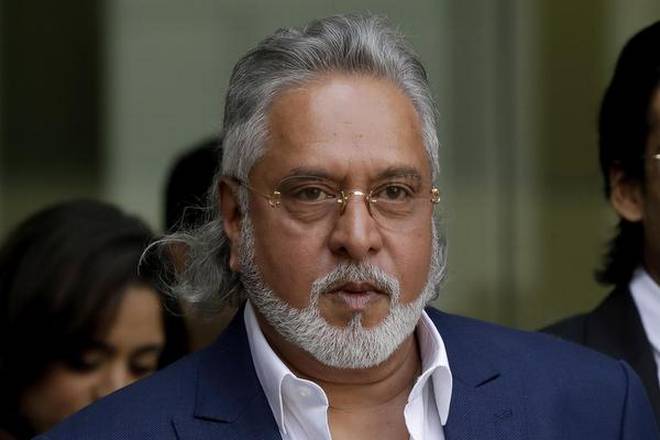
The Chief Magistrate at Westminster Magistrate's court in London will resume the extradition proceedings against the beleaguered businessman Vijay Mallya on January 11th,. During the hearing in December 2017, the prosecution set out its evidence on a prima facie case for fraud charges against the businessman, relying less on money laundering charges that had been added in October. During the opening hearing, barrister Mark Summers leading for the Crown Prosecution Service on behalf of India focussed on three main aspect. Firstly he addressed what he described as the mis-representations made by Mallya and Kingfisher to the banks in loan applications made to them. He then turned to the use of the loans, which he argued went against the uses stipulated in the loan conditions – highlighting examples such as the use of funds for payment of rent on the corporate jet, which Mallya “used exclusively.” The third plank of his argument focussed on Mallya’s response to the recall of the loans by the bank, which relied on attempts to “squirrel away” the money owed.
“This is not the kind of thing honest people do,” he told the judge at one point, as he highlighted email exchanges between Mallya and others which mulled over the options, following the consortium of banks’ decision to recall the loans, including suggesting that pursuing Mallya in this way somehow amounted to discrimination because he was affluent.
Mallya’s defence team led by Clare Montgomery launched a stinging attack on the style of Indian media coverage and the emergence of powerful commentators, which raise doubts about a fair trial for the liquor baron in India. Montgomery asked a legal expert during his witness statement his views on the way the allegations of fraud against Mallya have been dealt with by the media. “There is an increasing concern in India about media trials, which is connected with a change in the landscape in India where TV channels use panel discussions and such like…there is an emergence powerful TV commentators,” said Martin Lau, an expert on South Asian law who deposed as a key defence witness.
Mallya declared proclaimed offender
Meanwhile, Mallya was declared a proclaimed offender by a Delhi court for evading summons in a FERA violation case. Chief Metropolitan Magistrate Deepak Shehrawat passed the order after noting that Mallya failed to appear before it despite repeated summons. The court had on April 12 last year issued an open-ended non-bailable warrant against the liquor baron. Unlike a non-bailable warrant, 'open-ended NBW' does not carry a time limit for execution. On November 4, 2016, while issuing non-bailable warrant against Mallya, the court had observed that he had no inclination to return and had scant regard for the law of the land.
It had said that coercive process has to be initiated against Mallya as he was facing proceedings in several cases and avoiding appearance in those matters. The court had also held that Mallya's plea that he wanted to return to India but was "incapacitated" to travel as his passport had been revoked by Indian authorities, was "malafide" and "abuse of the process of law". Mallya, who is reportedly in London, had submitted before the court on September 9 that he was "incapacitated" to travel despite "best intentions" as his passport had been revoked.